Sakti
Sakti is the divine feminine energy, the creative and dynamic power inherent in the cosmos and within individuals. It represents the active, manifest aspect of divinity, often personified as goddesses, and is crucial for creation, preservation, and transformation in Hindu philosophy.
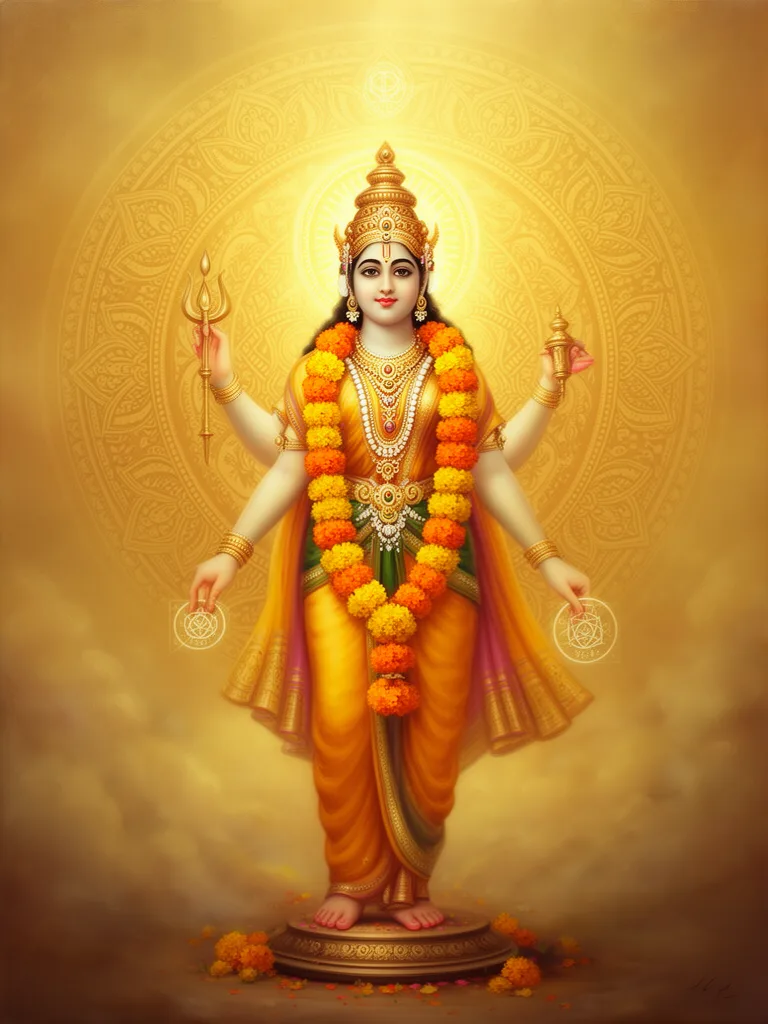
Where the word comes from
The Sanskrit word "Śakti" (शक्ति) derives from the root "śak" (शक्), meaning "to be able" or "to have power." It signifies inherent power, strength, or ability. The term's usage in ancient Vedic texts and Upanishads points to its foundational role in understanding cosmic forces and divine potential.
In depth
The active female energy of the gods; in popular Hinduism, their wives and goddesses; in Occultism, the crown of the a.stral light. Force and the six forces of nature .synthesized. Universal P^nergy.
How different paths see it
What it means today
Helena Blavatsky, in her monumental effort to synthesize and disseminate esoteric knowledge, identified Sakti as the "active female energy of the gods," a concept resonant with the very pulse of creation. In the rich currents of Hindu thought, Sakti is far more than a mythological consort; she is the primordial power, the dynamic force that emanates from the absolute, the unmanifest Brahman, giving birth to the manifold universe. Mircea Eliade, in his studies of comparative religion, illuminated how this concept of divine feminine energy is not unique to Hinduism but echoes in various primal cosmogonies, representing the generative source from which all being arises.
This energy, often personified as powerful goddesses like Durga, the invincible warrior, or Kali, the destroyer of illusion, is not to be mistaken for mere passivity. Sakti is the active principle, the very impetus for change and movement. It is the power that drives the cycle of birth, death, and rebirth, the force that enables transformation and spiritual evolution. For the modern seeker, understanding Sakti offers a profound reorientation. It suggests that the divine is not a distant, static entity but an immanent, vibrant energy that can be accessed and cultivated within. This energy is the source of creativity, intuition, and the capacity for radical change.
Carl Jung, in his exploration of the collective unconscious, might see Sakti as representing the archetypal feminine, the anima within the masculine psyche, and the potent, life-giving force that drives individuation. The Tantric traditions, deeply rooted in the worship of Sakti, offer practices aimed at awakening and channeling this divine energy, often through mantra, meditation, and ritual, to achieve liberation and spiritual realization. It is the vital spark, the radiant force that makes the universe dance and the individual soul aspire towards its divine origin. To grasp Sakti is to recognize the inherent dynamism and creative potential that underpins all existence, urging us to engage with the vibrant, manifest aspect of the sacred.
Related esoteric terms
Books on this concept








No reflections yet. Be the first.
Share your interpretation, experience, or question.
