Runes
Runes are ancient Germanic alphabetic symbols imbued with mystical significance, used for divination, magic, and inscription. Each rune represents a concept, sound, and often a divine principle, believed to hold inherent power and meaning beyond mere phonetic representation.
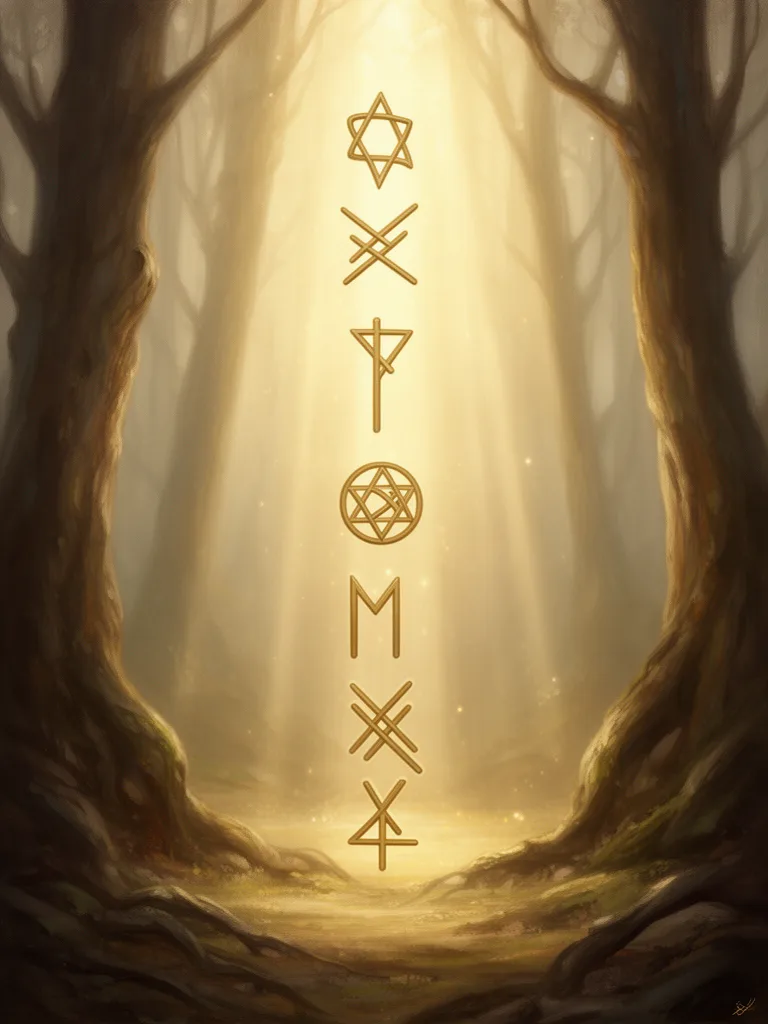
Where the word comes from
The term "rune" likely derives from Proto-Germanic rūnō, meaning "secret" or "mystery." This root is shared with Gothic rūna, Old Norse rún, and Old English rūn. The concept of hidden knowledge or a secret utterance is central, suggesting an ancient understanding of these symbols as carriers of profound, often divinatory, wisdom.
In depth
The Runic language and characters are the mystery or sacerdotal tongue and alphabet of the ancient Scandinavians. Runes are derived from the word runa (secret). Therefore both language and character could neither be understood nor interpreted without liaving the key to it. Hence wliile the written nou s consisting of sixteen letters are known, the ancient ones composed of marks and signs are indecipherable. They are called the magic characters. "It is clear", says E. W. Anson, an authority on the folk-lore of the Norsemen, "that the runes were from various causes regarded even in Germany jjroper as full of mystery and endowed with supernatural power". They are said to have been invented by Odin.
How different paths see it
What it means today
In the dust motes dancing in a sunbeam, or the intricate frost patterns on a winter pane, we find echoes of the rune's profound power. Blavatsky, with her characteristic intensity, points to the ancient Scandinavians' belief that runes were not simply characters but "magic characters," invented by Odin, the All-Father, the god of wisdom, poetry, and war. This attribution is crucial; it places the runes not in the realm of mundane communication but within the sacred architecture of the cosmos, a gift from the divine to the mortal mind.
The very etymology of the word—from *rūnō, "secret"—invites us into a space of hushed reverence. It suggests that understanding runes requires not just intellectual assent but an initiation into a deeper, intuitive knowing. Mircea Eliade, in his explorations of shamanism and the sacred, often spoke of the initiatory journey, a process of death and rebirth, of shedding the old self to embrace a new, more profound awareness. The practice of rune casting, for instance, can be viewed through this lens: the casting of the runes is a ritualistic act, a moment of surrender to the unknown, where the symbols thrown become a mirror to the soul's present condition and potential future.
Carl Jung's work on archetypes and the collective unconscious offers a resonant framework for understanding the enduring power of runes. Each rune, with its distinct form and meaning—Thurisaz, the primal force of disruption and protection; Ansuz, the breath of divine inspiration; Uruz, the untamed strength of the wild ox—can be seen as an archetypal symbol, a pattern of psychic energy that resonates across cultures and time. They are not static glyphs but dynamic forces, capable of awakening dormant aspects of the psyche. As Seyyed Hossein Nasr might suggest, they are part of the "sacred sciences," disciplines that seek to bridge the gap between the material and the spiritual, offering a path toward reintegration with the Divine. The runes, in their enigmatic simplicity, offer a pathway to perceive the interconnectedness of all things, a reminder that even in the most mundane of symbols, there lies a universe of meaning waiting to be discovered. They are, in essence, whispers from the ancient heart of the world, inviting us to listen.
Related esoteric terms
Books on this concept


No reflections yet. Be the first.
Share your interpretation, experience, or question.
