Rev
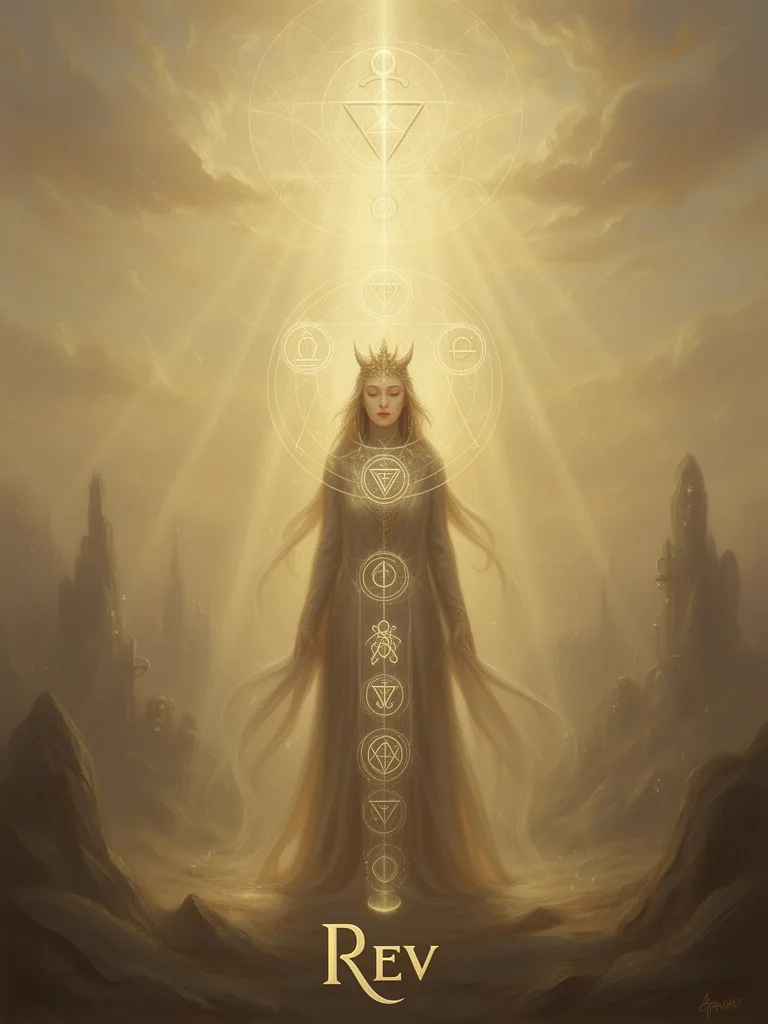
Shambhala, a mythical kingdom, is a legendary hidden land prophesied to be the birthplace of a future messiah who will usher in a new era of peace and enlightenment. It is often associated with spiritual wisdom and a utopian society.
Where the word comes from
The term "Shambhala" originates from Sanskrit, likely derived from "śambha-la," meaning "place of happiness" or "place of peace." It first appears in ancient Indian texts, notably the Kalachakra Tantra, a significant Buddhist scripture.
In depth
All these "messengers" are to appear "l>efore the destruction of the world", .says the one; before the end of Kali Yuga say the others. It is in S'ambhala that the future Messiah will be borii. Some Orientalists make modern Muradabad in Kohilkhand (N.W.P.) identical with S'ambhala. while Occulti.sm places it in The Himalayas. It is pronounced Shamhhalu.
How different paths see it
What it means today
The idea of Shambhala, a hidden kingdom of enlightened beings, is more than a mere geographical fantasy. It functions as a potent psychological and spiritual archetype, a repository of lost wisdom and a promise of renewal. Mircea Eliade, in his studies of myth and the sacred, would likely see Shambhala as an example of the "axis mundi," a cosmic center connecting the earthly realm with the divine, a place where time is held in abeyance, awaiting a propitious moment for intervention. This concept echoes the perennial human desire for a sanctuary, a place untouched by the corruptions of the mundane world, where the seeds of a better future are nurtured. It is the ultimate projection of our collective unconscious, a land where the principles of harmony and enlightenment are not merely ideals but lived realities. Blavatsky's placement of it in the Himalayas, a region already steeped in spiritual mystique, amplifies this sense of a sacred geography. The anticipation of a messianic figure emerging from Shambhala reflects a universal eschatological impulse, a belief that even in times of profound darkness, a transformative power lies dormant, ready to reawaken and usher in a new cycle of existence. The modern seeker might find in Shambhala not a literal destination, but a metaphor for the inner citadel of wisdom, a cultivated space within the self where the potential for profound change is cultivated, awaiting its own appointed time. It is the whispered promise that ultimate truth is not lost, but merely concealed, waiting for the worthy to discover it.
RELATED_TERMS: Utopia, Shangri-La, Avalon, Agartha, Pure Land, Golden Age, Axis Mundi, Messianism
Related esoteric terms
Books on this concept







No reflections yet. Be the first.
Share your interpretation, experience, or question.
