Radha
Radha is the chief of the Gopis, a cowherd maiden who is the divine consort of Lord Krishna in Hindu Vaishnavism. She represents the soul's deepest yearning for the divine, embodying ecstatic devotion and the ultimate spiritual union with God.
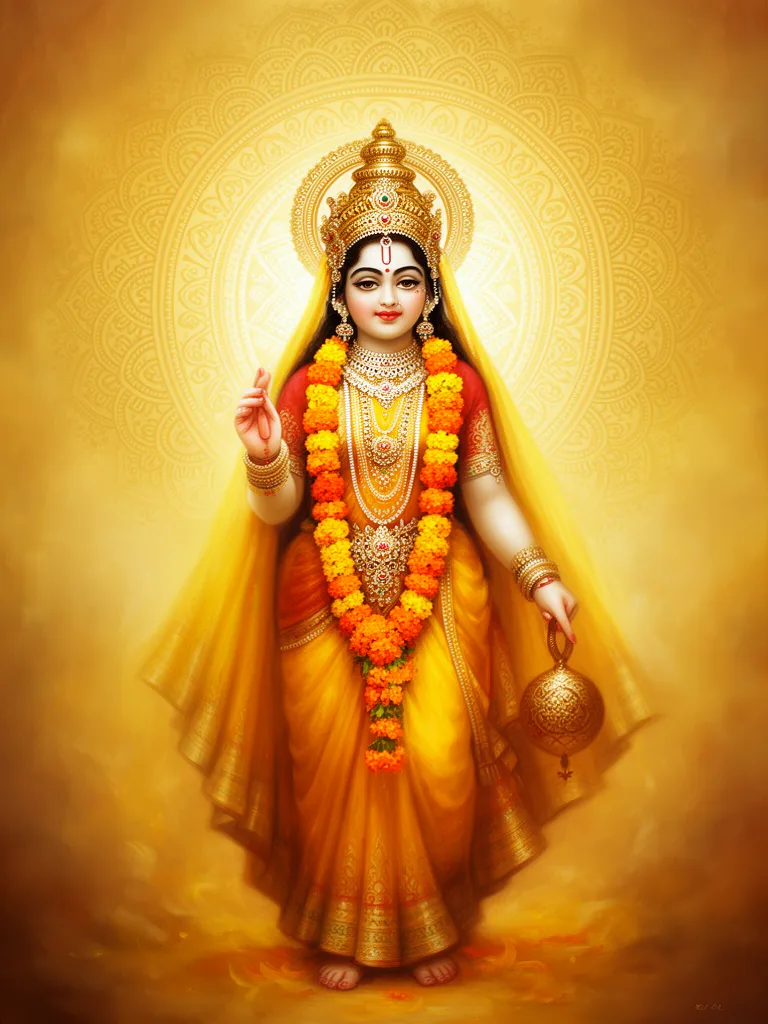
Where the word comes from
The name "Radha" derives from the Sanskrit root "radh," meaning "to prosper," "succeed," or "worship." It first appears in ancient Indian literature, gaining prominence in the Puranic period and becoming central to the Bhakti movement, particularly in the medieval era.
In depth
The shepherdess among the Gopia fslie)>herdesses) of Krislina. who was the wife of the god.
How different paths see it
What it means today
In the vibrant pantheon of Hindu devotion, Radha emerges not merely as a mythological figure but as a potent symbol of the soul's impassioned relationship with the divine. Her narrative, interwoven with that of Krishna, speaks to the core of bhakti, or devotional love, a spiritual path that emphasizes emotional engagement and ecstatic surrender. As Mircea Eliade noted in his studies of religious experience, the divine is often apprehended not through abstract intellect but through a profound, visceral connection, a sentiment Radha embodies in her every gesture. Her love for Krishna is not a passive affection but an active, consuming force, a testament to the transformative power of focused desire.
This archetype resonates deeply with the modern seeker grappling with the perceived separation between the material and the spiritual. Radha's unwavering focus on Krishna, her willingness to transcend societal norms and personal comfort in her pursuit, offers a compelling vision of spiritual commitment. In the psychological landscape explored by Carl Jung, such figures can represent the anima, the feminine principle within the psyche, or the projection of the soul's deepest longing for wholeness. Her story is a reminder that the path to the divine is often paved with an intensity of feeling, a willingness to be consumed by the object of one's devotion, much like a flame is consumed by its own burning. Her presence challenges us to consider whether our own spiritual endeavors are marked by such fervent aspiration, or if they remain tethered to a more guarded, intellectual approach.
RELATED_TERMS: Krishna, Gopis, Bhakti, Prema, Divine Love, Soul's Union, Spiritual Ecstasy, Yoga of Devotion
Related esoteric terms
Books on this concept







No reflections yet. Be the first.
Share your interpretation, experience, or question.
