Puja
Puja is a devotional ritual practiced in Hinduism, Jainism, Buddhism, and Sikhism, involving offerings, prayers, and symbolic gestures to honor a deity, saint, or sacred object. It is a fundamental expression of spiritual connection and gratitude, often performed daily in homes and temples.
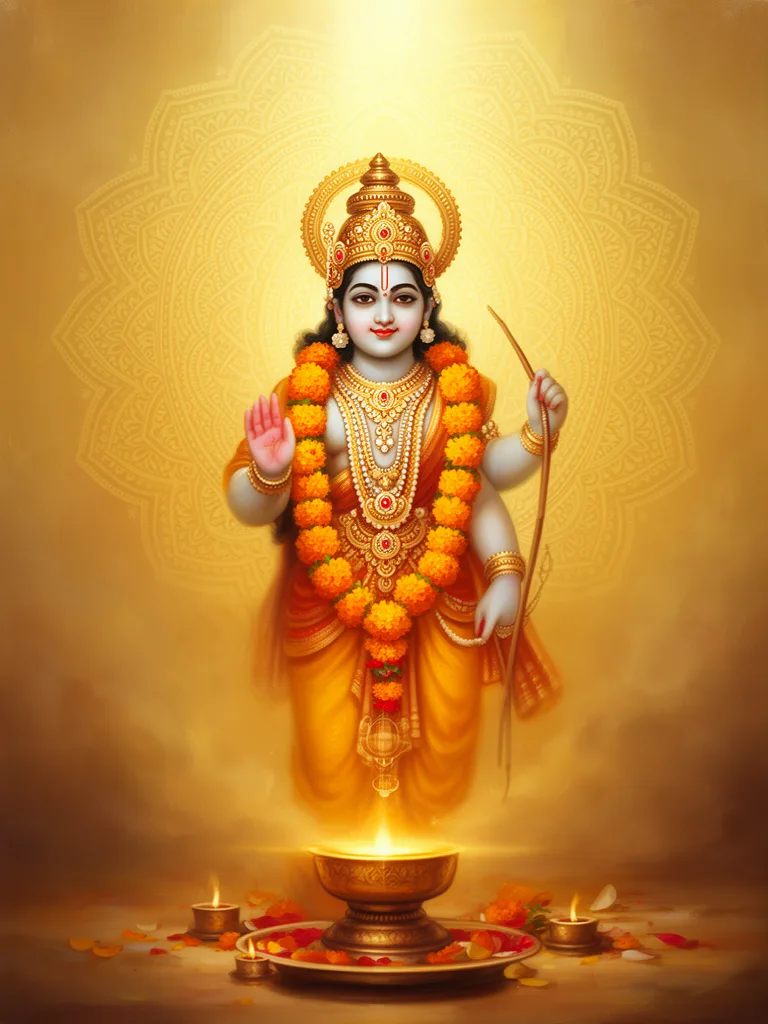
Where the word comes from
The Sanskrit term "Puja" (पूजा) derives from the root "pūj," meaning "to honor," "to worship," or "to revere." It signifies an act of veneration and respect. The practice is ancient, with roots traceable to Vedic rituals, though its formalized structure evolved over centuries.
In depth
An olferiufi: worship and divine honours offered to an idol or something sacred.
How different paths see it
What it means today
The term "Puja," originating from Sanskrit, translates to the act of worship, honor, and veneration. In its Hindu context, it is far more than a perfunctory ritual; it is a dynamic engagement with the sacred, a means by which the devotee invites the divine into the immediate sphere of their life. Mircea Eliade, in his seminal work The Sacred and the Profane, elucidated how such rituals serve to re-create a sacred space and time, separating it from the profane everyday. Puja achieves this through a meticulous choreography of actions: the purification of the space and the self, the adornment of the deity's image or symbol, the offering of flowers, incense, food, and water, and the recitation of mantras.
This practice is not limited to a singular form; it is as varied as the pantheon of Hindu deities themselves. A simple home puja might involve lighting a lamp and offering a single flower to a household shrine, while a temple puja can be a grand, multi-day affair involving a retinue of priests and elaborate processions. The essence, however, remains the same: the creation of a relationship. It is an active dialogue, a tangible expression of love and surrender. As Ananda Coomaraswamy observed, the ritual act is a form of participation in the divine order. The offerings, often simple items from the earth, are elevated through the intention behind them, becoming conduits of spiritual energy. This act of giving, of sharing one's resources and time, is itself a form of spiritual discipline, cultivating detachment from material possessions and fostering a sense of abundance derived from the divine.
For the modern seeker, grappling with the fragmented nature of contemporary existence, the structured devotion of puja offers a potent antidote. It provides a framework for mindfulness, a way to anchor the wandering mind in a singular focus of reverence. It reminds us that the sacred is not a distant abstraction, but something that can be actively invoked and experienced in the present moment, through deliberate acts of beauty and devotion. The transformation of the ordinary, the mundane act of preparing food or arranging flowers, into a sacred offering, imbues life with a profound sense of purpose and connection. It is in these very acts of humble service that the divine is most palpably met.
Related esoteric terms
Books on this concept








No reflections yet. Be the first.
Share your interpretation, experience, or question.
