Moira
Moira, in Hellenistic thought, refers to fate or destiny, a governing principle that shapes human actions, experiences, and the unfolding of life. It is understood as an impersonal, inexorable force, distinct from the ethical causality of Karma, representing a predetermined cosmic order.
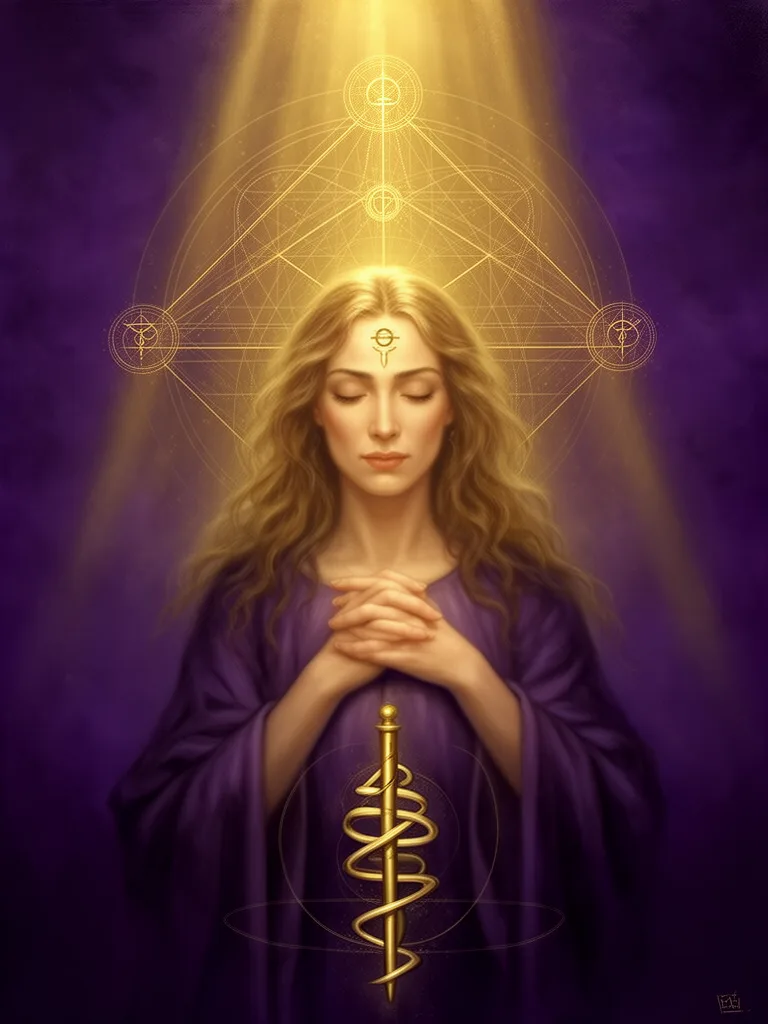
Where the word comes from
The term "Moira" derives from the Ancient Greek word "μοῖρα" (moira), meaning "part," "share," or "lot." It is often associated with the Moirai, the three Fates in Greek mythology who spun, measured, and cut the thread of life. The concept predates classical Greek literature, appearing in early Indo-European roots related to division and apportionment.
In depth
The same as the Latin Fatum — fate, destiny, the power wliich rules over the actions, sufferings, the life and struggles of men. P)Ut this is not Karma; it is only one of its agent-forces.
How different paths see it
What it means today
The term Moira, a cornerstone of Hellenistic understanding, invites us to consider the architecture of existence beyond the immediate calculus of cause and effect. It is not simply the consequence of our deeds, as in the ethical engine of Karma, but the very framework within which those deeds occur. Think of it as the unchangeable laws of physics governing the flight of an arrow, distinct from the archer's intent or the target's vulnerability.
Mircea Eliade, in his explorations of the sacred and the profane, often touched upon the pervasive human need to perceive order in the chaos of existence. Moira represents one such ancient attempt to map this order, a cosmic decree that imbues life with a sense of inevitability, a recognition that not all is subject to our will or even our moral accounting. It is the silent hum of the universe, the rhythm to which all things dance, whether they are aware of it or not.
This concept, unlike the more personalistic divine plans found in some theological systems, often carries an impersonal, almost elemental weight. It is akin to the Stoic understanding of logos, a rational principle that pervades all things, dictating events with an impartial logic. For the ancient Greeks, understanding Moira was not about rebellion, but about acceptance and alignment, a wisdom that sought to live in harmony with the cosmic flow, rather than against it. It is a reminder that our individual agency, while real, is situated within a larger, pre-existing design, a grand narrative whose author and ultimate purpose remain veiled.
The challenge for the modern seeker is to engage with Moira not as a fatalistic resignation, but as an invitation to contemplate the vastness of forces beyond our immediate grasp. It encourages a humility before the mystery of being, a recognition that our personal dramas are woven into a cosmic fabric of immense scale and intricate design. To understand Moira is to acknowledge the silent, pervasive currents that shape our reality, urging us toward a deeper attunement with the world's inherent order.
RELATED_TERMS: Fate, Destiny, Providence, Niyati, Logos, Cosmic Order, Determinism, Necessity
Related esoteric terms
Books on this concept








No reflections yet. Be the first.
Share your interpretation, experience, or question.
