Major Arcana
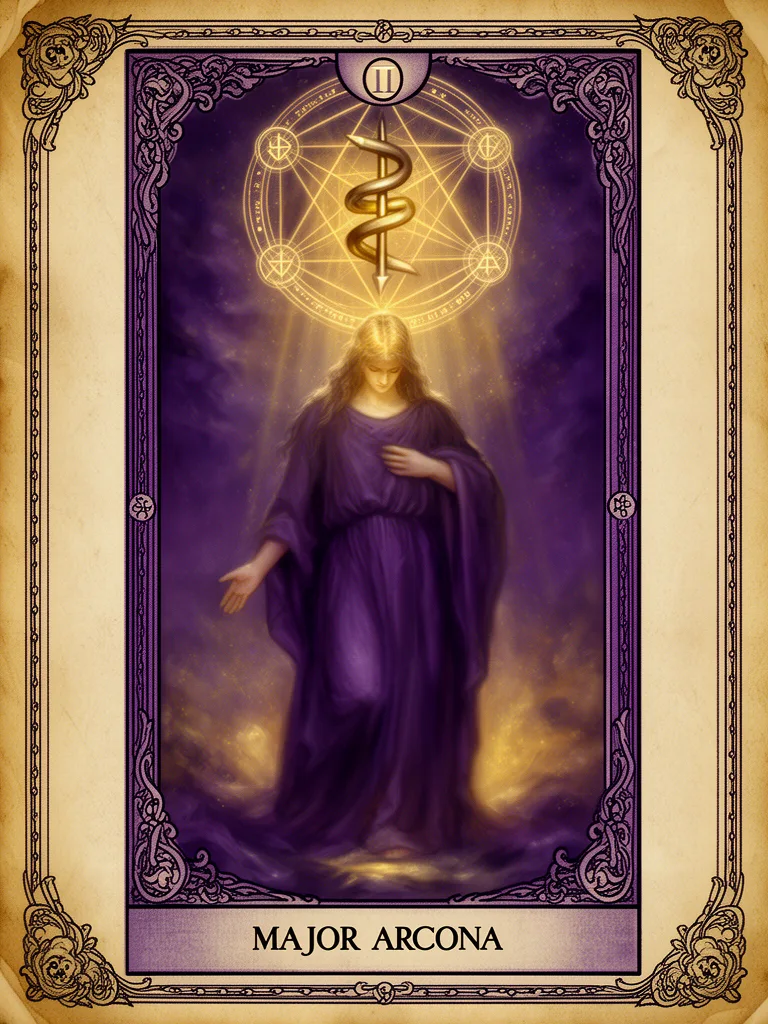
The Major Arcana are the 22 principal cards of a tarot deck, often seen as archetypal symbols representing stages of the human journey, spiritual lessons, and universal forces. They are distinct from the Minor Arcana, which represent more mundane events and circumstances.
Where the word comes from
The term "Major Arcana" is a modern coinage, appearing in the late 19th century, likely within occult circles influenced by esoteric interpretations of the tarot. It signifies the "greater secrets" or "major mysteries" within the deck's symbolic system, distinguishing them from the "minor" or lesser secrets of the suits.
In depth
The Major Arcana are the named cards in a cartomantic tarot pack. There are usually 22 such cards in a standard 78-card pack, typically numbered from 0 to 21 (or 1 to 21, with the Fool numbered as 0). Although the cards correspond to the trump cards of a pack used for playing tarot card games, the term 'Major Arcana' is rarely used by players and is typically associated exclusively with use for divination. The Major Arcana are complemented by the Minor Arcana—the 56 unnamed cards of the tarot deck...
How different paths see it
What it means today
The Major Arcana, those twenty-two grand figures in the tarot deck, are less a tool for predicting the minutiae of daily life and more a profound symbolic grammar of existence itself. They echo Mircea Eliade's concept of the hierophany, those sacred appearances that reveal the structure of reality. Each card, from the primal potential of The Fool to the completion embodied by The World, represents a distinct phase in the unfolding of consciousness, a cosmic drama played out on a personal stage.
These archetypes, as Carl Jung might have recognized, are not mere inventions but expressions of the collective unconscious, universal patterns of human experience that resonate across cultures and epochs. They speak a language that predates spoken words, a visual lexicon of the soul's journey. Think of The High Priestess, the keeper of hidden knowledge, or The Hermit, the solitary seeker of inner truth. These are not characters but states of being, symbolic encounters with the forces that shape our inner and outer worlds.
The Hermetic tradition, in particular, saw the tarot as a key to unlocking the secrets of the universe, a visual representation of the alchemical process of transmutation, the turning of base metal into gold, or more accurately, the transformation of the mundane self into a divine spark. The cards become a map for the Great Work, the arduous but ultimately liberating process of spiritual development. They invite contemplation, introspection, and a recognition of the profound interconnectedness of all things. To engage with the Major Arcana is to engage with the ancient wisdom that reminds us we are not merely passive observers of life, but active participants in a cosmic dance of becoming. Their enduring power lies in their ability to illuminate the path toward self-understanding, even in the most bewildering of times.
RELATED_TERMS: Archetypes, The Fool, The World, The Great Work, Collective Unconscious, Spiritual Journey, Initiation, Symbolism
Related esoteric terms
Books on this concept


No reflections yet. Be the first.
Share your interpretation, experience, or question.
