Lila
Lila is a Sanskrit term meaning "play" or "sport," often used in Hinduism to describe the divine cosmic activity as a playful, spontaneous unfolding of existence. It suggests that creation and divine action are not driven by necessity or labor, but by an inherent, joyful expression of being.
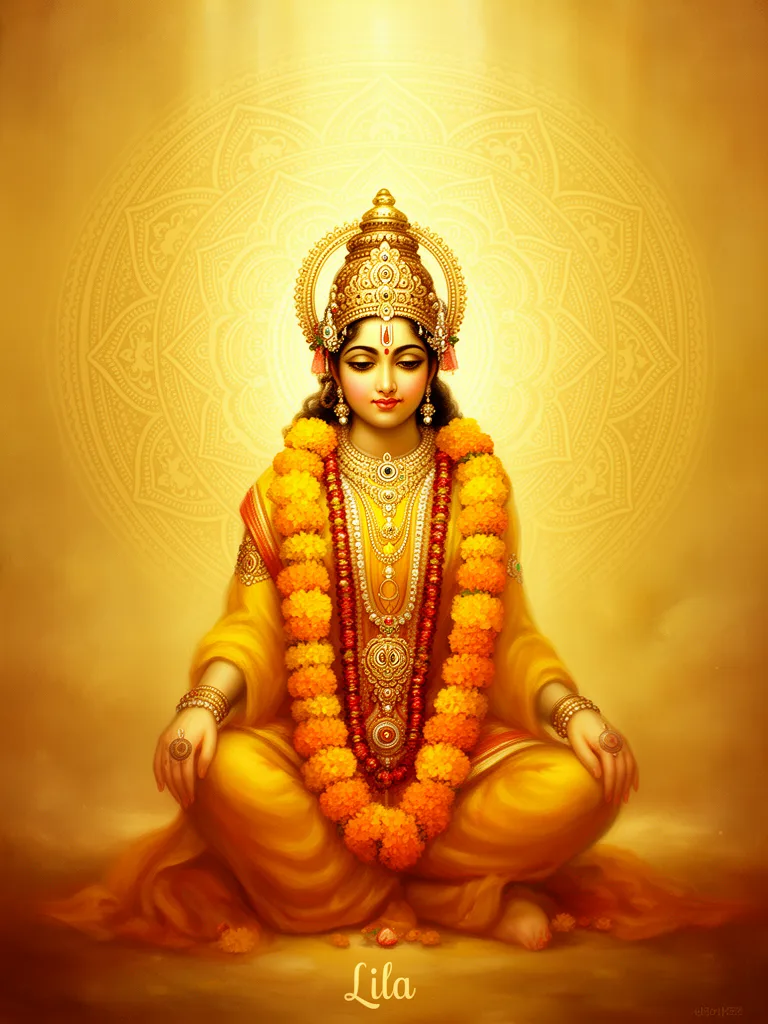
Where the word comes from
The word "lila" originates from the Sanskrit root lī, meaning "to play, to sport, to act." It signifies a divine, effortless, and joyous activity. The concept is deeply embedded in Vedic and Puranic literature, appearing in philosophical and theological discussions from ancient times.
In depth
Sport, literally; or pa.stime. In the orthodox Hindu Scriptures it is explained that "the acts of the divinity are lila", or sport.
How different paths see it
What it means today
The Sanskrit term lila, often translated as "play" or "sport," offers a profound counterpoint to the often grim, labor-intensive conceptions of divinity and creation found in some Western traditions. In the Hindu worldview, particularly as elaborated in texts like the Bhagavad Gita and the Bhagavata Purana, the universe is not the result of a cosmic builder toiling with blueprints, but rather the spontaneous, effortless, and joyful expression of Brahman, the Absolute. Mircea Eliade, in his exploration of sacred time, touches upon the cyclical nature of creation and dissolution, which can be seen as the grand gestures within this divine play.
This concept invites us to consider our own creative endeavors not as arduous duties, but as potential echoes of this divine sport. When a musician improvises, a painter loses themselves in their canvas, or a child builds a fantastical castle from sand, are they not, in a miniature way, participating in lila? The notion suggests that the divine is not a distant, stern ruler, but an immanent, joyful presence whose very being is an act of creative unfolding. This perspective shifts the emphasis from striving for salvation through rigorous adherence to law, to recognizing the divine within the very flow and spontaneity of existence. As Swami Vivekananda, a key interpreter of Vedanta for the West, often emphasized the inherent divinity within all beings, the idea of lila provides a framework for understanding that divinity not as static perfection, but as dynamic, joyful expression. It encourages a release from the anxiety of cosmic purpose, suggesting that existence itself, in its myriad forms and transformations, is the ultimate divine art.
The implications for the modern seeker are substantial. If the cosmos is a divine play, then the perceived suffering and challenges within it can be viewed not as divine punishment, but as part of the intricate, unfolding narrative of this cosmic sport. This doesn't negate the reality of pain, but it reframes our relationship to it, allowing for a greater sense of acceptance and even wonder. It encourages a posture of engagement with life, not as a grim trial, but as an opportunity to participate in the ongoing, radiant manifestation of being.
RELATED_TERMS: Brahman, Atman, Maya, Shakti, Yoga, Vedanta, Moksha, Dharma
Related esoteric terms
Books on this concept








No reflections yet. Be the first.
Share your interpretation, experience, or question.
