L. W. de Laurence
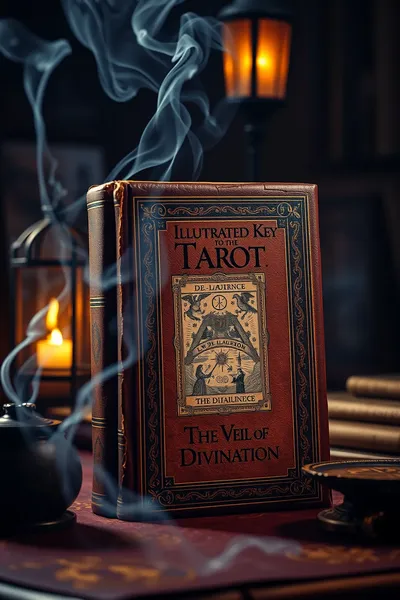
L. W. de Laurence was an American occult publisher and author active in the early 20th century. He popularized esoteric teachings, particularly Hermeticism, through prolific writings and a mail-order business, often facing legal challenges and accusations of fraud and cult leadership.
Where the word comes from
The name "L. W. de Laurence" is a personal identifier, not derived from ancient roots. Laurance likely originates from the Latin "Laurentius," meaning "from Laurentum." William is of Germanic origin, meaning "resolute protector." The "de" suggests a noble or territorial connection, though in this context, it was likely adopted for stylistic flair.
In depth
Lauron William de Laurence (31 October 1868 – 11 September 1936) was an American hypnotist, occult author and publisher, and a self styled spiritual authority who gained notoriety in the early 20th century as both a cult leader and promoter of esoteric teachings. He was arrested multiple times over the course of his career, most notably in 1912 for operating the Order of the Black Rose, a cult accused of physically and mentally abusing its members, distributing narcotics, and engaging in trance induced...
How different paths see it
What it means today
L. W. de Laurence occupies a peculiar and often disreputable niche in the history of Western esotericism. His name, more than a mere label, conjures a specific era of occultism—one where the once-guarded secrets of Hermeticism, alchemy, and ceremonial magic were increasingly packaged and sold through the burgeoning mechanisms of mass media and mail-order commerce. He was a figure of immense energy and questionable ethics, a self-styled guru who, like a latter-day alchemist, sought to transmute the raw materials of public curiosity into gold, both literal and figurative.
His prolific output, often reprinting and reinterpreting foundational texts of the Hermetic tradition, played a crucial role in democratizing access to these complex ideas. For individuals in isolated towns or those outside established intellectual circles, de Laurence's catalogs offered a portal into a world of ancient wisdom, lunar influences, and the potent force of the human will. Scholars like Mircea Eliade, in his explorations of shamanism and the eternal return, recognized the persistent human drive to connect with archaic cosmologies. De Laurence, in his own unrefined way, tapped into this fundamental impulse, albeit often through sensationalized prose and promises of immediate magical empowerment.
Yet, de Laurence's story is also a cautionary tale, a stark reminder of the perennial challenge of discerning authentic spiritual guidance from charlatanry. His numerous legal troubles, accusations of fraud, and the controversial nature of his organizations point to a darker side of the occult marketplace. This duality—the genuine diffusion of esoteric knowledge alongside its exploitation—is a recurring theme. The Sufi tradition, for instance, with its emphasis on the guidance of a living master (shaykh) and the rigorous inner discipline required for spiritual progress, stands in stark contrast to de Laurence's more transactional approach. Similarly, the meticulous, often monastic, transmission of Buddhist teachings, or the deeply personal, experiential path of Christian mystics, highlights the profound difference between true initiation and mere intellectual or commercial engagement with spiritual concepts. De Laurence’s legacy forces us to consider the conditions under which esoteric traditions flourish and when they become susceptible to distortion, a question as relevant today as it was at the dawn of the 20th century.
RELATED_TERMS: Hermeticism, The Kybalion, Ceremonial Magic, Occultism, Esoteric Publishing, New Thought, Spiritualism
Related esoteric terms
Books on this concept







No reflections yet. Be the first.
Share your interpretation, experience, or question.
