Kashmir Shaivism
A philosophical and spiritual tradition originating in the Kashmir region of India, it presents a monistic understanding of the divine, viewing consciousness as the fundamental reality underlying all existence. This non-dual perspective synthesizes elements of tantra, yoga, and Vedanta.
Where the word comes from
The term "Kashmir Shaivism" is a modern scholarly designation, not an ancient self-identifier. It refers to Shaivite (devotional to Shiva) traditions that flourished in the Kashmir Valley. Its roots lie in Sanskrit terms like "Shaiva" (related to Shiva) and the geographical identifier "Kashmir."
In depth
Kashmir Shaivism is a 19th-century umbrella-term for a body of Sanskrit exegetical literature of non-dual Shaiva-Shakta tantric and monistic religious traditions from Kashmir, "principally the Trika and the Krama," both subschools of the Kaula-tradition. This exegetical tradition developed in Kashmir after 850 CE, as an adaptation to upper-class Hindu norms of 'wild' tantric Kaula traditions, replacing Shaiva Siddhanta as the dominant form of Saivism. It includes the Spanda ('Divine vibration...
How different paths see it
What it means today
Kashmir Shaivism, a complex and profound philosophical system that bloomed in the verdant valleys of Kashmir, offers a vision of reality that is both radically immanent and transcendent. It is not merely a religion but a comprehensive cosmology, a sophisticated epistemology, and a potent path to liberation. Unlike dualistic systems that posit a creator distinct from creation, Kashmir Shaivism, particularly through its Trika school, asserts that Shiva, the supreme consciousness, is the very substance of all that exists. The universe is not made by Shiva, but is Shiva as it appears.
This understanding draws parallels to the insights of thinkers like Mircea Eliade, who explored the sacred as the manifestation of the real, and Carl Jung, who recognized the archetypal unity of consciousness. The concept of Spanda, or divine vibration, central to this tradition, can be seen as an ancient articulation of the energetic substratum of existence, a notion that echoes in modern physics' understanding of the universe as a field of vibrating energies. The practice within Kashmir Shaivism, often involving meditation and contemplation on the nature of consciousness, aims to dissolve the illusory boundaries of the self and realize one's inherent identity with the divine. It challenges the modern individual's ingrained sense of separation, suggesting that liberation is not an achievement but a recognition of what already is.
The tradition teaches that the limitations we experience are not inherent flaws but rather the veils of ignorance or maya. By turning the gaze inward, by recognizing the divine light within one's own consciousness, these veils can be lifted. This introspective journey, guided by the wisdom of masters and the profound philosophical insights of texts like the Shiva Sutras and the Vijnana Bhairava Tantra, offers a path to experiencing the world not as a series of disconnected events but as the unified expression of a singular, blissful consciousness. It is a call to awaken to the fundamental oneness that underpins our perceived multiplicity.
Related esoteric terms
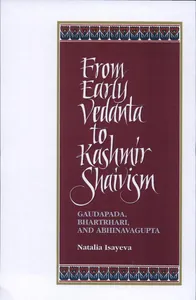
Books on this concept





No reflections yet. Be the first.
Share your interpretation, experience, or question.
