Kala
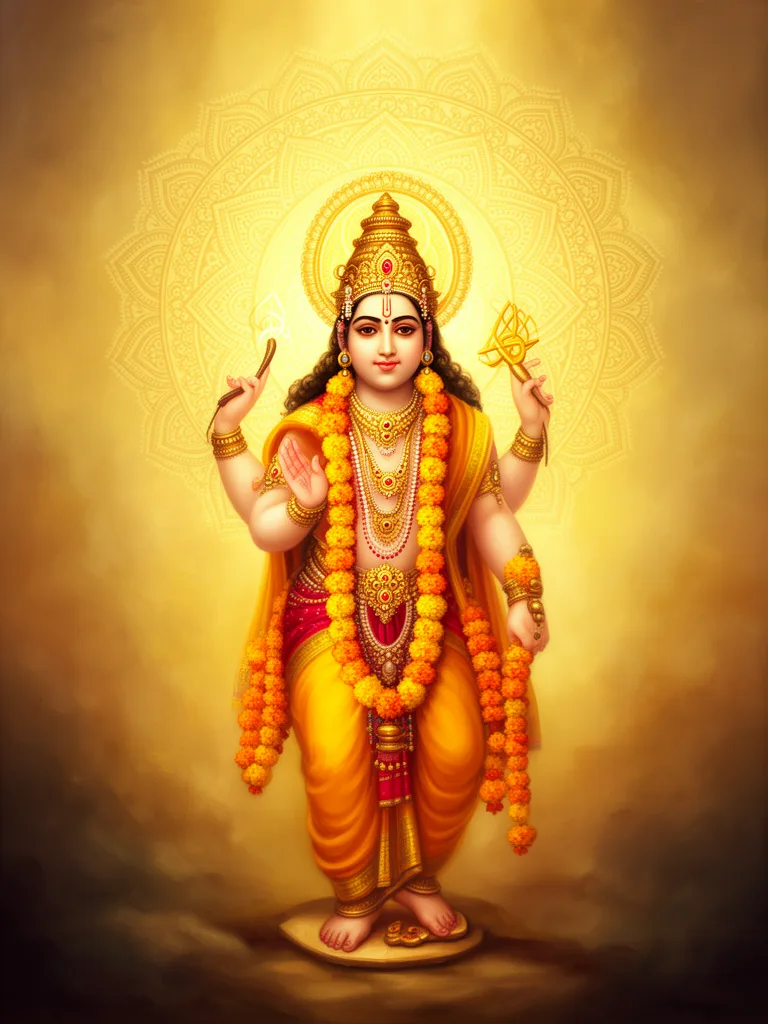
Kala signifies time, fate, and cyclical existence in Hindu thought. It represents the inexorable flow of moments, the predetermined course of events, and the cosmic cycles of creation and dissolution. Often personified as Yama, the god of death, Kala embodies the ultimate reckoning and the transient nature of all phenomena.
Where the word comes from
The Sanskrit word "Kala" derives from the root "kal," meaning "to count" or "to measure." It directly relates to the concept of time as a quantifiable and cyclical entity. In ancient Vedic texts, Kala appears as a fundamental cosmic principle, later personified as the deity associated with time and destiny.
In depth
Time, fate; a cycle and a proper name, or title given to Yama, King of the nether world and Judge of the Dead.
How different paths see it
What it means today
In the vast ocean of Hindu philosophy, Kala emerges as a profound meditation on the nature of existence itself, a concept that resonates with a deep, almost primal understanding of our place within the grand sweep of time. Blavatsky's definition, though concise, captures its multifaceted essence: time, fate, and the ultimate judge. This is not merely the ticking of a clock, but the very fabric of becoming, the ceaseless flux that shapes both the cosmos and the individual soul.
Mircea Eliade, in his seminal works on the history of religions, often explored the cyclical view of time prevalent in many ancient cultures, a perspective starkly contrasted with the linear, progressive march of time often assumed in Western thought. Kala embodies this cyclical understanding, a cosmic breath that expands and contracts, creating and dissolving worlds. It is the inexorable rhythm that governs the kalachakra, the wheel of time, upon which all beings are carried through countless births and deaths, each moment imbued with the weight of karma.
The personification of Kala as Yama, the King of the Nether World and Judge of the Dead, adds a potent ethical and existential dimension. Yama is not a malicious deity but a stern administrator of cosmic law, ensuring that actions have consequences that ripple through the currents of time. This echoes the Jungian concept of the shadow, the darker, often unacknowledged aspects of ourselves that must be confronted for true individuation. In confronting Yama, one confronts the totality of one's temporal existence, the accumulated weight of choices and their inevitable unfolding.
For the modern seeker, grappling with the ephemerality of life and the relentless march of change, understanding Kala offers a powerful antidote to existential dread. It suggests that impermanence is not a flaw but a fundamental characteristic of reality, a necessary condition for transformation. The cyclical nature of Kala invites a practice of detachment, recognizing that all phenomena, however solid they may appear, are transient. This is akin to the Buddhist concept of anicca, impermanence, which, when deeply understood, can lead to liberation from suffering. The awareness of Kala encourages us to live fully in each moment, knowing its fleeting beauty and its place within the eternal dance of creation and dissolution. It is a reminder that even in the face of inevitable endings, there is always the promise of renewal, a cosmic dawn following every twilight.
RELATED_TERMS: Karma, Samsara, Kalachakra, Maya, Dharma, Moksha, Yama, Anicca
Related esoteric terms
Books on this concept







No reflections yet. Be the first.
Share your interpretation, experience, or question.
