Joseph Fort Newton
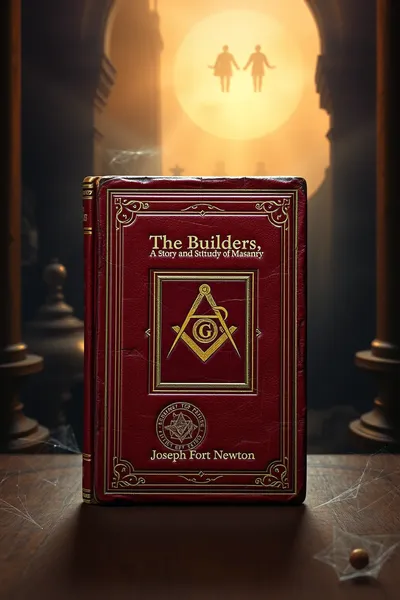
Joseph Fort Newton was an American minister and prolific author, deeply influential in Masonic thought. He explored the intersection of religion, philosophy, and esoteric traditions, advocating for a universalist spirituality that transcended sectarian divides. His writings aimed to bridge ancient wisdom with modern understanding.
Where the word comes from
The name "Joseph" is of Hebrew origin, meaning "He will add." "Fort" is a Latin word signifying "strong" or "powerful." "Newton" is an English surname derived from Old English, meaning "new town." The name itself carries connotations of spiritual augmentation and steadfastness.
In depth
Joseph Fort Newton (1880–1950) was an American Protestant minister and a prominent Masonic author. Newton was ordained a Baptist minister in 1895. After leaving Baptism he was associated with non-sectarian and Universalist churches, and in 1926 was ordained a deacon and priest in the Episcopal Church.
How different paths see it
What it means today
Joseph Fort Newton stands as a remarkable figure, a bridge-builder in the often-fractured terrain of spiritual seeking. Ordained in traditional Christian denominations, he nonetheless possessed a restless intellect that yearned for a wider vista, a more inclusive understanding of the divine. His prolific writings, particularly those engaging with Freemasonry, reveal a profound appreciation for symbolism and allegory, echoing the Hermetic tradition's emphasis on hidden meanings and correspondences. Mircea Eliade, in his studies of shamanism and archaic religions, often highlighted the universal human impulse to seek meaning beyond the empirical, a quest Newton clearly embodied.
Newton's approach was not one of dismissal towards established faiths, but rather an attempt to find the common luminous thread running through them. He saw in the rituals and teachings of Freemasonry, for instance, not a mere social fraternity, but a living repository of ancient wisdom, a symbolic drama designed to awaken the individual to their own spiritual potential. This resonates with Carl Jung's concept of archetypes, those universal patterns of the psyche that manifest across cultures and throughout history, providing a framework for understanding the shared symbolic language of humanity. Newton’s work suggests that true spiritual insight is less about dogma and more about the cultivation of a receptive consciousness, a willingness to perceive the sacred in the everyday. He invites us to consider that the "new town" of spiritual understanding is not a place to arrive at, but a continuous process of building, of adding to our perception of reality through disciplined contemplation and an open heart. His legacy is a call to see the universe not as a collection of disparate facts, but as a unified, divinely infused whole, waiting to be recognized.
RELATED_TERMS: Gnosis, Symbolism, Universalism, Mysticism, Esotericism, Hermeticism, Allegory, Spiritual Alchemy
Related esoteric terms
Books on this concept






No reflections yet. Be the first.
Share your interpretation, experience, or question.
