Gatha
A gatha is a type of Sanskrit verse, often a hymn or moral aphorism, central to ancient Indian religious and philosophical traditions. These metrical compositions served as vehicles for sacred knowledge, ethical teachings, and devotional expression, with specific forms like the Aryagiti denoting particular structures.
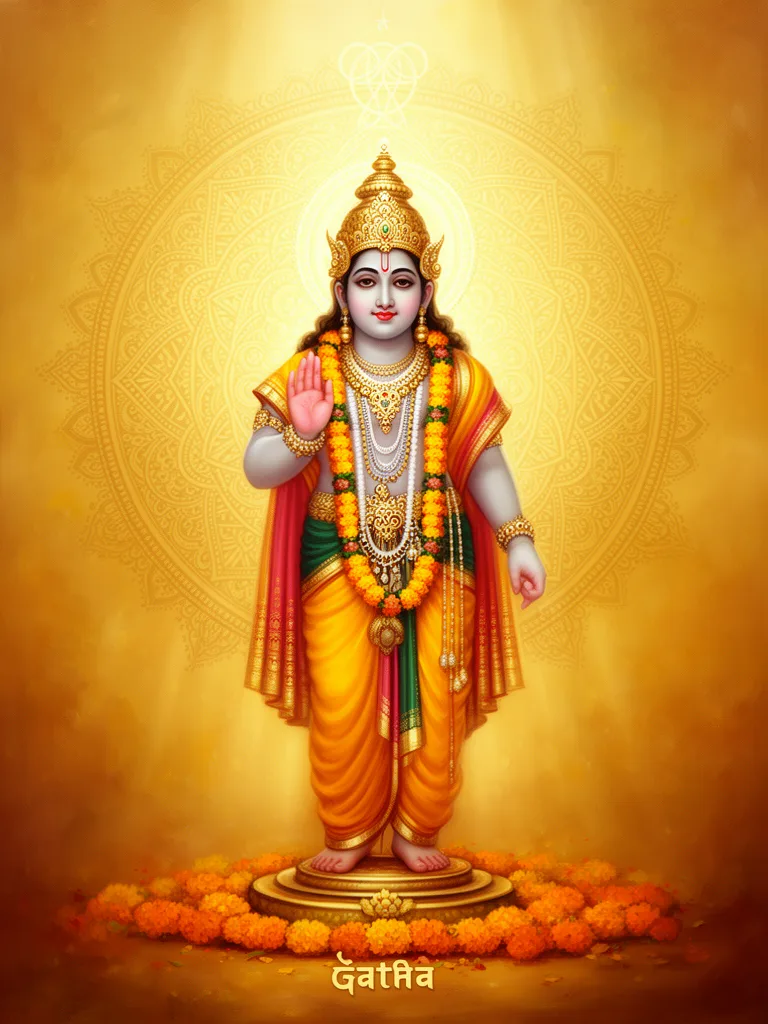
Where the word comes from
The Sanskrit word "gāthā" (गाथा) signifies a song, ballad, or narrative poem. Its roots likely lie in Proto-Indo-European, related to words for speaking or singing. The term appears in Vedic literature and gained prominence in post-Vedic texts, evolving to encompass metrical verses with profound spiritual and ethical content.
In depth
i\letrieal chants or hymns, consisting of moral aphorisms. A gatha of thirty-two words is called Aryagiti.
How different paths see it
What it means today
The gatha, a Sanskrit term for a metrical verse or hymn, offers a potent reminder of the enduring power of condensed wisdom. In an era saturated with information, the gatha’s form, often a moral aphorism or a devotional chant, champions the efficacy of brevity in conveying profound spiritual and ethical insights. Mircea Eliade, in his exploration of myth and ritual, would recognize the gatha’s role in preserving and transmitting sacred knowledge across generations, functioning much like a mnemonic device for the soul. These verses, like the carefully chosen words of a Sufi master or the pithy koans of Zen Buddhism, aim not for intellectual dissection but for experiential resonance. They are designed to lodge in the consciousness, acting as seeds for contemplation and guiding principles for conduct. The Aryagiti, a specific metrical form of the gatha, highlights the ancient appreciation for structure and rhythm in spiritual discourse, suggesting that the very cadence of the verse can amplify its meaning. This is akin to the musicality of Gregorian chant or the rhythmic chanting in Buddhist monasteries, where sound and form are inseparable from the spiritual message. The gatha’s enduring presence in Hindu traditions speaks to a timeless understanding that the most potent truths are often those that can be held, like a precious stone, in the palm of one’s mind, radiating their light through repetition and reflection. It invites us to consider how we might distill our own understanding into forms that are both beautiful and enduring.
Related esoteric terms
Books on this concept








No reflections yet. Be the first.
Share your interpretation, experience, or question.
