Fakir
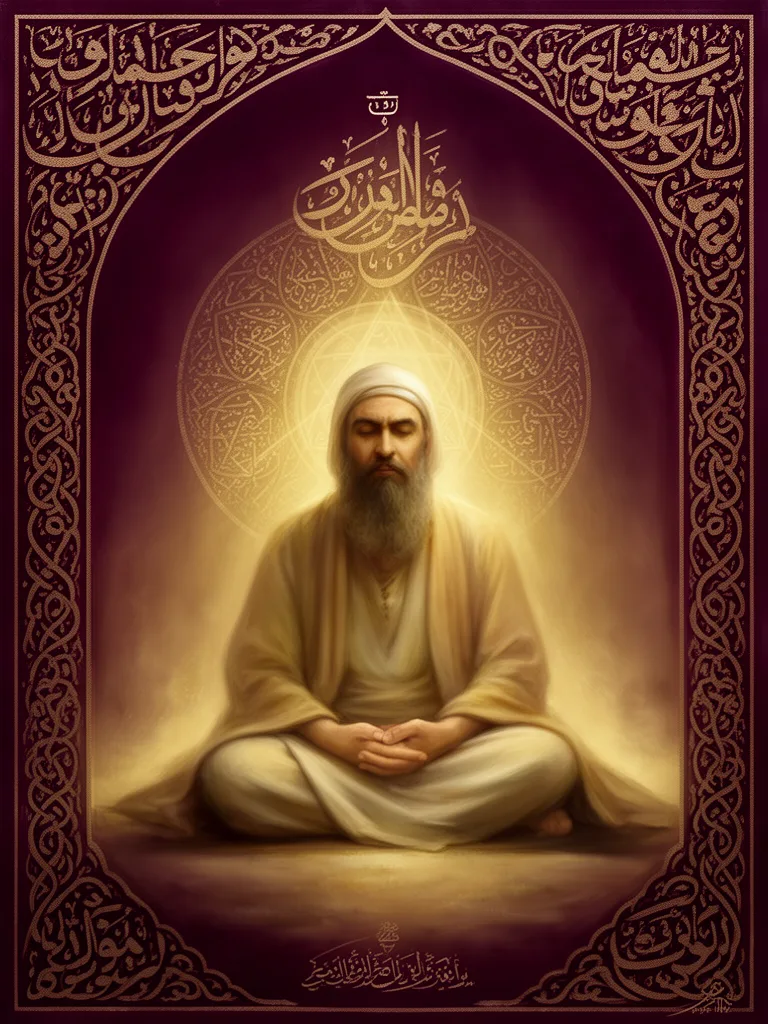
A Sufi ascetic, often associated with practices of extreme self-discipline and renunciation, aiming for spiritual union with God. The term is sometimes inaccurately applied to Hindu ascetics.
Where the word comes from
From the Arabic word "faqir," meaning "poor" or "needy," referring to one who has relinquished worldly possessions. It derives from the root "faqr," signifying poverty or indigence. The term gained prominence within Sufism to denote a dervish committed to spiritual mendicancy.
In depth
A ^Mussulman ascetic in India, a Maliometan "Yogi". The name is often applied, though erroneously, to Hindu ascetics; for strictly speaking only Mussuhnan ascetics are entitled to it. This loose way of calling things by general names was adopted in Isis Unveiled but is now altered. Falk, Cain Chcnul. A Kabbalistic Jew, reputed to have worked "miracles". Kenneth Mackenzie quotes in regard to him from the German ainialist Archenoilz' work on England (1788): — "There exists in Loudon an extraordinary man who for thirty years has been celebrated in Kab])alistic records. He is named Cain Cheinil Falk. A certain Count de Rautzow, lately dead in the service of France, with the rank of Field-Marshal, certifies that he has seen this Falk in Brunswick, and that evocations of spirits took place in the presence of credible witnessess. " These "spirits" were Elementals, whom Falk brought into view by the conjurations used by every Kabbalist. His son, Johann Frederich Falk, likewise a Jew, was also a Kabbalist of repute, and was once the head of a Kabbalist college in London. His occupation was that of a jeweler and appraiser of diamonds, and he was a wealthy man. To this day tinmy.stie writiiijrs and rare Kabbalistic works bi-queatlied by him to a trustee may be perused in a certain half-public library in London, by every genuine student of Occultism. Falk's own writings are still in ]MS., and some in cyijher.
How different paths see it
What it means today
The figure of the Fakir, particularly within the Sufi tradition, presents a potent archetype of spiritual renunciation. The term itself, rooted in the Arabic for "poor" or "needy," points to a deliberate embrace of indigence not as a state of lack, but as a profound spiritual strategy. Mircea Eliade, in his extensive studies of asceticism, highlights how such practices across cultures often serve to detach the practitioner from the mundane world, thereby opening a channel to the sacred. The Fakir, in this light, is not merely an ascetic but a seeker who understands that true wealth is found in the emptying of the self, a process that paradoxically leads to a fuller realization of divine presence.
The practices associated with some Fakirs, while often sensationalized, are in essence attempts to break the ordinary perceptual habits that bind consciousness to the material plane. This can involve intense meditation, prolonged vigils, and sometimes physical austerities that push the body to its limits, not for self-punishment, but to transcend its limitations and awaken a subtler awareness. This echoes the insights of Carl Jung, who saw asceticism as a way to confront and integrate the shadow aspects of the psyche, thereby achieving a more complete selfhood. The Fakir's journey is one of radical self-discipline, a conscious dismantling of egoic structures to make space for the divine. As Annemarie Schimmel notes in her work on Sufism, the dervish’s path is one of "dying before one dies," a metaphor for the dissolution of the limited self in preparation for experiencing the boundless reality of God. The challenge for the modern seeker is to understand this intentional poverty and discipline not as mere historical curiosities, but as profound psychological and spiritual technologies for achieving inner liberation.
RELATED_TERMS: Dervish, Asceticism, Renunciation, Sufism, Spiritual Poverty, Self-Discipline, Mysticism ---
Related esoteric terms
Books on this concept



No reflections yet. Be the first.
Share your interpretation, experience, or question.
