England
A historical term referring to a place of alchemical learning and practice, particularly associated with medieval England and figures like Ramon Lull and Cremer. It signifies a lineage of esoteric knowledge transmission through apprenticeship and shared discovery.
Where the word comes from
The term "England" in this context is not derived from its modern geographical or political meaning but rather from a specific historical association with the Rosicrucian and alchemical traditions. It emerged within the esoteric literature of the late medieval and early modern periods, referencing a location where secret knowledge was preserved and passed down.
In depth
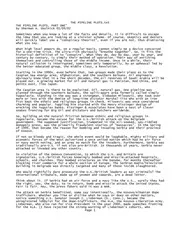
Lully divulged to Cremer the secrets of the stone, for which .service the monastery offered daily i)rayers for him. Cremer, says the Royal Masonic Cj/cloprdia, "having obtained a profound knowledge of the secrets of Alehemy. Ix'came a most celebrated adept in occult philosopliv lived to a good old age. and died in tlie nngn of King Edward III." OLOSSARY 33
How different paths see it
What it means today
Blavatsky's inclusion of "England" in this esoteric glossary, referencing the alchemical pursuits of figures like Cremer and the patronage of King Edward III, offers a fascinating glimpse into how geographical locations can become imbued with symbolic meaning within occult traditions. It's not the England of parliamentary debates or industrial revolutions that concerns the esotericist, but rather a specific, almost mythic, iteration of the island kingdom—a crucible where the Great Work was pursued in earnest. This echoes Mircea Eliade's observations on sacred geography, where certain places become imbued with a numinous quality, serving as points of contact between the mundane and the divine, or in this case, between the ordinary and the extraordinary secrets of nature.
The narrative of Ramon Lull divulging alchemical secrets to Cremer, who then "lived to a good old age, and died in the reign of King Edward III," paints a picture of a continuous, albeit clandestine, stream of knowledge. It speaks to the importance of lineage and mentorship, a theme central to many esoteric paths, from the Sufi transmission of baraka to the Buddhist guru-disciple relationship. The "secrets of the stone" were not abstract philosophical concepts but tangible, practical wisdom, passed down through a community, perhaps even a guild, dedicated to the transmutation of matter and spirit. This notion of a hidden academy, operating within the very fabric of established society, is a recurring motif in esoteric history, suggesting that profound wisdom often thrives in the shadows, nurtured by those who dedicate their lives to its pursuit. The monastery, offering "daily prayers," further contextualizes this within a spiritual framework, underscoring that the alchemical quest was not merely materialistic but deeply intertwined with devotional practice.
This conceptualization of "England" as an alchemical center invites us to consider how contemporary seekers might identify their own "sacred geographies"—places or communities where the spark of esoteric understanding can be fanned into flame. It suggests that the pursuit of wisdom is not a solitary endeavor confined to dusty tomes, but a dynamic process of connection, discovery, and perhaps even, as Blavatsky implies, a form of historical inheritance.
RELATED_TERMS: Alchemy, Hermeticism, Rosicrucianism, Great Work, Transmutation, Esoteric Lineage, Sacred Geography, Occult Philosophy
Related esoteric terms
Books on this concept
![The New-England primre [sic] improved.](/img/thumb/the-new-england-primre-sic-improved.webp)





No reflections yet. Be the first.
Share your interpretation, experience, or question.
