Egypt
Rajas is a Sanskrit term referring to one of the three fundamental qualities or "gunas" that constitute nature and matter in Hindu philosophy. It represents dynamism, passion, and activity, driving change and the formation of the material world.
Where the word comes from
The term "Rajas" originates from Sanskrit (गुण, guṇa), meaning "quality," "attribute," or "thread." It is one of the three gunas (Sattva, Rajas, Tamas) that form the fabric of existence in Samkhya and Vedanta philosophies. Rajas signifies motion, energy, and passion.
In depth
Rajas (Sk.). The "quality of foulness" (i.e., differentiation), and activity in the Purdnas. One of the three Gunas or divisions in the correlations of matter and nature, representing form and change. Rajasas ^S7.-.). The elder Agnishwattas—t\\o Fire-Pitris. "fire" standing as a symbol of enlightenment and intellect. Raja- Yoga ASk.). The true system of developing psychic and spiritual powers and union with one's Higher Self— or the Supreme Spirit, as the profane express it. The exercise, regulation and concentration of thought. Raja-Yoga is opposed to Hatha-Yoga, the physical or psychophysiological training in asceticism.
How different paths see it
What it means today
Blavatsky's inclusion of "Rajas" within a definition that also touches upon "Raja-Yoga" and the "Fire-Pitris" highlights a sophisticated understanding of the interconnectedness of cosmic principles and their manifestation in human endeavor. Rajas, in its essence, is the stirring of the primordial energy that animates the universe. It is the quality of "foulness" not in a moral sense, but in its role as the agent of differentiation, the very force that separates the undifferentiated Absolute into the manifold. This is the dynamism that underlies all existence, the ceaseless flux that philosophers like Mircea Eliade observed as the sacred dynamism of the cosmos.
In the context of Raja-Yoga, the pursuit of union with the Higher Self, understanding Rajas is crucial. It is the very energy that the yogi must learn to harness and redirect, not to extinguish, but to transmute. This is akin to the alchemical process, where base metals are transformed into gold. The passionate drive that can lead to worldly entanglement, when refined through concentration and spiritual discipline, becomes the potent force propelling the aspirant towards liberation. It is the "fire" of intellect and enlightenment, as Blavatsky notes, that distinguishes the "Fire-Pitris," the elder spiritual progenitors. This fiery nature of Rajas is what allows for the spark of consciousness to ignite, to perceive, and to act. Without this energetic principle, the universe would be static, an unmanifest potential. It is the restless heart of creation, the pulse that beats through all things, urging them into being and into change. To understand Rajas is to understand the fundamental drive behind all phenomena, both mundane and divine.
RELATED_TERMS: Sattva, Tamas, Guna, Prakriti, Purusha, Karma, Yoga, Manifestation
Related esoteric terms
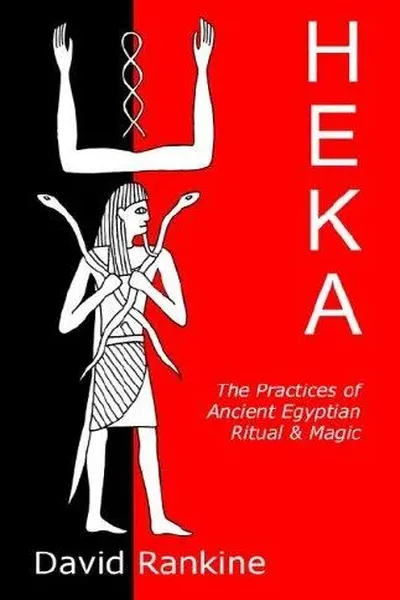
Books on this concept


![The Kybalion [A Study Of The Hermetic Philosophy Of Ancient Egypt And Greece].pdf (PDFy mirror)](/img/thumb/the-kybalion-a-study-of-the-hermetic-philosophy-of-ancient-egypt-and-greece-pdf-pdfy-mirror.webp)


No reflections yet. Be the first.
Share your interpretation, experience, or question.
