Ed Decker
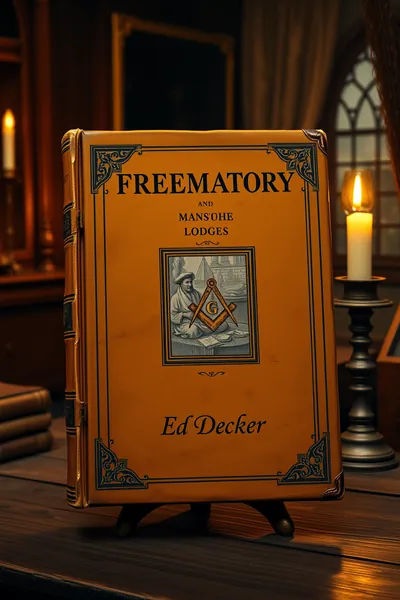
Ed Decker was an American author and evangelist known for his critical examinations of the Church of Jesus Christ of Latter-day Saints and Freemasonry, often framed through a lens of esoteric or hidden doctrines. His work focused on alleged discrepancies and clandestine aspects within these organizations.
Where the word comes from
The name "Ed Decker" is of English origin, a given name and surname. "Edward" derives from Old English "ēadweard," meaning "rich guard." "Decker" is a Germanic occupational surname, likely referring to a maker of deck chairs or a roofer. The term itself has no ancient esoteric etymology.
In depth
John Edward Decker Jr. (November 25, 1935 – December 18, 2025) was an American counterculture apologist and evangelist known for his studies, books and public presentations, of the negative aspects of the Church of Jesus Christ of Latter-day Saints (LDS Church) and Freemasonry. Decker was a former member of the LDS Church, and prominent early member of a Christian group for ex-Mormons called Saints Alive in Jesus. His most well-known book is The God Makers: A Shocking Expose of What the Mormon Church...
How different paths see it
What it means today
The inclusion of Ed Decker in an esoteric lexicon might initially seem incongruous, as he was not a practitioner or originator of ancient traditions but rather a commentator on their modern manifestations. Yet, his work, particularly his critical analyses of Freemasonry and Mormonism, touches upon a core concern within esoteric thought: the nature of hidden knowledge and the potential for its manipulation or misinterpretation. Mircea Eliade, in his exploration of the sacred and profane, often noted how societal structures, including religious and fraternal organizations, can become repositories of myth and ritual, sometimes obscuring their original intent.
Decker’s approach, while polemical, can be seen as a secular echo of the alchemical process of separation and purification—attempting to distill what he perceived as "truth" from what he considered "deception." His focus on "the God Makers" and the alleged hidden doctrines of the LDS Church speaks to a perennial fascination with the esoteric origins of belief systems. Carl Jung's concept of the collective unconscious and its archetypal patterns might offer a framework for understanding why certain symbols and narratives within Freemasonry, for instance, resonate so deeply and are often imbued with layers of meaning beyond their literal interpretation.
Decker’s writings function as a kind of inverted gnosis, seeking not to reveal a divine truth but to expose what he believed to be a hidden, detrimental reality. This mirrors, in a dark reflection, the Gnostic quest to uncover the true nature of the divine and the flawed demiurge. While his conclusions are contested, the very act of scrutinizing the esoteric claims of established groups underscores the enduring human desire to understand the unseen forces and secret histories that shape our world. His work, therefore, serves as a case study in how modern anxieties about hidden power and knowledge manifest in critiques of seemingly conventional institutions. The perennial search for authenticity, whether in ancient texts or contemporary organizations, continues to drive inquiry into the veiled aspects of human experience.
Related esoteric terms
Books on this concept



No reflections yet. Be the first.
Share your interpretation, experience, or question.
