Devapi
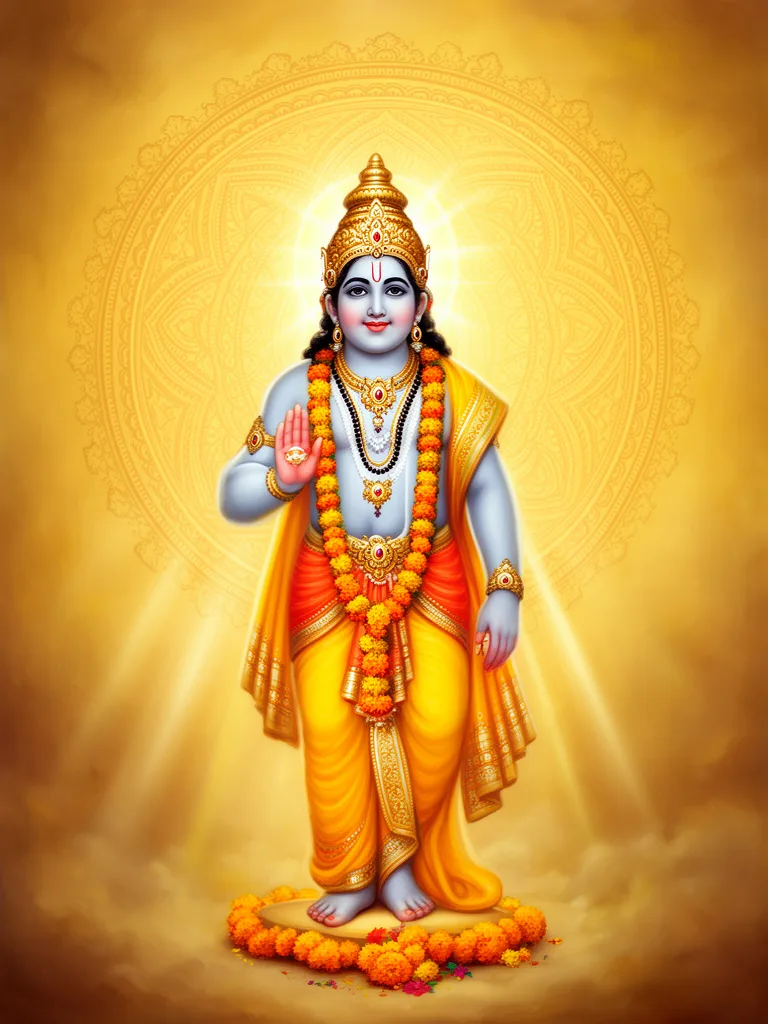
Devapi is a legendary Hindu sage from the Kuru race, believed to live through multiple cosmic ages alongside another sage, Maru. They are said to reside in a Himalayan retreat called Kalapa, awaiting a future cosmic event, symbolizing enduring wisdom and spiritual continuity.
Where the word comes from
The name "Devapi" originates from Sanskrit, a compound of "deva" (god) and "api" (suffix indicating possession or relation, or sometimes a particle of emphasis). It can be interpreted as "god-like" or "related to the divine." The term appears in ancient Hindu scriptures, notably the Puranas.
In depth
A Sanskrit Sage of tlie race of Kuru, who, together with another Sage (^Nloru). is supposed to live throughout the four ages and until the eoming of Maitrcifd Buddha, or Kidhi (the last Avatar of Vishnu) ; who. Ukc all the i<aviuurs of the ^yorld in their last appearance, like Sosiosh of the Zoroastrians and the liidcr of St. John's Rt v(latioi\, will appear .seated on a Whiir Ilorst . The two. Devapi and Morn, are supposed to live in a Himalayan n'treat called Kalapa or Katapa. This is a Puranic allegory. Devarshis, or D<i'a-rishi (Six.). Lit., "gods rishis"; the divine or god! ike .saints, tho.se sages who attain a fully divine nature on earth.
How different paths see it
What it means today
The figure of Devapi, as described by Blavatsky, resonates with a deep-seated human impulse to believe in the continuity of wisdom, a notion explored by Mircea Eliade in his studies of the eternal return and the sacred. The idea of sages existing beyond the conventional bounds of time, residing in a hidden sanctuary like Kalapa, echoes the concept of the Agartha or Shambhala, mythical realms where enlightened beings are said to preserve esoteric traditions. This is not merely a quaint mythological detail; it speaks to a psychological need for assurance that, even when the world seems lost in ignorance or material pursuits, there are repositories of spiritual insight, guardians of ancient truths.
The Puranic allegory of Devapi and Maru, who are destined to reappear at the end of the Kali Yuga, foreshadows the arrival of Kalki, the final avatar of Vishnu. This cyclical view of time, prevalent in Hinduism, suggests that history is not a linear progression but a series of great ages, each with its own challenges and eventual dissolution, followed by a renewal. The presence of these enduring sages signifies that the thread of spiritual lineage is never truly broken. They are the embodiment of the Devarshis, "god-sages," beings who have achieved a divine nature while still on earth, a state of being that transcends the ordinary limitations of mortality. This concept of spiritual masters who remain active in the world, though often in subtle forms, is a recurring theme in many esoteric traditions, from the hidden masters of Tibetan Buddhism to the spiritual guides in Sufism.
The enduring presence of Devapi and Maru in their Himalayan retreat serves as a powerful symbol of hope and the enduring nature of spiritual authority. It suggests that the quest for truth is never entirely in vain, and that the wisdom necessary for spiritual evolution is always accessible, waiting to be discovered by those who seek it with sincerity. The myth invites contemplation on the nature of time, the role of hidden masters, and the perennial quest for spiritual illumination that connects the present seeker to an unbroken chain of ancient knowledge. It prompts us to consider where the true custodians of wisdom might reside, and what forms their guidance might take in our own era of rapid change and profound questioning.
Related esoteric terms
No reflections yet. Be the first.
Share your interpretation, experience, or question.
