Dark Night of the Soul
A profound spiritual crisis characterized by feelings of abandonment by God, intense inner desolation, and the perceived absence of divine light. It represents a necessary stage of purification and transformation in the soul's journey toward union with the divine.
Where the word comes from
The phrase originates from the title of a poem and subsequent treatise by the 16th-century Spanish Carmelite friar, St. John of the Cross (San Juan de la Cruz). The Spanish term is "Noche Oscura del Alma." It describes a spiritual experience rather than a formally etymologized word.
In depth
The Dark Night of the Soul (Spanish: La noche oscura del alma) is a phase of passive purification in the mystical development of the individual's spirit, according to the 16th-century Spanish mystic and Catholic poet St. John of the Cross. John describes the concept in his treatise Dark Night (Noche Oscura), a commentary on his poem with the same name. It follows after the second phase, the illumination in which God's presence is felt, but this presence is not yet stable. The author himself did not...
How different paths see it
What it means today
The phrase "Dark Night of the Soul," most famously articulated by St. John of the Cross, resonates with a deep, often unsettling, truth about spiritual maturation. It describes a phase where the familiar consolations of faith, the perceived warmth of divine presence, inexplicably vanish, leaving the seeker adrift in a profound spiritual wilderness. This is not a void of meaninglessness, as it might appear to the uninitiated, but rather a crucible of transformation. Mircea Eliade, in his studies of religious experience, often highlighted the cyclical nature of death and rebirth inherent in many spiritual traditions. The Dark Night is a spiritual death, a necessary dismantling of the ego's architecture, its carefully constructed sense of self and its relationship with the divine.
What makes this experience so potent is its passivity. Unlike active spiritual disciplines, the Dark Night is a state of being stripped bare, where one's usual efforts to connect, to pray, to feel God's presence, seem utterly futile. It is a time of profound desolation, a spiritual drought that can feel like divine abandonment. Yet, as John of the Cross meticulously explained, this is precisely when the soul is being purified, when its attachments to spiritual "gifts" and even its own spiritual achievements are burned away. This process, akin to the alchemical refinement of metals, renders the soul more receptive to a purer, less mediated encounter with the divine.
The echoes of this experience can be found across various mystical lineages. In Sufism, the concept of "fana," the annihilation of the self in God, often involves periods of intense longing and perceived divine absence, a desolation that precedes the ultimate union. Carl Jung, exploring the depths of the human psyche, recognized the necessity of confronting the shadow, the disowned aspects of the self, which can manifest as periods of profound inner darkness and existential crisis. For the modern seeker, the Dark Night serves as a reminder that spiritual progress is rarely a linear ascent; it involves descent, dissolution, and the courage to remain present in the face of profound uncertainty and the apparent withdrawal of the divine light. It is in this radical surrender to the unknown that the soul discovers its deepest resilience and capacity for authentic connection.
Related esoteric terms
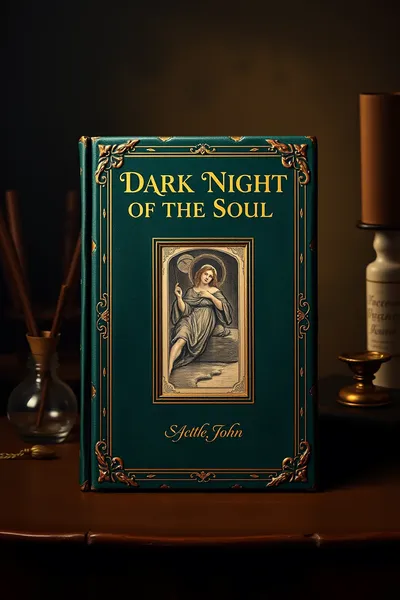
Books on this concept





No reflections yet. Be the first.
Share your interpretation, experience, or question.
