Ash
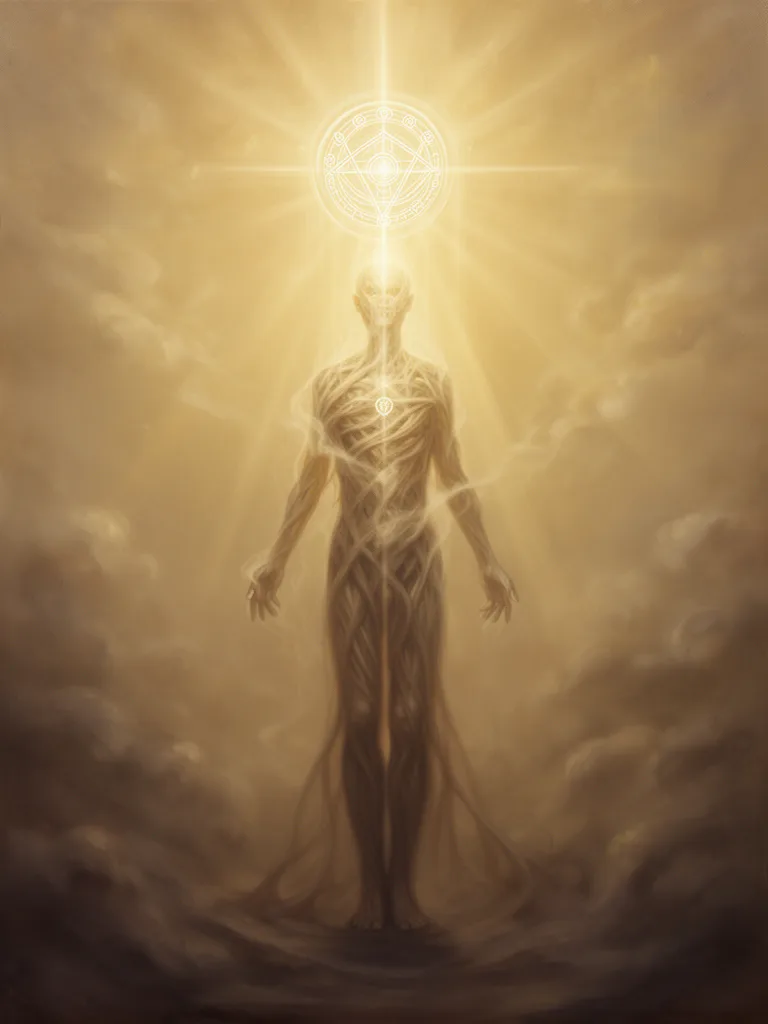
Ash symbolizes both physical residue and spiritual remnants, representing transformation, purification, and the enduring essence left after dissolution. It signifies what remains of the ephemeral, holding memory and potential for renewal.
Where the word comes from
The term "ash" derives from Old English "æsc," ultimately from Proto-Germanic *askaz. In Sanskrit, "aśu" relates to swiftness, and "aśnāti" means to consume. Blavatsky links it to "As" or "Aish," possibly hinting at ancient Semitic roots related to fire or spirit, and "Esch" suggesting a connection to the Germanic "Asche" or Latin "acinus" (grape seed, implying residue).
In depth
Fire, whether physical or synd)olical fire; also found written in Enplish as As, Aish and Esch. Ashen and Langhan (Kolarian). Certain ceremonies for castinp out evil spirits, akin to those of exorcism with the Christians, in nse with the Kolarian tribes in India.
How different paths see it
What it means today
The humble ash, often dismissed as mere detritus, is a profound symbol across human spiritual traditions, a quiet echo of the grand cosmic processes of dissolution and renewal. Blavatsky's inclusion of "physical or symbolical fire" is astute, recognizing that ash operates on multiple planes of understanding. In the alchemical crucible, ash is the tangible product of intense purification, the refined residue that holds the promise of transformation, much like the phoenix arising from its own pyre. It speaks to the alchemical dictum solve et coagula, the breaking down and rebuilding that is fundamental to both material and spiritual work.
For the Hindu, vibhuti, the sacred ash, is more than a mark; it is a constant reminder of impermanence and the divine presence that permeates all existence, even in its most reduced form. It is the ash of the funeral pyre, a stark yet beautiful memento mori, urging contemplation of the soul's eternal journey beyond the fleeting flesh. Mircea Eliade, in his explorations of the sacred and the profane, would likely see in this ritualistic use of ash a connection to primordial cosmogonies, where creation often arises from a primal state of chaos or dissolution, a void from which new forms emerge.
The Christian tradition, through the somber observance of Ash Wednesday, employs ash as a potent symbol of penitence and mortality, a stark acknowledgment of human finitude. This practice, rooted in ancient Near Eastern customs of wearing sackcloth and ashes as signs of mourning and repentance, connects the individual to a collective human condition of fallibility and the need for divine grace. It is a humbling, grounding ritual, a visual sermon on the transient nature of earthly life.
In the context of modern non-dual thought, the concept of ash can resonate with the understanding of emptiness (sunyata) or the dissolution of the perceived self. The fires of egoic desire and attachment, when finally extinguished, leave behind a profound stillness, a clear space that is not a void but rather the unconditioned awareness. It is the residue of experience, stripped of its narrative and emotional charge, revealing the pure luminosity of being. Ash, then, is not an ending but a profound continuation, a quiet whisper of the eternal within the ephemeral. It invites us to look beyond the immediate, the burning, the consumed, to the enduring essence that remains, a subtle but powerful testament to the cyclical nature of all things.
RELATED_TERMS: Pyre, Cremation, Phoenix, Residue, Transformation, Purification, Impermanence, Emptiness
Related esoteric terms
Books on this concept






No reflections yet. Be the first.
Share your interpretation, experience, or question.
