Apocryphon
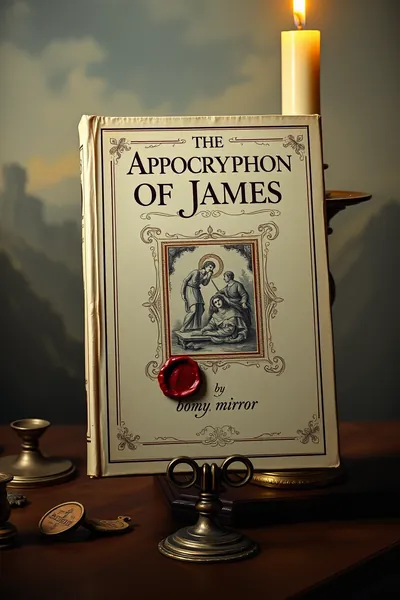
Apocryphon refers to a hidden or secret text, often containing esoteric knowledge or teachings not intended for general public dissemination. These texts typically claim to reveal hidden truths, divine mysteries, or secret doctrines, often presented as revelations to select individuals.
Where the word comes from
The term "apocryphon" originates from the Greek word apokryphos, meaning "hidden" or "secret." It implies something concealed from ordinary view or understanding. The plural form, "apocrypha," became associated with a collection of ancient religious texts, often of Jewish or early Christian origin, that were considered pseudepigraphal or non-canonical by mainstream religious authorities.
In depth
Apocryphon ("secret writing"), plural apocrypha, was a Greek term for a genre of Jewish and Early Christian writings that were meant to impart "secret teachings" or gnosis (knowledge) that could not be publicly taught. Jesus briefly withheld his messianic identity from the public. He also gave private instruction to the apostles, figures in the canonical Gospels of the New Testament and furnishes the material of the "sayings" of the Gospel of Thomas and part of the material of the Gospel of Mary...
How different paths see it
What it means today
The word "apocryphon" whispers of a knowledge held close, a wisdom not shouted from the rooftops but shared in hushed tones among those attuned to its frequency. It evokes the image of a locked chest, its contents accessible only to the key-holder, a metaphor for the inner sanctum of consciousness that certain teachings aim to unlock. Mircea Eliade, in his seminal works on the history of religions, often spoke of the sacred as that which is set apart, that which demands a ritualistic approach or a specific state of being to be encountered. Apocryphal texts embody this principle, suggesting that the divine or the deepest truths of existence are not meant for casual perusal but for a dedicated seeker.
These texts, whether Gnostic gospels, Hermetic dialogues, or esoteric interpretations of scripture, often function as maps to inner territories. They don't merely convey information; they invite a transformation. The secrecy they imply is not necessarily an act of exclusion but a recognition that the human psyche, like a delicate bloom, requires specific conditions for growth. Carl Jung's exploration of the unconscious, with its archetypal imagery and symbolic language, resonates here. The apocryphal, in this light, can be seen as an attempt to articulate the ineffable language of the psyche, a language that speaks in symbols and paradoxes, often veiled from the rational mind.
The very act of seeking out or producing apocryphal material suggests a dissatisfaction with the exoteric, the surface-level understanding of the world and the divine. It points to a yearning for the gnosis, the direct, experiential knowledge that transcends dogma and ritual. This pursuit is not about acquiring forbidden secrets for power, as a superficial reading might suggest, but about cultivating the inner faculty to perceive realities that lie beyond the ordinary. It is a testament to the enduring human quest for meaning, a quest that often leads us to the hidden archives of the soul. The apocryphon, therefore, is not merely a text; it is an invitation to an inner pilgrimage, a journey into the heart of mystery.
Related esoteric terms
Books on this concept







No reflections yet. Be the first.
Share your interpretation, experience, or question.
