Anthroposophical Society
The Anthroposophical Society is an international organization dedicated to fostering the development of the soul and spirit through the teachings of anthroposophy, a spiritual philosophy founded by Rudolf Steiner. It seeks to cultivate inner life and understanding of the spiritual world within individuals and society.
Where the word comes from
The term "anthroposophy" derives from the Greek words "anthropos" (human being) and "sophia" (wisdom). Thus, it signifies "wisdom of the human being" or "human wisdom," emphasizing a holistic understanding of humanity's spiritual nature and its connection to the cosmos.
In depth
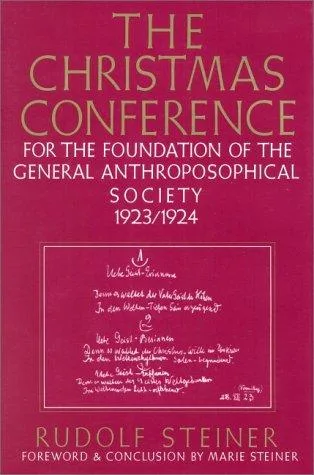
The General Anthroposophical Society is an "association of people whose will it is to nurture the life of the soul, both in the individual and in human society, on the basis of a true knowledge of the spiritual world." As an organization, it is dedicated to supporting the community of those interested in the inner path of schooling known as anthroposophy, developed by Rudolf Steiner. The Anthroposophical Society was founded on December 28, 1912 in Cologne, Germany, with about 3000 members. Central...
How different paths see it
What it means today
Rudolf Steiner's Anthroposophical Society, born from a desire to nurture the soul's life, offers a contemporary articulation of an ancient impulse: the quest for spiritual knowledge not as dogma, but as a living, evolving understanding of humanity's place in the cosmos. In an age often characterized by fragmentation and the dominance of the material, anthroposophy proposes a path of inner development, a form of "spiritual science" that seeks to bridge the perceived chasm between the visible and the invisible. This endeavor echoes the alchemical pursuits of the Hermetic tradition, where the transformation of base metals mirrored the purification and elevation of the human soul.
The very name, "anthroposophy," suggests a profound reverence for the human being as a vessel of divine potential, a microcosm reflecting the macrocosm. This resonates with Mircea Eliade's observations on the perennial human need to find meaning and connection within a sacred cosmos, a need that spiritual disciplines have historically addressed. Steiner’s work, while distinct, can be seen as a modern continuation of this lineage, offering exercises and meditations designed to awaken latent spiritual capacities. It’s a call to become an active co-creator of one's own spiritual destiny, rather than a passive recipient of revelation.
The emphasis on "true knowledge of the spiritual world" is not an invitation to mere intellectual speculation, but a call to rigorous inner work. This is akin to the practices described by Sufi mystics or the contemplative traditions within Christianity, where the heart and will are as crucial as the intellect in the pursuit of divine insight. The goal is not simply to know about the spirit, but to know the spirit through direct experience, cultivated through conscious effort. In this sense, the Anthroposophical Society can be viewed as a modern guild of spiritual artisans, each seeking to refine their inner instruments to perceive and interact with the subtle realities that shape existence. It reminds us that the deepest wisdom often lies not in the accumulation of external facts, but in the diligent cultivation of our inner landscape.
Related esoteric terms
Books on this concept







No reflections yet. Be the first.
Share your interpretation, experience, or question.
