Akbar
Akbar was a 16th-century Mughal emperor of India renowned for his exceptionally tolerant and enlightened reign. He actively patronized arts, sciences, and diverse religious traditions, fostering an era of intellectual and cultural flourishing unmatched by many rulers in India or the broader Islamic world.
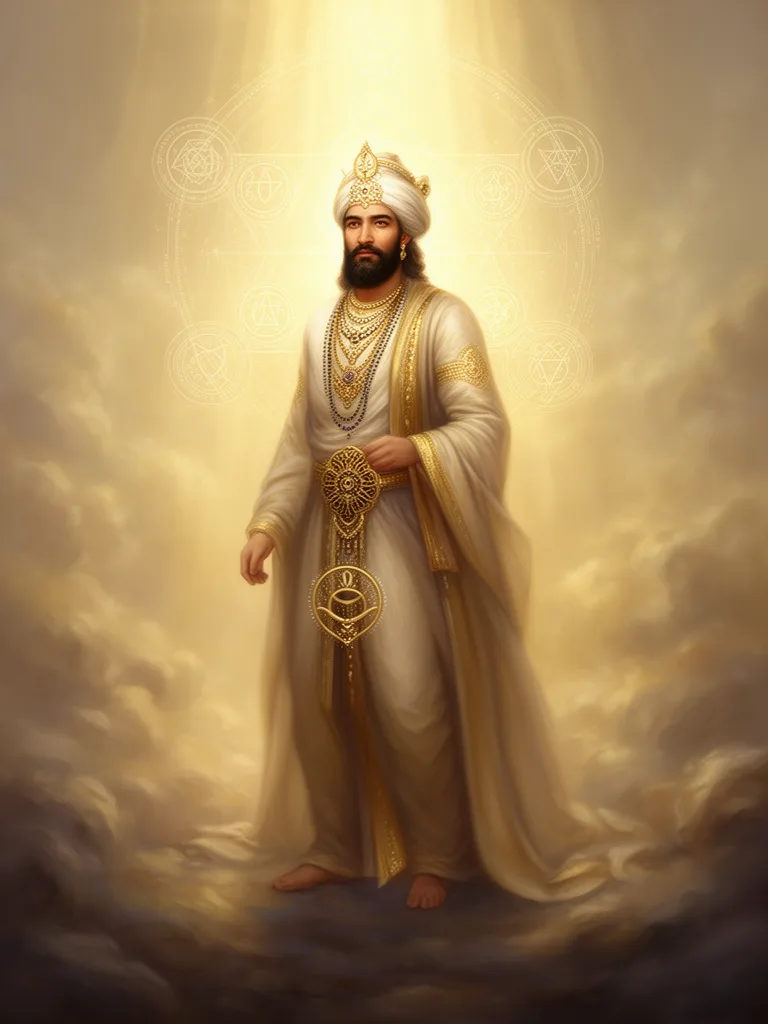
Where the word comes from
The name "Akbar" is Arabic, meaning "great" or "magnificent." It was a given name, not a title, adopted by Jalal-ud-din Muhammad, the third Mughal emperor, who ascended the throne in 1556. His reign is considered a golden age of the Mughal Empire.
In depth
The great Mogul Emperor of India, the famous patron of religions, arts, and sciences, the most liberal of all the ^Mussulman sovereigns. There has never been a more tolerant or enlightened ruler than the Emjx'ror Akbar, either in India or in any other Mahometan countrv.
How different paths see it
What it means today
In the annals of imperial history, the figure of Akbar stands as a luminous anomaly. His reign, a mere flicker in the vast expanse of centuries, yet burns with an enduring light, a testament to the radical potential of enlightened leadership. Mircea Eliade, in his explorations of the sacred and the profane, often highlighted figures who bridged divides, and Akbar, in his own unique way, achieved this on a grand scale. He was not merely a patron of the arts and sciences, as Blavatsky notes, but a conscious architect of a pluralistic society.
His famous policy of Sulh-i-kul, meaning "universal peace" or "absolute harmony," was more than a political strategy; it was a philosophical stance. It recognized that the divine manifests in myriad forms, and that the pursuit of truth is a multifaceted endeavor. This echoes the insights of thinkers like Seyyed Hossein Nasr, who has written extensively on the perennial philosophy, the idea that wisdom traditions share a common, underlying truth. Akbar’s court became a crucible where Brahmins debated with Mullahs, Zoroastrians with Jesuits, and yogis with Sufis. This intellectual ferment, documented in works like Abu al-Fazl's Akbarnama, was not about dissolving distinctions but about recognizing their shared origin and purpose.
For the modern seeker, Akbar’s example offers a potent antidote to the tribalism and dogmatism that plague our contemporary world. He demonstrates that true strength lies not in uniformity but in the courageous embrace of diversity. His life invites us to consider how we might cultivate our own inner courts of understanding, where the seemingly disparate elements of our experience can find harmonious coexistence, leading to a richer, more profound apprehension of reality. The echoes of his universal peace continue to resonate, a quiet challenge to our often fractured perceptions.
Related esoteric terms
Books on this concept







No reflections yet. Be the first.
Share your interpretation, experience, or question.
