Ahan
Ahan signifies "day" in Sanskrit, representing a cosmic cycle or a specific period within the grand unfolding of existence. In Hindu philosophy, it can symbolize the manifest world or a unit of time within Brahma's creative process, suggesting a structured progression of reality.
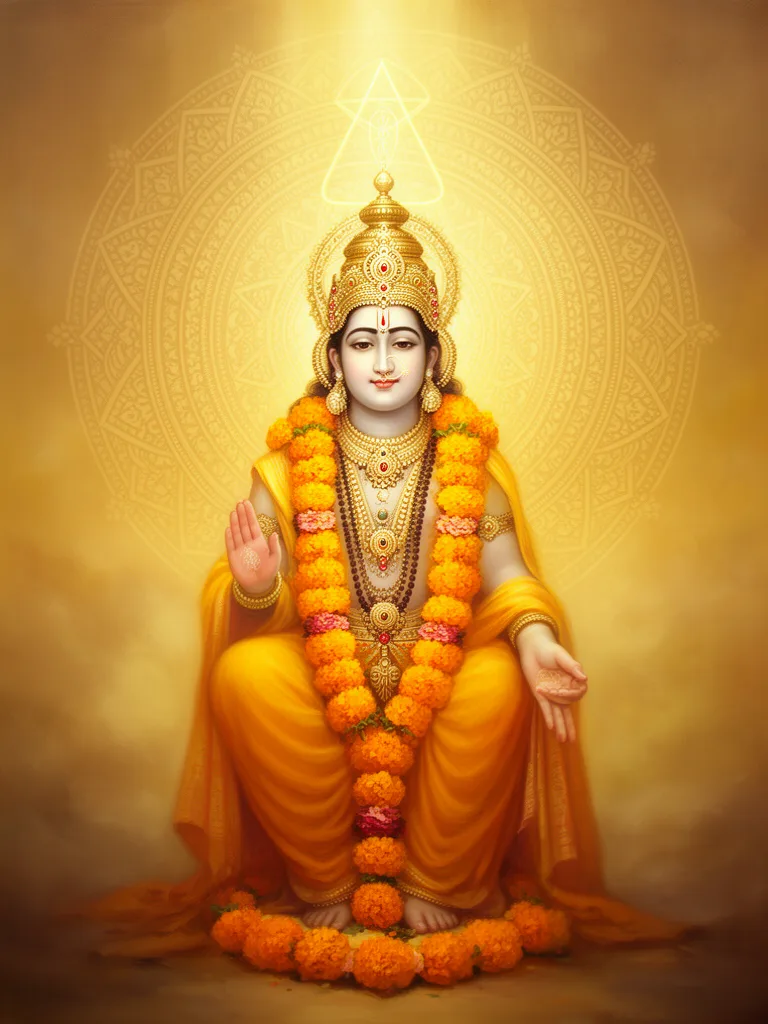
Where the word comes from
Ahan derives from the Proto-Indo-European root *a-weng- meaning "to shine" or "to be bright," connecting it to the concept of light and illumination. It is the Sanskrit word for "day," a fundamental unit of temporal experience and cosmic measurement.
In depth
"Day", the Body of Brahma, in the Vurdnas.
How different paths see it
What it means today
Blavatsky's definition of Ahan as "Day, the Body of Brahma, in the Vurdnas" offers a glimpse into a conception of time far removed from our quotidian experience. It is not merely the twenty-four hours that punctuate our individual lives, but a fundamental unit of cosmic manifestation, a breath taken by the universe itself. This "day" is not a fleeting moment but a grand epoch, a kalpa, within which worlds are born, flourish, and eventually dissolve back into the unmanifest. The Vurdnas, a term hinting at cosmic cycles or perhaps specific cosmic divisions, further suggests a structured, ordered progression of existence, a divine architecture of time.
Mircea Eliade, in his seminal work "The Myth of the Eternal Return," explored how ancient cultures often perceived time not as an irreversible arrow but as a cyclical phenomenon, a perpetual renewal. The concept of Ahan resonates with this understanding, positing that each "day" is a repetition, a re-enactment of a primordial creative act. This cyclical view can be deeply liberating, offering a sense of participation in an ongoing, divine drama rather than a solitary, finite journey. It suggests that the patterns of creation and dissolution are not merely historical events but are eternally present, accessible through spiritual insight.
For the modern seeker, contemplating Ahan can be a profound exercise in shifting perspective. It encourages us to look beyond the immediate pressures of our own limited lifespans and to connect with a sense of deep time, a temporal vastness that dwarfs our personal concerns. It is an invitation to understand our individual existence as a single ripple within an oceanic flow of cosmic consciousness, a single note in an eternal symphony. This perspective can foster a sense of humility, awe, and ultimately, a deeper connection to the cosmic order. The "body of Brahma" implies that this cosmic day is not an abstract concept but a tangible, living reality, the very substance of existence unfolding.
RELATED_TERMS: Kalpa, Brahma, Yuga, Cosmic Cycle, Samsara, Maya, Creation, Time ---
Related esoteric terms
Books on this concept








No reflections yet. Be the first.
Share your interpretation, experience, or question.
