Academic study of Western esotericism
Western esotericism refers to the academic field studying historical traditions of Western thought and practice, including Hermeticism, alchemy, astrology, and magic, often considered hidden or esoteric knowledge. It examines their development, influence, and interpretation.
Where the word comes from
The term "esotericism" derives from the Greek "esōterikos," meaning "inner" or "belonging to a select group." It emerged in the late 18th century within intellectual circles discussing hidden philosophical and religious currents, distinct from exoteric or public teachings.
In depth
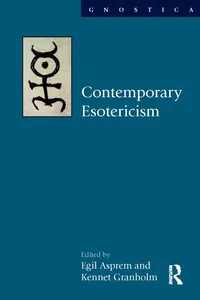
Western esotericism is an academic discipline of research, scholarship, and education that focuses on the history of Western esotericism.
How different paths see it
What it means today
The academic study of Western esotericism, a discipline itself born from a late 18th-century intellectual impulse to categorize and understand hidden currents, offers a lens through which to view a vast constellation of traditions often relegated to the shadows of mainstream history. These include the intricate symbolic language of alchemy, the celestial cartography of astrology, the ritualistic evocations of magic, and the philosophical depth of Hermeticism, all of which have, in their own ways, sought to articulate a hidden order or a more profound reality beneath the surface of the mundane.
Scholars like Antoine Faivre have been instrumental in defining this field, distinguishing it from mere occultism by emphasizing its historical, philosophical, and cultural significance. The study does not necessarily endorse these traditions but rather seeks to understand their genesis, evolution, and impact on Western thought and culture. It’s akin to excavating a buried city, not to inhabit its ruins, but to comprehend the lives and beliefs of those who built it. Mircea Eliade, in his broader work on religion, frequently touched upon the archetypal patterns found in these esoteric pursuits, recognizing their role in providing meaning and structure to human experience across diverse cultures and epochs.
Carl Jung's engagement with alchemy, for instance, revealed its profound psychological dimensions, suggesting that the alchemical quest for the philosopher's stone was a metaphor for the individuation process, the journey toward wholeness. This interdisciplinary approach, drawing from history, philosophy, religious studies, and even psychology, allows for a nuanced appreciation of how these "esoteric" ideas, often expressed through dense allegory and symbolic imagery, have contributed to artistic expression, scientific inquiry, and the perennial human search for transcendence. The academic study, therefore, is not merely an antiquarian pursuit; it is a vital endeavor for understanding the full spectrum of human consciousness and its enduring quest for meaning beyond the immediately apparent. It reminds us that the rational mind, while powerful, has always been accompanied by a more intuitive, symbolic way of knowing, a persistent echo from the inner chambers of human experience.
Related esoteric terms
Books on this concept







No reflections yet. Be the first.
Share your interpretation, experience, or question.
