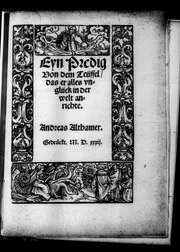
Tractatvs de confessionibvs maleficorum & sagarum, an, et quanta fides ijs adhibenda sit. ... 1579: Iss 112

 81
81

Tractatvs de confessionibvs maleficorum & sagarum, an, et quanta fides ijs adhibenda sit. ... 1579: Iss 112



By Balthazar Finch (Senior Critic, Occult Philosophy) — Pierre Binsfeld's 'Tractatvs de confessionibvs maleficorum & sagarum' stands as a monumental pillar in the study of early modern witch trials. Binsfeld, with scholarly rigor, dissects the confessions of alleged maleficorum and sagarum, questioning the absolute faith often placed in such accounts. His nuanced approach to the veracity and weight of these testimonies offers profound insights into the legal and theological frameworks of the era. This work is indispensable for serious scholars and practitioners seeking to understand the historical underpinnings of witch beliefs and the critical examination of occult phenomena. Its strength lies in its intellectual honesty and its contribution to the deconstruction of fear-driven narratives.
📝 Description
81
Published in 1579, Pierre Binsfeld's Tractatvs de confessionibvs maleficorum & sagarum questions the veracity of witch confessions.
Pierre Binsfeld's 1579 work, 'Tractatvs de confessionibvs maleficorum & sagarum', examines confessions made by individuals accused of witchcraft and sorcery. Binsfeld addresses how much weight should be given to such statements, considering the context of accusations and interrogations common in the 16th century. The book analyzes the psychological and social factors that influenced how people perceived witchcraft and shaped belief systems of the time.
This text provides a historical perspective on the construction of what was considered 'occult'. It details the relationship between religious faith, societal fear, and the human mind during an era of intense witch trials. The writing, though historical, evokes the atmosphere of a society confronting perceived supernatural threats and seeking answers within its own framework. It prompts reflection on the nature of evidence and the influence of belief across different periods.
This book falls within the tradition of early modern demonology and legal treatises concerned with witchcraft. It engages with the intellectual currents of the time that sought to understand, categorize, and combat perceived malevolent supernatural forces. While dealing with themes of belief and the unseen, its approach is analytical, focusing on the credibility of testimony rather than mystical practices themselves. It reflects a period where the line between religious belief, superstition, and legal process was heavily debated and often blurred, particularly concerning accusations of maleficium.
💡 Why Read This Book?
Uncover the historical roots of witch trials and the critical analysis of occult testimonies. 'Tractatvs de confessionibvs maleficorum & sagarum' offers a unique perspective on the nature of belief, evidence, and societal fear in the 16th century. Ideal for scholars, history enthusiasts, and those interested in the philosophical underpinnings of witchcraft studies.
⭐ Reader Reviews
Honest opinions from readers who have explored this book.
❓ Frequently Asked Questions
What is the primary focus of Binsfeld's 'Tractatvs de confessionibvs maleficorum & sagarum'?
The book meticulously examines the confessions of individuals accused of witchcraft and sorcery, scrutinizing the degree of credibility and authority these testimonies should hold within legal and theological contexts.
Who was Pierre Binsfeld?
Pierre Binsfeld (circa 1540-1598) was a German jurist and Trier Official, renowned for his significant contributions to the study of witchcraft and demonology during the late Renaissance.
What historical period does this book cover?
The book primarily addresses the late 16th century, a period marked by intense witch hunts and fervent theological debates across Europe.
Is this book suitable for beginners in occult studies?
While historically significant, its dense legal and theological discourse may be more challenging for absolute beginners. However, for those with a foundational interest, it offers invaluable historical context.
What is the significance of 'Issue 112' in the title?
'Issue 112' likely refers to a specific edition or volume within a larger collected series of texts, indicating its place in a curated collection of historical and esoteric works.
🔮 Key Themes & Symbolism
The Epistemology of Accusation
This treatise studies the very foundations of knowledge acquisition within the context of witchcraft accusations. Binsfeld interrogates how confessions were obtained, their reliability, and the philosophical underpinnings of believing such accounts. He explores the delicate balance between accepting testimony and demanding empirical evidence, a concept remarkably ahead of its time. The work highlights the inherent dangers of uncritical acceptance of statements, particularly those extracted under duress or within a framework of pervasive societal fear. It offers a critical perspective on the construction of 'truth' in historical witch trials, urging readers to question the sources and methods of belief.
Demonology and Human Psychology
Binsfeld's work navigates the complex intersection of demonic influence and human psychology as understood in the 16th century. While acknowledging the theological framework of demonic agency, the 'Tractatvs' subtly probes the psychological states of those confessing and those interrogating. It touches upon the power of suggestion, hallucination, and the potential for confession to be a product of extreme duress or internal conviction. This provides a fascinating glimpse into early attempts to understand the mental range of individuals ensnared by accusations of the supernatural, revealing a nascent awareness of the mind's role in perceived reality.
The Weight of Testimony in Legal and Spiritual Authority
A central theme is the examination of how much faith should be placed in the confessions of alleged malefactors and sorcerers. Binsfeld critically assesses the authority granted to such testimonies by legal systems and religious doctrines of his era. He questions whether these confessions, often obtained through torture or coercion, could genuinely serve as proof of supernatural involvement. The work dissects the societal and institutional structures that gave weight to these pronouncements, highlighting the critical need for discernment and reasoned judgment, even when confronting beliefs in the diabolical.
💬 Memorable Quotes
Direct passages from the work, attributed to the author.
“An et quanta fides ijs adhibenda sit.”
— This core query translates to 'What and how much faith should be given to them?' It expresses the book's central thesis: a critical examination of the credibility of witchcraft confessions.
“Maleficorum confessiones, si dubia sint, non satis firmum fundamentum iudicii praebent.”
— The confessions of malefactors, if they are doubtful, do not provide a sufficiently firm foundation for judgment. This highlights Binsfeld's emphasis on the need for solid evidence over questionable testimonies.
“Timor et dolor, mentem saepe turbant.”
— Fear and pain often disturb the mind. This poignant observation points to the psychological impact of torture and fear on the reliability of confessions.
“Veritas in interrogatione non semper lucet.”
— Truth does not always shine in interrogation. This signifies Binsfeld's skepticism towards the absolute veracity of statements extracted under pressure.
“Sicut fabulas, ita etiam multa de maleficiis credunt simplices.”
— The simple-minded believe many things about witchcraft, just as they believe fables. This suggests a critique of credulity and the ease with which unfounded beliefs can spread.
🌙 Esoteric Significance
Tradition
This work is deeply embedded within the Western esoteric tradition, specifically concerning demonology and the legalistic approach to supernatural phenomena prevalent in late medieval and Renaissance Europe. While not overtly mystical in its presentation, it engages with the perceived 'occult' by critically analyzing the discourse surrounding witchcraft. It represents a philosophical precursor to more modern psychological and sociological analyses of belief and delusion, making it significant for those studying the historical evolution of thought on the hidden aspects of reality and human experience.
Symbolism
The 'maleficorum' (evildoers) and 'sagarum' (sorceresses) themselves function as potent symbolic figures within the text, representing societal fears and the perceived intrusion of malevolent forces. The act of confession, under Binsfeld's scrutiny, becomes a symbolic battleground between perceived truth and manufactured narrative, between spiritual conviction and psychological manipulation. The weight of faith ('fides') ascribed to these confessions symbolizes the reliance on authority and doctrine, often overshadowing critical discernment. The text's very structure, a treatise dissecting these elements, symbolizes the attempt to bring order and reason to perceived chaos.
Modern Relevance
In contemporary times, Binsfeld's 'Tractatvs' offers useful insights into the dangers of mass hysteria, the unreliability of coerced testimony, and the construction of 'otherness' through accusation. Its critical examination of how beliefs are formed and disseminated remains relevant in an age of misinformation and online witch hunts. For practitioners and scholars of the occult, it provides crucial historical context for understanding the origins of demonological frameworks and the societal anxieties that shaped them. It encourages a discerning approach to claims of supernatural influence and a deeper understanding of the human psyche's role in perceived realities.
👥 Who Should Read This Book
This treatise is an essential read for serious scholars of European history, religious studies, and the history of magic and witchcraft. It will also resonate with occult practitioners seeking to understand the historical genesis of demonological beliefs and the legalistic frameworks that once governed perceptions of the supernatural. For those interested in the philosophy of evidence, the psychology of belief, and the critical examination of historical narratives, Binsfeld's work offers a compelling and thought-provoking perspective. While dense, its intellectual rigor rewards the patient reader with invaluable insights into a critical period of Western thought.
📜 Historical Context
Published in 1579, Pierre Binsfeld's 'Tractatvs de confessionibvs maleficorum & sagarum' emerges from the heart of the late Renaissance, a period characterized by intense religious upheaval, the burgeoning of empirical inquiry, and widespread paranoia surrounding witchcraft. This era witnessed a dramatic escalation in witch trials across Europe, fueled by a potent combination of theological dogma, popular superstition, and evolving legal practices. Jurists and theologians grappled with the nature of evidence, the role of the devil, and the psychological states of accused individuals. Binsfeld, as a jurist himself, stood at this intersection, attempting to impose a rational framework upon a phenomenon often driven by fear and hysteria. His work reflects a growing, albeit still nascent, skepticism towards the unfettered acceptance of confessions, particularly those obtained through methods now recognized as barbaric. It is a crucial document for understanding the intellectual currents that shaped both the persecution and the critical examination of witchcraft.
📔 Journal Prompts
Reflect on the distinction Binsfeld draws between genuine confession and coerced testimony. How might this apply to modern situations where individuals are pressured to speak?
Consider the societal fears that fueled witch trials. How do similar fears manifest today, and how are they amplified by modern media or social platforms?
Analyze the role of authority (legal, religious) in validating or dismissing confessions. Where does authority hold sway in your own beliefs and judgments?
Binsfeld questions the 'weight of faith' given to confessions. What are some areas in your own life where you might be granting too much or too little faith to certain claims?
How does Binsfeld's critical approach to evidence challenge or confirm your understanding of truth and belief in historical and contemporary contexts?
🗂️ Glossary
Maleficorum
Latin for 'evildoers' or 'sorcerers.' In the context of the text, it refers to individuals accused of practicing harmful magic and witchcraft.
Sagarum
Latin for 'sorceresses.' Specifically refers to female practitioners of witchcraft, a central focus of many historical accusations.
Fides
Latin for 'faith' or 'belief.' In this context, it refers to the degree of credibility and authority attributed to the confessions of accused individuals.
Confessionibus
Latin for 'confessions.' The core subject of the treatise, examining the nature and reliability of statements made by those accused of witchcraft.
Tractatvs
Latin for 'treatise.' Denotes a formal and systematic written discourse on a particular subject, often academic or scholarly in nature.
This book appears in 2 collections
🔮 Readers Also Liked
Browse all →




More by BINSFELD, Pierre.
All books →



From the “Witchcraft” Collection
View all →





More Free Witchcraft & Paganism Books
View all →