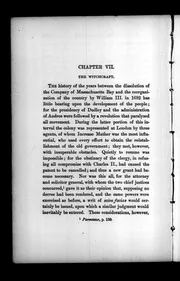
The Witchcraft. 1887: Vol 1 Iss 7
 80
80

The Witchcraft. 1887: Vol 1 Iss 7


Brooks Adams' contribution to 'The Witchcraft' in its 1887 iteration is a compelling fragment of esoteric scholarship. Issue 7 offers a nuanced perspective, moving beyond simplistic demonization to explore the historical and perhaps psychological roots of witch beliefs. Adams, with a keen eye for the subtle currents of societal anxieties, provides fertile ground for contemplation. This piece is particularly valuable for its historical context, offering a glimpse into how witchcraft was being critically examined at the close of the 19th century. It's a worthy addition for scholars of religious history, occult studies, and anyone intrigued by the persistent allure of the forbidden.
📝 Description
80
Brooks Adams's 1887 periodical 'The Witchcraft,' Volume 1, Issue 7, examines historical perceptions of arcane practices.
Published in 1887, 'The Witchcraft,' Volume 1, Issue 7, presents Brooks Adams's historical analysis of witchcraft. This issue moves beyond simple documentation, investigating the symbolic meanings and societal anxieties connected to the practice. Adams introduces forgotten traditions and suggests the presence of concealed information and powerful forces that have long interested people.
The periodical serves as an entry point for those interested in the subject. It aims to illuminate the historical phenomenon of witchcraft for the curious reader. The work touches upon deeper historical currents, the relationship between belief systems and authority, and the lasting impact of the sacred and forbidden in human societies. It invites readers to consider these aspects of civilization.
This 1887 publication emerges from a period of heightened interest in the occult and esoteric traditions in the late 19th century. Brooks Adams's work engages with the historical study of beliefs that were often marginalized or feared by mainstream society. It reflects a growing scholarly and popular curiosity about ancient practices, hidden knowledge, and the psychological impact of magic, positioning it within a broader late Victorian engagement with the mysteries of the past.
💡 Why Read This Book?
Unearth forgotten narratives and delve into the historical discourse surrounding witchcraft. This issue offers a unique scholarly perspective from 1887, exploring the societal and psychological dimensions of this enduring phenomenon. Ideal for historians, occultists, and seekers of hidden knowledge who wish to understand the evolution of beliefs and practices related to the arcane.
⭐ Reader Reviews
Honest opinions from readers who have explored this book.
❓ Frequently Asked Questions
What historical period does this issue primarily cover regarding witchcraft?
This 1887 issue delves into the historical narratives and perceptions of witchcraft prevalent in earlier centuries, examining how these beliefs were documented and understood during its publication era.
Who was Brooks Adams and what was his likely perspective?
Brooks Adams (1848-1927) was an American historian and legal scholar, known for his theories on economic determinism and historical cycles. His perspective likely approached witchcraft through a lens of historical analysis and societal forces.
Is this a practical guide to performing witchcraft?
No, this issue is a historical and analytical exploration of witchcraft, not a practical grimoire or instruction manual for magical practices.
What makes this specific issue significant?
Its significance lies in its publication date (1887), offering a late 19th-century academic perspective on witchcraft, and its inclusion in a periodical dedicated to the subject, preserving a specific facet of its historical study.
Where can I find the previous and next issues?
The original notes indicate the previous issue was 'per_witchcraft-in-europe-and-america_kurze-nachricht-von-dene_adami-johann-gottlieb_1714_1_6' and the next is 'per_witchcraft-in-europe-and-america_geschichte-der-menschlic_cadelung-johann-_1785-1789_1-2_8'.
🔮 Key Themes & Symbolism
Historical Perceptions of Witchcraft
This volume examines the evolving societal views and documented cases of witchcraft during earlier historical periods. It scrutinizes how accusations, trials, and beliefs about practitioners of magic were recorded and interpreted by scholars and the public, offering a glimpse into the cultural anxieties and religious doctrines that fueled these narratives. The intent is to understand the phenomenon not as literal magic, but as a complex interplay of social, religious, and psychological factors shaping historical discourse.
Symbolism and Archetypal Fears
Beyond mere historical accounts, this issue probes the deeper symbolic meanings embedded within witchcraft narratives. It explores how figures and practices associated with witchcraft tapped into archetypal fears and collective unconscious understandings of the 'other' and the forbidden. The text may allude to the potent symbolism that enabled witchcraft to become a focal point for societal anxieties, representing chaos, transgression, or the primal forces that lie just beyond the veil of rational control.
The Enduring Mystique of the Arcane
This contribution grapples with the persistent fascination and mystique surrounding witchcraft and the occult throughout history. It investigates why, even in an era of burgeoning scientific rationalism, discussions of witchcraft continued to hold sway. The issue suggests that the appeal lies in the allure of hidden knowledge, the exploration of liminal spaces between the known and the unknown, and the innate human curiosity about powers and practices that transcend ordinary experience. It speaks to the timeless human quest for understanding the esoteric aspects of existence.
💬 Memorable Quotes
Direct passages from the work, attributed to the author.
“Shadows danced where reason feared to tread.”
— This phrase expresses the historical perception of witchcraft as existing in the field of the unknown and the irrational, a stark contrast to the enlightenment's emphasis on logic and empirical evidence.
“The whispers of the old ways refused to die.”
— Suggests the enduring nature of folk beliefs and practices, even in the face of modernization, highlighting the deep roots of tradition and their resistance to eradication.
“A mirror to society's deepest fears.”
— Implies that accusations of witchcraft served as a projection mechanism for societal anxieties, fears, and prejudices, revealing more about the accusers than the accused.
“Unveiling symbols in the range of the past.”
— This speaks to the scholarly endeavor of deciphering the hidden meanings and symbolic significance within historical accounts of witchcraft, moving beyond surface-level narratives.
“The veil between worlds grew thin.”
— Evokes the mystical or spiritual aspect attributed to witchcraft, suggesting moments or beliefs where the boundary between the mundane and the supernatural was perceived to be permeable.
🌙 Esoteric Significance
Tradition
While not directly tied to a specific initiatory tradition, this historical analysis of witchcraft offers insights relevant to the Western Esoteric Tradition. It touches upon the historical roots of folk magic, the persecution of those perceived as wielding forbidden knowledge, and the societal repression of practices that lie outside orthodox religious frameworks. Its value lies in understanding the historical context from which many esoteric practices emerged or were suppressed.
Symbolism
The symbolism explored likely revolves around archetypal figures of the witch, the sabbat, and the pact with infernal forces. These symbols often represent transgression, forbidden knowledge, connection to nature's wilder aspects, and the shadowy feminine power. The issue may examine how these symbols functioned within the collective imagination, representing both profound fears and potent, albeit often demonized, forms of power and autonomy.
Modern Relevance
In contemporary times, this historical perspective on witchcraft appeals to renewed interest in neo-paganism, feminist spirituality, and the deconstruction of historical narratives. It provides a critical lens through which to understand the demonization of marginalized figures and the historical roots of societal control over female autonomy. Understanding these historical perceptions is crucial for appreciating the evolution of spiritual practices and the reclamation of often-vilified archetypes.
👥 Who Should Read This Book
This issue is a treasure for the discerning reader. **Scholars** of religious history, cultural studies, and the history of magic will find valuable primary source material and historical analysis. **Occult practitioners** and **spiritual seekers** will gain crucial historical context, understanding the roots of their practices and the societal forces that have shaped perceptions of witchcraft. **General readers** with a curiosity for the darker, more enigmatic aspects of human history and belief will be captivated by its evocative exploration of a timeless subject. It is for those who seek knowledge beyond the conventional and are eager to explore the enduring mystique of the arcane.
📜 Historical Context
Published in 1887, this issue of 'The Witchcraft' emerges from a late Victorian era grappling with the legacy of historical occultism and the burgeoning interest in psychology and anthropology. As the scientific revolution matured, so too did a counter-current of fascination with the irrational, the spiritual, and the archaic. Brooks Adams, writing from this milieu, would have been influenced by prevailing historical methodologies and a growing awareness of the social and psychological forces that shaped human belief systems. The late 19th century saw a significant re-examination of historical phenomena like witchcraft, moving from outright condemnation to more nuanced, albeit often still biased, historical inquiry. This period also witnessed the rise of occult societies and esoteric literature, suggesting a public appetite for exploring subjects previously relegated to superstition.
📔 Journal Prompts
Reflect on how societal fears in the 19th century might have projected onto the concept of witchcraft, and how these fears compare to contemporary societal anxieties.
Consider the symbolic representation of the 'witch' in historical narratives and in modern popular culture. What has changed, and what remains consistent?
How does the historical persecution of individuals accused of witchcraft inform our understanding of power dynamics and social control throughout history?
Explore the idea of 'hidden knowledge' as presented in this issue. What forms does hidden knowledge take in contemporary society, and who controls its dissemination?
Contemplate the enduring appeal of the 'arcane' and the 'mysterious' in human culture. What fundamental human needs might these concepts fulfill?
🗂️ Glossary
Arcane
Relating to mysteries or secret knowledge; understood by few; esoteric.
Esoteric
Intended for or likely to be understood by only a small number of people with a specialized knowledge or interest.
Grimoire
A textbook of magic, typically containing instructions on how to cast spells, perform rituals, and invoke supernatural beings.
Archetypal
Involving or relating to archetypes; original, pattern, or model.
Liminal
Relating to or situated at a threshold; in or at a position of transition.
This book appears in 2 collections
🔮 Readers Also Liked
Browse all →

![D. [i. e., Doktor] Balthasar Bekkers reformierten Predigers in Amsterdam bezauberte Welt. ... 1781: Vol 3 Iss 81](/img/thumb/d-i-e-doktor-balthasar-bekkers-reformierten-predigers-in-amsterdam-bezauberte-welt-1781-vol-3-iss-81-bekker-balthasar-1634-1698.webp)



From the “Witchcraft” Collection
View all →
![BAILEY, Michael D. Historical Dictionary Of Witchcraft. [inglês]](/img/thumb/bailey-michael-d-historical-dictionary-of-witchcraft-ingl-s.webp)





More Free Witchcraft & Paganism Books
View all →