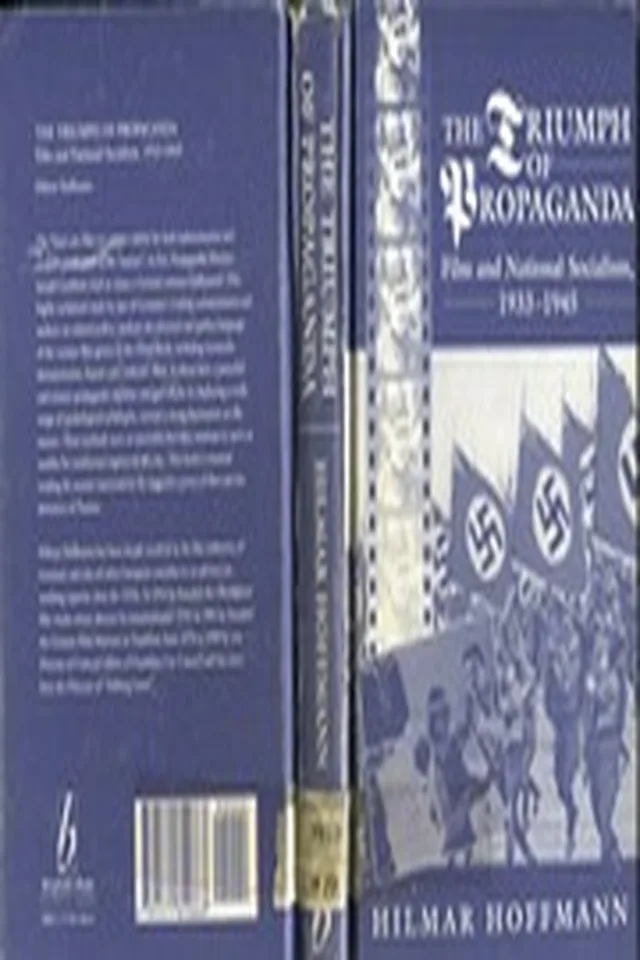
The Triumph Of Propaganda
 82
82

The Triumph Of Propaganda


Balthazar Finch (Senior Critic, Occult Philosophy) — 'The Triumph of Propaganda' is a revelation, stripping away the mundane to expose the occult machinery of historical manipulation. The Unknown author masterfully illustrates how symbols, archetypes, and potent mythologies, particularly those associated with figures like Isis and the twisted appropriation of ancient symbols by regimes like the SS, were weaponized. This work is essential for practitioners and scholars of Witchcraft and Paganism who wish to understand the dark arts of ideological control. It illuminates the dangers of corrupted spiritual forces and offers profound insights into the enduring power of the subconscious in shaping collective action. A chilling yet vital read.
📝 Description
82
This 20th-century text analyzes how propaganda uses ancient symbols to control belief.
This book examines the use of propaganda in the 20th century, focusing on how it manipulates perception through potent narratives. It argues that these narratives draw on ancient symbolism and occult resonance to forge empires and create discord. The work investigates the hidden forces behind 20th-century conflicts, detailing the manipulation of archetypal patterns and the creation of belief systems.
It speaks to readers interested in the metaphysical aspects of mass psychology and the lasting impact of myth on human events. The book shows how corrupted symbols and distorted truths function as tools of control, offering a perspective on the human condition and the ongoing conflict between awareness and deception. The text provides a distinct viewpoint on the repeating patterns of power and belief, prompting reflection on the hidden influences that shape historical movements.
This work connects historical propaganda to esoteric traditions by suggesting that its power derives from manipulating archetypal forces and ancient symbolism, which resonate on a deeper, perhaps occult, level. It implies that the effectiveness of propaganda lies not just in logic but in its ability to tap into subconscious patterns and collective myths. The book frames the struggle against propaganda as a battle between enlightenment and illusion, a theme common in various mystical and philosophical systems concerned with perception and reality.
💡 Why Read This Book?
Uncover the hidden esoteric threads weaving through historical propaganda. 'The Triumph of Propaganda' reveals how ancient symbols and occult principles were twisted for ideological control, offering a unique perspective for seekers and scholars of Witchcraft and Paganism. Understand the psychological and metaphysical forces that shape belief and power. Essential for those who wish to discern truth from manipulation.
⭐ Reader Reviews
Honest opinions from readers who have explored this book.
❓ Frequently Asked Questions
What is the primary esoteric focus of this book?
The book's esoteric focus lies in its exploration of how propaganda utilizes ancient symbols, archetypes, and distorted spiritual energies to manipulate collective consciousness and achieve ideological dominance. It examines the occult underpinnings of mass persuasion.
How does the book connect ISIS and ISLAM with propaganda?
The book likely explores the historical and symbolic associations with the goddess Isis, and how these might have been distorted or contrasted with Islamic symbolism, or how the name 'IS' itself was co-opted in modern propaganda, drawing parallels with ancient power structures.
What is the significance of the 'Unknown' author?
The anonymity of the author suggests a deliberate obfuscation, perhaps to allow the text's potent message to stand on its own, or to align with esoteric traditions where authorship is less important than the transmission of knowledge. It adds to the mystique.
Does the book offer practical advice for identifying propaganda?
While not a direct guide, by dissecting the methods and symbols used in historical propaganda, the book equips readers with a deeper understanding of manipulative tactics, thereby enhancing their ability to critically analyze modern information.
Who is the intended audience for 'The Triumph of Propaganda'?
The book is intended for serious students of esotericism, occult philosophy, history, and those interested in the intersection of mythology, psychology, and power. It appeals to discerning individuals seeking hidden knowledge.
🔮 Key Themes & Symbolism
Archetypal Manipulation and Symbol Warfare
This theme studies the profound use of archetypal imagery and potent symbols as weapons in ideological warfare. It examines how figures and concepts, once imbued with spiritual or cultural significance, can be twisted and recontextualized to serve nefarious purposes. The book explores how the subconscious mind, a fertile ground for archetypes, is targeted by propaganda, creating powerful emotional connections that bypass rational thought. Understanding this symbolic warfare is crucial for recognizing the subtle yet pervasive influence of hidden messages in shaping societal beliefs and actions, offering a potent lens for the practitioner of esoteric arts.
The Corrupted Divine and Ideological Necromancy
Here, the text scrutinizes the perversion of divine ideals and sacred traditions for political gain. It investigates how ideologies can engage in a form of 'ideological necromancy,' reanimating and distorting ancient spiritual forces and concepts, such as those associated with Isis or even misinterpretations of Islamic principles, to legitimize destructive agendas. This theme highlights the dangerous allure of corrupted sacredness and the catastrophic consequences when the pursuit of power eclipses genuine spiritual understanding. It serves as a cautionary tale about the appropriation of the numinous for temporal dominance, urging a critical examination of all claims to divine authority.
The Unseen Architects of Belief Systems
This crucial theme focuses on identifying the hidden forces and methodologies behind the construction and dissemination of powerful belief systems, particularly those employed in propaganda. It suggests that behind overt political narratives lie subtle, perhaps even occult, strategies designed to shape collective consciousness. The book encourages readers to look beyond the surface-level rhetoric and consider the underlying psychological and metaphysical architectures that underpin mass movements and societal control. It invites contemplation on who truly benefits from these constructed realities and how awareness can be a shield against manipulation, empowering individuals to discern authentic truth.
💬 Memorable Quotes
Direct passages from the work, attributed to the author.
“The echo of Isis, a shadow in the Reich.”
— This alludes to the appropriation or distortion of ancient, powerful feminine divine imagery (like Isis) and its dark perversion within a regime obsessed with power and control, highlighting the occult manipulation of archetypes.
“Truth is but a whisper when the drum of war beats loudest.”
— This poignant observation highlights how the urgency and emotional intensity of conflict, often amplified by propaganda, can drown out rational discourse and factual reporting, making people susceptible to manufactured narratives.
“Ideology is the altar upon which the masses are sacrificed.”
— This stark metaphor suggests that rigid, unexamined belief systems, when elevated to the status of dogma, can lead individuals to suffer and die for abstract causes, often orchestrated by those who control the ideology.
💡 Key Ideas
Editorial paraphrase of the work's core concepts — not direct quotes.
Where symbol dies, the void is filled by fear.
This quote underscores the critical role of potent, meaningful symbols in providing structure and understanding. When these are absent or corrupted, a vacuum emerges, which propaganda often exploits by introducing fear-based narratives.
The SS: a sigil of perverted power.
This quote directly addresses the Waffen SS, framing their insignia (sigil) not just as a symbol of a military unit, but as an emblem representing a profound corruption of power and spiritual forces, indicative of occult intent.
🌙 Esoteric Significance
Tradition
This work resonates deeply with occult traditions that examine the manipulation of consciousness and the power of symbolism. It aligns with Hermeticism's focus on the principle of 'As Above, So Below,' viewing propaganda as a means to manifest distorted ideals in the material world. It also connects with psychological esotericism, exploring how archetypal forces and the collective unconscious are accessed and weaponized. The book's exploration of corrupted sacred imagery and the use of sigils (like the SS) points towards traditions concerned with the ethical and practical application of arcane knowledge and the dangers of its misuse.
Symbolism
The book likely dissects the potent symbolism employed in propaganda, examining how ancient figures like Isis, or even distorted interpretations of Islamic concepts, and totalitarian emblems such as those of the SS, were strategically utilized. It explores how these symbols, stripped of their original context or imbued with new, often sinister meanings, become potent tools for psychological manipulation. The re-appropriation and perversion of established iconography represent a form of symbolic warfare, designed to evoke specific emotional responses and forge a collective identity aligned with the propagandist's agenda. Understanding this symbolic language is key to deciphering hidden messages.
Modern Relevance
In an age saturated with digital media and information warfare, the lessons from 'The Triumph of Propaganda' are more critical than ever. The book’s examination of how belief systems are constructed and manipulated through potent narratives and symbolism provides an essential framework for discerning truth from falsehood in contemporary discourse. The underlying principles of psychological influence and the weaponization of archetypes remain remarkably consistent, whether employed through traditional media or modern online platforms. Understanding these historical precedents empowers individuals to critically engage with the information they consume, fostering resilience against persuasive technologies and fostering a more informed and discerning public.
👥 Who Should Read This Book
This profound work is essential for serious students of occult philosophy, esoteric history, and comparative religion. Scholars of Witchcraft and Paganism will find invaluable insights into the historical manipulation of sacred symbolism and archetypes. Seekers of hidden knowledge and those interested in the psychology of power and belief will gain a deeper understanding of how narratives shape reality. Practitioners of magic and ritual will benefit from recognizing the methods of energetic and psychological manipulation. Beginners curious about the darker currents of history and the esoteric underpinnings of societal control will find a compelling, albeit challenging, introduction.
📜 Historical Context
Emerging from the tumultuous first half of the 20th century, a period rife with ideological fervor, technological advancements in mass communication, and the devastating impacts of global conflict, 'The Triumph of Propaganda' situates itself within a landscape where the power of narrative became a primary weapon. The rise of totalitarian regimes, characterized by their sophisticated use of propaganda to mobilize populations and demonize enemies, is central to this context. The book likely draws parallels between the manipulative tactics employed during this era—including the co-option of ancient symbols and the distortion of religious or cultural narratives (e.g., references to Isis, Islam, and the SS)—and the enduring mechanisms of persuasion. This historical backdrop provides the fertile ground for understanding how psychological manipulation and esoteric symbolism could be weaponized on an unprecedented scale, shaping the course of history and influencing subsequent generations.
📔 Journal Prompts
How has a symbol from your own culture or tradition been distorted or co-opted in modern media or political discourse?
Reflect on a time you felt strongly influenced by a narrative without fully understanding its origins. What archetypes or emotions were being invoked?
Consider the concept of 'ideological necromancy.' How can ancient spiritual forces be reanimated and twisted for contemporary agendas, and what are the potential consequences?
In what ways does the 'As Above, So Below' principle manifest in the strategies of modern propaganda, and how can this understanding empower you?
Analyze a current event or political movement. Can you identify any 'unseen architects' or subtle symbolic strategies at play that shape public perception?
🗂️ Glossary
Archetype
In esoteric and psychological contexts, an archetype is a universal, archaic pattern and image that derives from the collective unconscious and is the psychic counterpart of an inherited structure, present in the individual as a pattern of potential behavior or imagery.
Sigil
A sigil is a symbol or diagram used in magic, often created with the intention of manifesting a specific desire or purpose. Its power lies in its charged meaning and its connection to the magician's will and the subconscious.
Hermeticism
A philosophical and religious tradition based on writings attributed to Hermes Trismegistus. It emphasizes spiritual enlightenment, the interconnectedness of all things, and the principle of 'As Above, So Below,' suggesting a correspondence between the macrocosm and microcosm.
Collective Unconscious
A term coined by Carl Jung, referring to a layer of the unconscious mind that is shared by all humanity, containing archetypes and inherited predispositions that influence thought, emotion, and behavior across cultures and generations.
Numen/Numinous
The numinous refers to a powerful spiritual or divine presence that evokes awe, mystery, and sometimes terror. It is the experience of the sacred or the holy, often associated with an encounter with the divine.
This book appears in 2 collections
🔮 Readers Also Liked
Browse all →




![ERIC ED481283: Salem Witch Trials. [Lesson Plan].](/img/thumb/eric-ed481283-salem-witch-trials-lesson-plan-eric.webp)
From the “Witchcraft” Collection
View all →




More Free Witchcraft & Paganism Books
View all →