The BLUE laws of New Haven colony, usually called Blue laws of Connecticut ... 1838: Iss 119
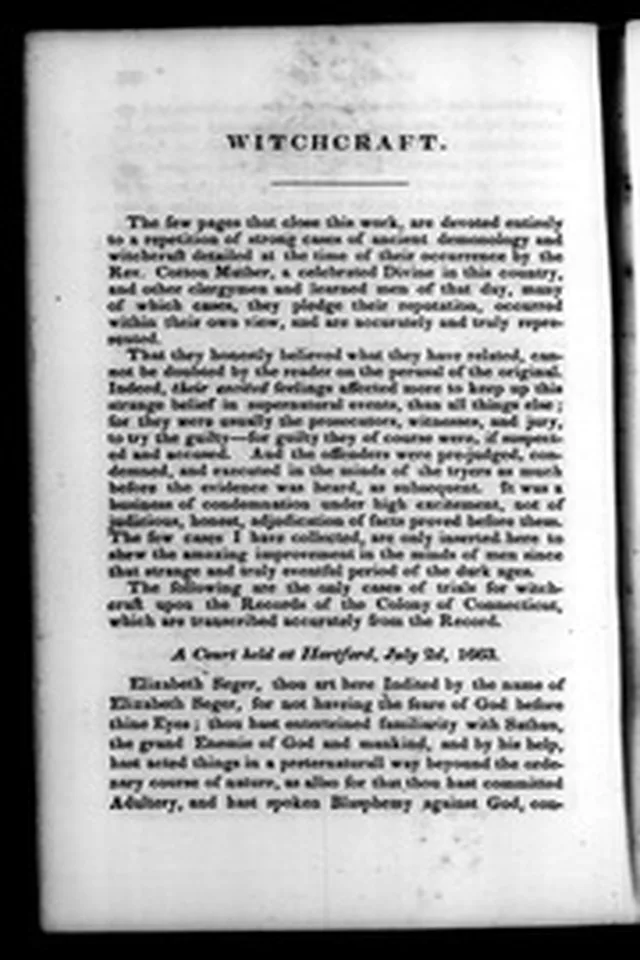
 83
83

The BLUE laws of New Haven colony, usually called Blue laws of Connecticut ... 1838: Iss 119



Lorelei Sage (Contemplative Literature Editor) — In 'The BLUE Laws of New Haven Colony,' we encounter a fascinating artifact of early Puritanical jurisprudence. This 1838 issue transcends mere historical record, offering potent insights into the interwoven tapestry of religious dogma and civil governance. The 'Blue Laws' act as a coded language, revealing the anxieties, aspirations, and perceived cosmic order of a nascent society. For practitioners and scholars of socio-theological history, this volume is invaluable, providing direct access to the foundational principles that sought to impose a divine will upon colonial life. Its strength lies in its unvarnished presentation, allowing readers to draw their own conclusions about the efficacy and esoteric implications of such codified spirituality.
📝 Description
83
Published in 1838, 'The Blue Laws of New Haven Colony' records early American statutes rooted in strict religious interpretation.
This 1838 compilation, known as the Blue Laws of Connecticut, presents a collection of statutes from the New Haven Colony. These laws reflect a society where religious doctrine heavily influenced civil and personal conduct. The text goes beyond simple prohibitions to show a detailed theological structure. It maps out expected human behavior according to a divine plan. Every rule, whether for daily life or serious offenses, suggests an era with a strong connection between the spiritual and material worlds. Societal organization was directly tied to cosmic principles.
For those interested in historical governance and belief systems, this volume functions as a record of social control mechanisms. It demonstrates the impact of codified religious ideas on a community. The book encourages reflection on how faith shaped law, the meaning within communal regulations, and the ongoing human effort to implement spiritual order on Earth. This edition, part of a curated collection, appeals to readers interested in the origins of social structures and the less obvious forces that formed them.
The Blue Laws of New Haven Colony offer a unique window into how a specific religious worldview attempted to structure society. Within esoteric traditions, such attempts to manifest divine order on Earth, even through strict legal codes, are of interest. The perceived link between individual conduct, community rules, and cosmic alignment echoes themes found in various mystical and philosophical systems that seek a correspondence between macrocosm and microcosm. This text shows a historical instance of a community striving to align its earthly existence with a divinely perceived celestial blueprint.
💡 Why Read This Book?
Delve into the foundational spiritual and legal architecture of early America. Understand the esoteric worldview that shaped colonial society and its enduring impact. Ideal for seekers of hidden historical knowledge, scholars of religion and law, and practitioners interested in the manifestation of belief systems.
⭐ Reader Reviews
Honest opinions from readers who have explored this book.
❓ Frequently Asked Questions
What is the primary focus of the 'Blue Laws'?
The primary focus is on enforcing strict religious and moral conduct, often derived directly from biblical interpretations, to maintain a God-fearing and orderly society within the New Haven Colony.
Are these laws still in effect today?
No, these specific laws are historical artifacts and are not legally enforced in modern times. They represent a distinct period of colonial governance.
What does 'esoteric' mean in relation to these laws?
It refers to the underlying spiritual beliefs, hidden symbolism, and philosophical frameworks that informed the creation and enforcement of these laws, aiming for a divinely ordained social order.
Who originally compiled or wrote these laws?
The original authorship is attributed to the governing bodies of the New Haven Colony, reflecting the collective religious and legal consciousness of the time, rather than a single author.
How does this relate to witchcraft and paganism?
While not directly advocating for witchcraft or paganism, the extreme religious fervor and the legal persecution of perceived deviations from strict Puritan doctrine are part of the broader historical context often studied alongside witchcraft trials and the suppression of alternative spiritual practices.
🔮 Key Themes & Symbolism
The Divine Mandate and Social Order
This theme explores how the Puritan colonists believed their laws were divinely ordained, directly reflecting God's will for society. The 'Blue Laws' were not merely secular regulations but sacred covenants, intended to manifest a heavenly kingdom on Earth. The meticulous detailing of prohibitions and commandments reveals a deep-seated desire to purify the community, expelling elements deemed contrary to divine law. This perspective highlights the profound integration of theology and governance, where every aspect of life was subject to spiritual scrutiny and the pursuit of a perfect, God-centered existence.
Symbolism of Purity and Control
The 'Blue Laws' are rich with symbolic meaning, particularly concerning purity and control. Restrictions on leisure, work, and even personal conduct were designed to prevent 'sin' and maintain spiritual cleanliness. The enforcement of these laws symbolized the colony's commitment to a righteous path, differentiating themselves from perceived moral laxity elsewhere. This emphasis on strict regulation served as a visible manifestation of their spiritual discipline, a constant reminder of their covenant with God and the consequences of straying from the prescribed path. The laws themselves become a symbolic shield against the forces of chaos and temptation.
The Esoteric Underpinnings of Governance
Beneath the surface of legalistic text lies an esoteric worldview that shaped the 'Blue Laws.' The belief in predestination, the constant battle against unseen spiritual forces, and the search for divine signs permeated the colonial psyche. These laws can be interpreted as an attempt to codify and control the spiritual landscape, to impose a visible order that mirrored an unseen, divinely orchestrated reality. For the esoteric scholar, this volume offers a unique window into how metaphysical beliefs were translated into tangible societal structures, demonstrating the powerful, often unseen, influence of spiritual cosmology on the development of civilization.
💬 Memorable Quotes
Direct passages from the work, attributed to the author.
“The Sabbath day must be kept holy.”
— This foundational tenet underscores the central role of religious observance and spiritual devotion in the daily life and governance of the colony.
“No one shall run on the Sabbath day.”
— Illustrates the stringent, often literal interpretation of religious observance, extending to the regulation of physical activity to ensure solemnity.
“No one shall be a taster of wine or strong drink.”
— Reflects a deep concern with temperance and the potential for indulgence to lead to moral or spiritual decay.
“No one shall travel more than three miles on the Sabbath day.”
— Demonstrates the practical application of religious law to limit movement and prevent activities deemed non-essential or potentially sinful on the holy day.
“No one shall play any game upon the Lord's day.”
— Highlights the prohibition of all forms of recreation and amusement, emphasizing the sacred and solemn nature expected of the Sabbath.
🌙 Esoteric Significance
Tradition
The 'Blue Laws' are intrinsically linked to the Puritan tradition, a branch of Calvinism that emphasized divine sovereignty, predestination, and the establishment of a godly commonwealth. Esoterically, their significance lies in the manifestation of a worldview where the earthly realm was seen as a direct reflection of a celestial order. The laws sought to align human society with perceived divine will, acting as a form of applied theology aimed at spiritual purification and the prevention of demonic influence. This tradition, while outwardly austere, harbored an intense focus on spiritual struggle and the meticulous charting of one's path toward salvation.
Symbolism
The laws are replete with symbolism: the Sabbath as a sacred portal to the divine, prohibitions against revelry as a warding against spiritual corruption, and the strictures on daily life as a means of channeling human energy toward righteous purpose. Each rule can be seen as a symbolic barrier against the forces of chaos and temptation, an effort to maintain the purity of the 'elect' community. The very act of codifying these rules was symbolic of building a spiritual fortress, a visible manifestation of their covenant with God, intended to keep them separate from the perceived secular temptations of the world.
Modern Relevance
In contemporary society, the 'Blue Laws' offer a potent lens through which to examine the enduring tension between secularism and religious influence in public life. They serve as a historical case study for understanding how deeply ingrained spiritual beliefs can shape legal and social structures. For practitioners of esoteric traditions, they highlight the power of codified intention and the historical attempts to manifest spiritual ideals in the material world. They prompt reflection on the nature of social control, the role of morality in governance, and the perennial human quest for order, whether derived from divine decree or secular reason.
👥 Who Should Read This Book
Scholars of American history, religious studies, and legal history will find this volume indispensable for understanding the roots of colonial governance and the pervasive influence of religious thought. Seekers of esoteric knowledge will be drawn to the underlying metaphysical worldview that informed these laws, revealing how societal structures can be an outward manifestation of inner spiritual beliefs. Practitioners interested in the history of social control and the manifestation of belief systems will find valuable case studies here. Even the casual reader curious about the unique and often austere foundations of early American society will find this a compelling and thought-provoking read.
📜 Historical Context
Published in 1838, this compilation of the 'Blue Laws' of New Haven Colony emerges from a period of intense historical reflection and rediscovery of America's colonial past. The 19th century saw a burgeoning interest in the nation's origins, fueled by a desire to understand the foundational principles upon which the United States was built. The 'Blue Laws,' originating from the severe Puritanical environment of the 17th century, represented a stark contrast to the more liberalizing tendencies of the antebellum era. Their re-publication speaks to a fascination with the extreme religious fervor and the attempts to establish a theocratic society. This era was also marked by various social reform movements and a heightened awareness of how historical legal frameworks could inform or critique contemporary society, making the 'Blue Laws' a subject of both academic curiosity and moral contemplation.
📔 Journal Prompts
How might the concept of a 'holy day' influence your personal daily practices, beyond religious observance?
Reflect on a modern law or societal norm that you believe has roots in spiritual or moral convictions. What are these roots?
Imagine you are a colonist tasked with interpreting and enforcing one of these 'Blue Laws.' What challenges would you face?
Consider the symbolism of 'purity' in the context of the 'Blue Laws.' How does the concept of purity manifest in contemporary society?
In what ways can the meticulous regulation of behavior, as seen in these laws, be viewed as a form of spiritual or psychological control?
🗂️ Glossary
Sabbath
The seventh day of the week, observed as a day of rest and worship, particularly in Puritan tradition, with strict prohibitions against secular activities.
Puritan
Members of a religious group in the 16th and 17th centuries in England and America who sought to purify the Church of England of Roman Catholic practices.
Theocratic
A system of government in which priests rule in the name of God or a god, or a government where religious law is the basis of civil law.
Edict
An official order or proclamation issued by an authority, often a sovereign ruler or governing body.
Covenant
A solemn agreement or promise, often used in a religious context to describe the agreement between God and his people.
This book appears in 2 collections
🔮 Readers Also Liked
Browse all →









From the “Witchcraft” Collection
View all →









More Free Witchcraft & Paganism Books
View all →