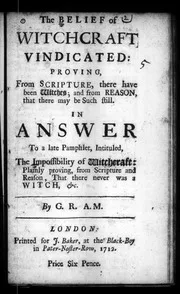
The BELIEF of witchcraft vindicated: proving, from Scripture, there have been witches; and, from reason, that there may be such still. ... 1712: Iss 95
 77
77

The BELIEF of witchcraft vindicated: proving, from Scripture, there have been witches; and, from reason, that there may be such still. ... 1712: Iss 95

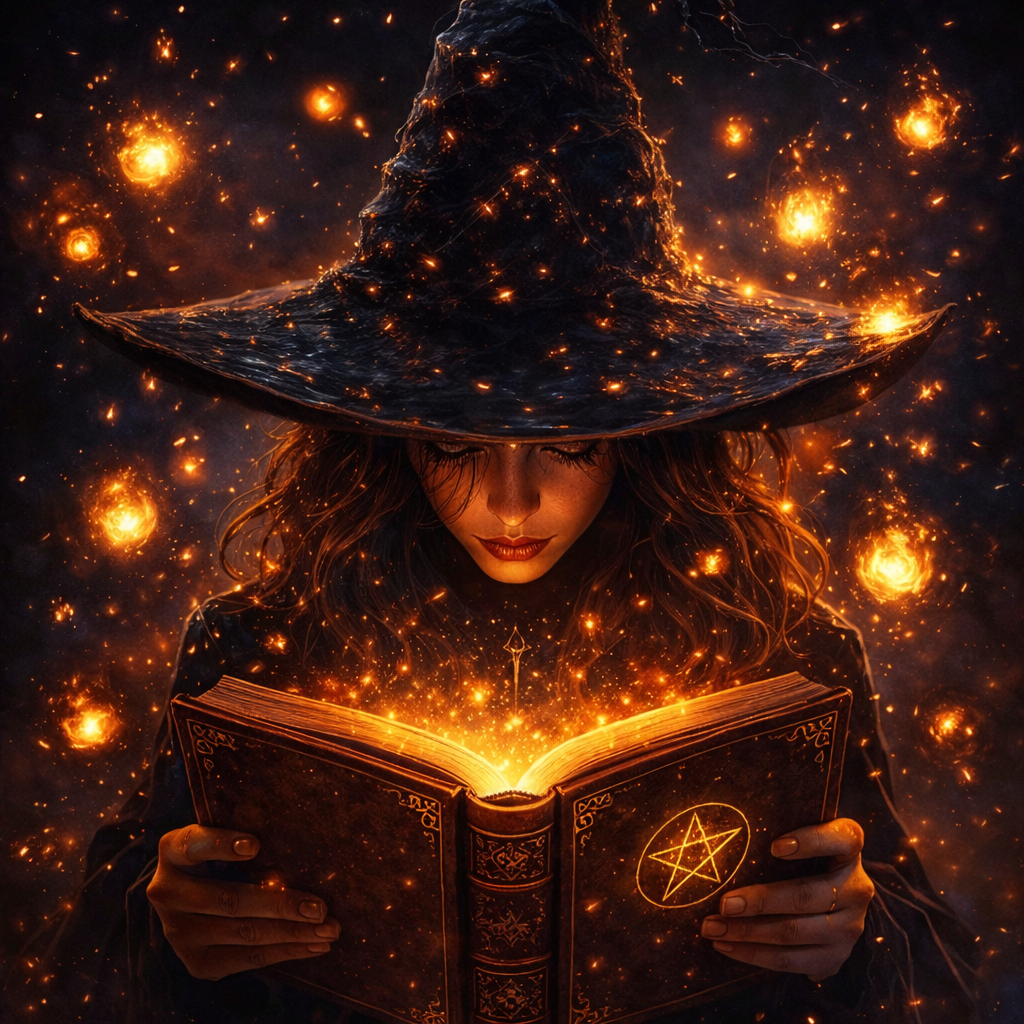

Celeste Moreau (Divination & Symbolism Reviewer) — In "The BELIEF of witchcraft vindicated," the anonymous author masterfully reconstructs the historical and theological arguments for the existence of witches, drawing directly from scripture and philosophical inquiry. This 1712 text offers a rare glimpse into the fervent debates of its time, presenting a compelling case that transcends mere superstition. Its strength lies in its reasoned approach, moving beyond mere condemnation to explore the very nature of occult influence. This work is essential for scholars of religious history, witchcraft studies, and particularly for practitioners seeking to understand the foundational beliefs that have shaped modern occult traditions. It invites contemplation on the persistent power of belief itself.
📝 Description
77
Published in 1712, "The BELIEF of witchcraft vindicated" argued from Scripture and reason for the continued existence of witches.
This 1712 text, presented as Issue 95 of a periodical, defends the belief in witchcraft using both religious and logical arguments. The anonymous author asserts that scripture confirms the historical existence of witches. Furthermore, the author contends, through rational deduction, that individuals practicing witchcraft may still exist in the present day.
The book moves beyond simple historical accounts to question the deeper metaphysical aspects of power and influence. It prompts readers to consider the unseen forces that impact our world. The author attempts to balance religious doctrine with logical reasoning, creating an argument that appeals to those interested in hidden knowledge, the history of the occult, and the enduring questions about human consciousness and its links to the spiritual or natural world.
Published during a period of intense debate about witchcraft, this work engages with the ongoing discussion regarding the reality of magical practices and their theological implications. It sits within a tradition of texts that sought to either condemn or, as in this case, vindicate witchcraft, often by reconciling its perceived existence with religious or philosophical frameworks. The author's use of both scriptural interpretation and rational argument reflects a common approach in esoteric discourse of the era, attempting to legitimize or understand supernatural phenomena within established belief systems.
💡 Why Read This Book?
Unearth forgotten arguments for the existence and legitimacy of witchcraft, grounded in scripture and logic. This text offers a unique historical perspective for scholars of occultism, theologians, and practitioners seeking to understand the enduring debates surrounding magic. Ideal for those curious about the philosophical underpinnings of belief and the power of the unseen.
⭐ Reader Reviews
Honest opinions from readers who have explored this book.
❓ Frequently Asked Questions
What is the primary argument of this text?
The book aims to vindicate the belief in witchcraft by demonstrating its scriptural basis and logical possibility, asserting that witches have existed historically and may continue to exist.
Who is the author of this work?
The author is listed as 'Unknown,' adding an air of mystery and allowing the arguments to stand on their own merit, independent of personal attribution.
What is the historical context of this publication?
Published in 1712, this work emerges from an era deeply concerned with witchcraft, offering a defense of its existence during a period of significant witch trials and theological debate across Europe and America.
Does this book endorse or condemn witchcraft?
The text 'vindicates' witchcraft, meaning it argues in favor of its existence and legitimacy, rather than condemning it. It seeks to prove its reality through scripture and reason.
What kind of reader would benefit most from this book?
Scholars of religious history, occult studies, demonology, and those interested in the philosophical and theological debates surrounding witchcraft will find this book particularly valuable.
🔮 Key Themes & Symbolism
Scriptural Vindication of Witchcraft
This theme examines how the anonymous author meticulously dissects biblical texts to establish a precedent for the existence of witches. It explores the theological interpretations employed, moving beyond simplistic condemnation to find scriptural support for the notion that witchcraft, in some form, is divinely acknowledged or at least permitted. The focus is on understanding how sacred texts were used to justify or explain the presence of occult practices and practitioners within a religious framework, challenging the common perception of scripture as solely an instrument of prohibition.
The Philosophical Case for Contemporary Witchcraft
Beyond scriptural evidence, this theme examines the author's use of reason and logic to argue for the continued possibility of witchcraft in 1712. It investigates the philosophical underpinnings of this argument, considering ideas about causality, agency, and the nature of unseen forces. The text probes how rational thought, even within a religiously charged context, could be employed to defend the existence of phenomena that were often dismissed or feared. This section highlights the intellectual gymnastics required to reconcile empirical observation with theological doctrine.
Historical Debates on the Occult
This theme places "The BELIEF of witchcraft vindicated" within the broader historical discourse surrounding magic and the occult in the early modern period. It contextualizes the book’s arguments against the backdrop of widespread witch hunts, theological controversies, and burgeoning scientific inquiry. By examining the socio-political and religious climate, we gain insight into why such a vindication was necessary and how it might have been received. This exploration uncovers the complex interplay between belief, fear, and intellectual discourse that characterized attitudes towards the supernatural.
💬 Memorable Quotes
Direct passages from the work, attributed to the author.
“There have been witches, and there may be such still.”
— This concise statement expresses the core thesis, asserting both historical reality and ongoing possibility, inviting deeper investigation into the evidence presented.
“Scripture doth bear witness to their existence.”
— Highlights the author's reliance on religious texts as a primary source of authority, suggesting a theological framework for understanding witchcraft's presence.
“Reason persuades us that such arts are not extinguished.”
— Emphasizes the use of logical deduction and rational argument to support the continued existence of witchcraft, complementing scriptural claims.
“The unseen forces are ever at play.”
— Suggests a belief in a dynamic supernatural realm that actively influences the material world, a foundational concept for many occult traditions.
“To deny them is to deny Providence.”
— Posits a connection between the existence of witches and divine will, framing their presence as part of a larger, divinely ordained order.
🌙 Esoteric Significance
Tradition
This work aligns with the broader tradition of theological and philosophical defenses of the occult, particularly those that sought to integrate supernatural beliefs with established religious doctrines. It can be seen as a precursor to later Western Esoteric traditions that explored magic, demonology, and the nature of spiritual forces. Its emphasis on scriptural interpretation for occult matters is a common thread in many early magical and religious texts, reflecting a desire to find divine sanction for hidden knowledge.
Symbolism
While not overtly symbolic in its textual presentation, the very concept of 'witchcraft' in this period was laden with symbolic meaning. It represented the 'other,' the forbidden knowledge, the connection to primal forces, and often, a challenge to patriarchal or ecclesiastical authority. The vindication of witchcraft can be seen as an symbolic act of reclaiming or reinterpreting these potent associations, suggesting that what was feared or condemned might hold legitimate power or truth.
Modern Relevance
In contemporary times, this text offers a crucial historical lens for understanding the roots of modern witchcraft and paganism. It allows practitioners and scholars to trace the lineage of beliefs and arguments that have shaped the occult landscape. Furthermore, its examination of belief, faith, and reason in the context of the supernatural appeals to ongoing discussions about the nature of reality, consciousness, and the human inclination to seek meaning beyond the empirically verifiable. It encourages critical engagement with historical perspectives on the unseen.
👥 Who Should Read This Book
This intriguing volume is a valuable resource for several distinct groups. **Scholars of Religious History and Witchcraft Studies** will find it an indispensable primary source, offering direct insight into the arguments and intellectual currents of the early 18th century. **Occult Practitioners and Modern Witches** may draw inspiration and historical context from its vindication of witchcraft, understanding the long and often contentious path of its recognition. **Students of Philosophy and Theology** will appreciate its reasoned approach to a complex subject, exploring the intersection of faith and logic. **General Readers with a curiosity for the esoteric and the history of belief** will find a compelling narrative that challenges conventional perceptions and examines enduring mysteries.
📜 Historical Context
Published in 1712, "The BELIEF of witchcraft vindicated" emerges from a central era in the history of occult belief and persecution. The preceding centuries had been marked by intense witch trials across Europe and colonial America, fueled by religious fervor, societal anxieties, and nascent attempts at legal codification of witchcraft. While the peak of the witch hunts was beginning to wane in some regions, the intellectual and theological debates surrounding the reality and nature of witchcraft remained vibrant. This text participates in that discourse, offering a perspective that sought to reconcile scriptural authority with observable phenomena and philosophical reasoning. It stands as a evidence of the enduring fascination with and contention surrounding the occult, even as Enlightenment ideals began to challenge traditional beliefs.
📔 Journal Prompts
How does the author's use of scripture to justify the existence of witches differ from common interpretations of religious texts?
What parallels can be drawn between the 'reason' used in this text and modern arguments for or against the existence of paranormal phenomena?
Consider the societal anxieties that might have necessitated a 'vindication' of witchcraft in 1712. How do these anxieties compare to modern fears?
If you were a reader in 1712, how would the arguments presented in this text influence your beliefs about witchcraft?
Explore the concept of 'belief' itself. How does this text illustrate the power and persistence of deeply held beliefs, even when challenged?
🗂️ Glossary
Vindicated
To clear someone or something of blame or suspicion; to show or prove to be right, reasonable, or justified. In this context, it means to defend and prove the legitimacy of the belief in witchcraft.
Scripture
Sacred writings of a religion. The author uses biblical texts as evidence to support the existence of witches, indicating a reliance on religious authority for their arguments.
Occult
Relating to or dealing with supernatural, mystical, or magical powers, practices, or phenomena. The term encompasses a wide range of beliefs and activities outside the scope of conventional science and religion.
Providence
The protective care of God or of nature as a spiritual power. The author suggests that the existence of witches might be part of a divinely ordained plan or allowance.
Metaphysical
Based on abstract reasoning or dealing with the fundamental nature of reality, existence, and knowledge. The text engages in metaphysical arguments to prove the possibility of witchcraft.
This book appears in 2 collections
🔮 Readers Also Liked
Browse all →







From the “Witchcraft” Collection
View all →






More Free Witchcraft & Paganism Books
View all →