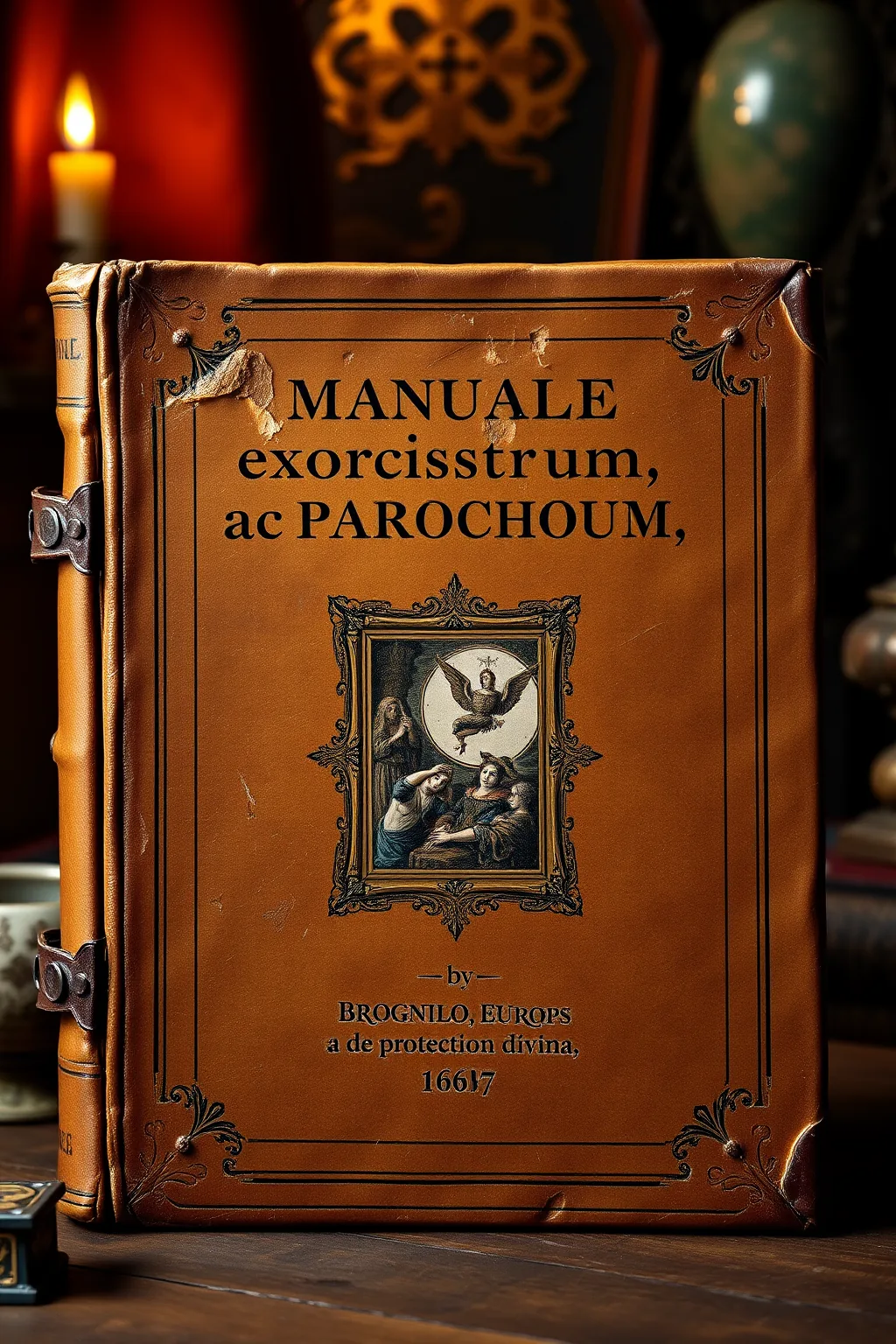
Manuale exorcistarum, ac parochorum hoc est Tractatus de curatione ac protectione divina; in quo reprobatis erroribus, verus, oertus, securus, catholicus, apostolicus, ... 1658: Iss 172
 71
71

Manuale exorcistarum, ac parochorum hoc est Tractatus de curatione ac protectione divina; in quo reprobatis erroribus, verus, oertus, securus, catholicus, apostolicus, ... 1658: Iss 172



Candido Brognolo’s *Manuale Exorcistarum* stands as a cornerstone of 17th-century spiritual defense literature. Its meticulous exposition of Catholic doctrine concerning demonic influence and divine intervention is both comprehensive and authoritative. Brognolo masterfully navigates complex theological arguments, offering clear directives for the clergy tasked with spiritual healing and protection. The text’s strength lies in its rigorous adherence to apostolic tradition, providing practitioners with a secure and proven methodology. This is not a work for the faint of heart, but for dedicated scholars and clergy seeking a deep understanding of historical exorcism and the profound spiritual battles it represents. A vital resource for grasping the practical and theoretical dimensions of spiritual warfare in the post-Reformation Catholic Church.
📝 Description
71
Candido Brognolo's 1658 *Manuale Exorcistarum* details the Catholic Church's approved methods for spiritual protection and exorcism.
Published in 1658, Candido Brognolo's *Manuale Exorcistarum* is a scholarly work on divine protection and the practice of exorcism within the Catholic tradition. Brognolo, born in 1607, aimed to correct what he saw as errors in contemporary spiritual practices, laying out what he termed the 'true, pure, secure, Catholic, and Apostolic' approach. The book is structured as a guide for priests and parish ministers, addressing the confrontation of malevolent forces.
Its contents include discussions of theological debates surrounding spiritual defense, specific rites, and an understanding of the symbolic conflict between good and evil. The text reflects the era's beliefs regarding the permeability of the veil between the material and spiritual worlds. Brognolo's writing is dense and scholarly, requiring careful reading to grasp its insights into belief systems, ritual practices, and the perceived struggle for the soul.
This manual operates within the Catholic Church's framework for addressing perceived supernatural disturbances, a practice with roots in early Christianity and medieval demonology. While not esoteric in the sense of occultism, it engages with a worldview where divine and infernal powers directly influence human affairs. Its focus on prescribed rituals and theological justification for combating malevolent influences positions it within a tradition of spiritual defense literature that coexisted with more private or forbidden magical texts.
💡 Why Read This Book?
Uncover lost knowledge on spiritual warfare and divine protection. Essential for historians of religion, occult practitioners, and anyone fascinated by the historical intersection of faith, ritual, and the unseen. Gain profound insights into Catholic demonology and the enduring quest for spiritual safeguarding. Read free online.
⭐ Reader Reviews
Honest opinions from readers who have explored this book.
❓ Frequently Asked Questions
What is the primary purpose of this manual?
The primary purpose of Brognolo's manual is to provide a comprehensive guide for Catholic clergy on performing exorcisms and offering divine protection against perceived malevolent spiritual forces, based on established doctrine and practice.
Who was Candido Brognolo?
Candido Brognolo (b. 1607) was a learned scholar and clergyman who authored this significant 17th-century treatise on exorcism and spiritual defense within the Catholic tradition.
What does 'Tractatus de curatione ac protectione divina' mean?
This Latin phrase translates to 'Treatise on Divine Healing and Protection,' indicating the book's focus on spiritual remedies and safeguards against spiritual harm.
Is this book suitable for beginners in esotericism?
While rich in historical and theological content, the text's dense, scholarly nature and specific religious context might be challenging for absolute beginners. It is best suited for those with some background in religious history or occult studies.
What historical period does this book represent?
This book represents the mid-17th century, a period marked by intense religious fervor, the aftermath of the Reformation, and significant societal interest in witchcraft, demonology, and spiritual phenomena.
🔮 Key Themes & Symbolism
The Art of Exorcism and Spiritual Warfare
This theme examines the detailed procedures, theological justifications, and spiritual preparedness required for the solemn rite of exorcism. It explores the Catholic understanding of demonic influence, the nature of evil spirits, and the divinely sanctioned methods for their expulsion and the protection of the faithful. Brognolo's work meticulously outlines the spiritual and psychological dimensions of this battle, emphasizing faith, prayer, and adherence to apostolic tradition as the primary weapons against malevolent forces. It reveals a worldview where spiritual integrity is actively defended through rigorous ritual and unwavering belief.
Divine Providence and Catholic Orthodoxy
Central to the *Manuale Exorcistarum* is the concept of divine providence—God's benevolent and active governance of the universe. Brognolo underscores that all spiritual protection and efficacy in combating evil ultimately derive from God's grace and authority. The text rigorously adheres to orthodox Catholic teachings, distinguishing its approach from heterodox or superstitious practices. It serves as a bulwark against perceived errors, reaffirming the Church's role as the divinely appointed custodian of spiritual truth and the conduit for God's protective power, ensuring that the faithful remain secure within the embrace of sacred doctrine and sacraments.
The Interplay of Faith, Ritual, and Symbolism
This theme examines how faith is enacted through precise ritual and imbued with potent symbolism. Brognolo's manual is replete with explanations of the symbolic significance of prayers, sacraments, holy objects, and specific gestures used in exorcism. It illustrates the belief that these outward actions, when performed with true faith and within the correct liturgical framework, possess a profound spiritual power to ward off evil and restore divine order. The text reveals a sophisticated understanding of the human psyche's engagement with the sacred, where ritual acts as a tangible manifestation of invisible spiritual realities and a conduit for divine intervention.
💬 Memorable Quotes
Direct passages from the work, attributed to the author.
“Verus, oertus, securus, catholicus, apostolicus...”
— This Latin phrase, meaning 'true, pure, secure, Catholic, apostolic,' expresses the desired qualities of the methods and doctrines presented, emphasizing authenticity and adherence to Church tradition.
“Tractatus de curatione ac protectione divina”
— Highlighting the book's core purpose: a treatise dedicated to spiritual healing and safeguarding through divine means, rather than mere human effort.
“Reprobatis erroribus”
— Meaning 'errors having been rejected,' this signifies the manual's intent to correct misconceptions and establish an authoritative, orthodox approach to spiritual matters.
“Manuale exorcistarum”
— Directly translated as 'Manual of Exorcists,' this clearly defines the primary audience and practical function of the text within the Church's hierarchy.
“Ac parochorum”
— Indicating its relevance 'and for parish priests,' this broadens the manual's applicability beyond specialized exorcists to those ministering directly to congregations.
🌙 Esoteric Significance
Tradition
This text is firmly rooted in the tradition of Catholic demonology and spiritual theology, specifically within the framework of the Counter-Reformation. It represents the Church's formal engagement with the phenomena of alleged demonic possession and influence, offering a divinely sanctioned methodology for addressing such challenges. While not overtly 'occult' in the modern sense, its focus on spiritual warfare, ritual efficacy, and the unseen realm aligns with broader esoteric interests in the hidden forces of the universe and humanity's interaction with them.
Symbolism
The symbolism within the *Manuale Exorcistarum* is deeply tied to Catholic sacramental theology and iconography. Key symbols include the use of holy water (representing purification and divine grace), the crucifix (embodying Christ's victory over sin and death), blessed salt (symbolizing spiritual cleansing), and various prayers and exorcistic formulas (acting as spiritual shields and weapons). The ritual itself becomes a potent symbol of the Church's authority to command spiritual forces and restore divine order, with each element carrying layers of meaning related to faith, redemption, and the triumph of good over evil.
Modern Relevance
In contemporary times, Brognolo's *Manuale Exorcistarum* offers crucial historical context for understanding the evolution of spiritual beliefs and practices. For scholars, it provides primary source material on 17th-century religious thought, demonology, and the social anxieties of the era. For practitioners of various spiritual traditions, it offers insights into historical methods of spiritual defense and the enduring human impulse to seek protection from perceived malevolent forces. It prompts reflection on the nature of belief, the power of ritual, and the psychological dimensions of spiritual struggle, resonating with modern discussions on mental well-being and the human search for meaning.
👥 Who Should Read This Book
This important work is indispensable for scholars of religious history, theology, and the occult, providing a critical primary source for understanding 17th-century Catholic approaches to spiritual warfare. Practitioners of esoteric disciplines, particularly those interested in historical demonology and spiritual defense, will find invaluable insights into established ritualistic practices and their underlying theological frameworks. Seekers of hidden knowledge concerning the nature of good and evil, and the historical battle against perceived malevolent influences, will be drawn to its profound depth. While its scholarly nature may require dedicated study, its historical significance and thematic richness make it a compelling read for anyone interested in the intersection of faith, ritual, and the unseen world.
📜 Historical Context
Published in 1658, the *Manuale Exorcistarum* emerges from a turbulent period in European history. The continent was still reeling from the Thirty Years' War, religious tensions between Catholicism and Protestantism remained high, and anxieties surrounding witchcraft and demonic influence were prevalent. The Catholic Church, in its Counter-Reformation efforts, sought to consolidate its authority and provide clear guidance on spiritual matters. This era saw a resurgence of interest in demonology and the precise protocols for dealing with perceived supernatural threats. Brognolo's work reflects this climate, offering a scholarly and authoritative defense of traditional Catholic practices for spiritual protection and the expulsion of evil, aiming to reaffirm faith and order in a world perceived as increasingly vulnerable to unseen forces.
📔 Journal Prompts
Reflect on the concept of 'spiritual warfare' as presented in the manual. How does it compare to modern understandings of psychological or societal conflict?
Consider the role of faith and ritual in the manual. What is the perceived power dynamic between the human agent and divine intervention?
Analyze the historical context of the 17th century and its impact on the anxieties surrounding demonic influence. How might these anxieties be mirrored today?
Explore the symbolic significance of specific elements used in exorcism (e.g., holy water, crucifix). What do these symbols represent on a deeper level?
How does Brognolo's emphasis on 'Catholic and Apostolic' doctrine differentiate his approach from other spiritual or magical systems?
🗂️ Glossary
Exorcism
A religious rite or ritual performed to expel a supposed evil spirit from a person or place, often involving prayers, blessings, and specific incantations.
Parochus
Latin for 'parish priest,' referring to a clergyman responsible for the spiritual care of a specific geographical parish within the Catholic Church.
Divina Protectione
Latin for 'Divine Protection,' referring to the safeguarding and spiritual security believed to be provided by God or divine forces.
Catholicus
Meaning 'Catholic,' indicating adherence to the doctrines, traditions, and authority of the Roman Catholic Church.
Apostolicus
Meaning 'Apostolic,' signifying a direct lineage or adherence to the teachings and authority passed down from the Apostles of Jesus Christ.
This book appears in 2 collections
🔮 Readers Also Liked
Browse all →







More by BROGNOLO, Candido, b. 1607.
All books →

From the “Witchcraft” Collection
View all →







More Free Witchcraft & Paganism Books
View all →