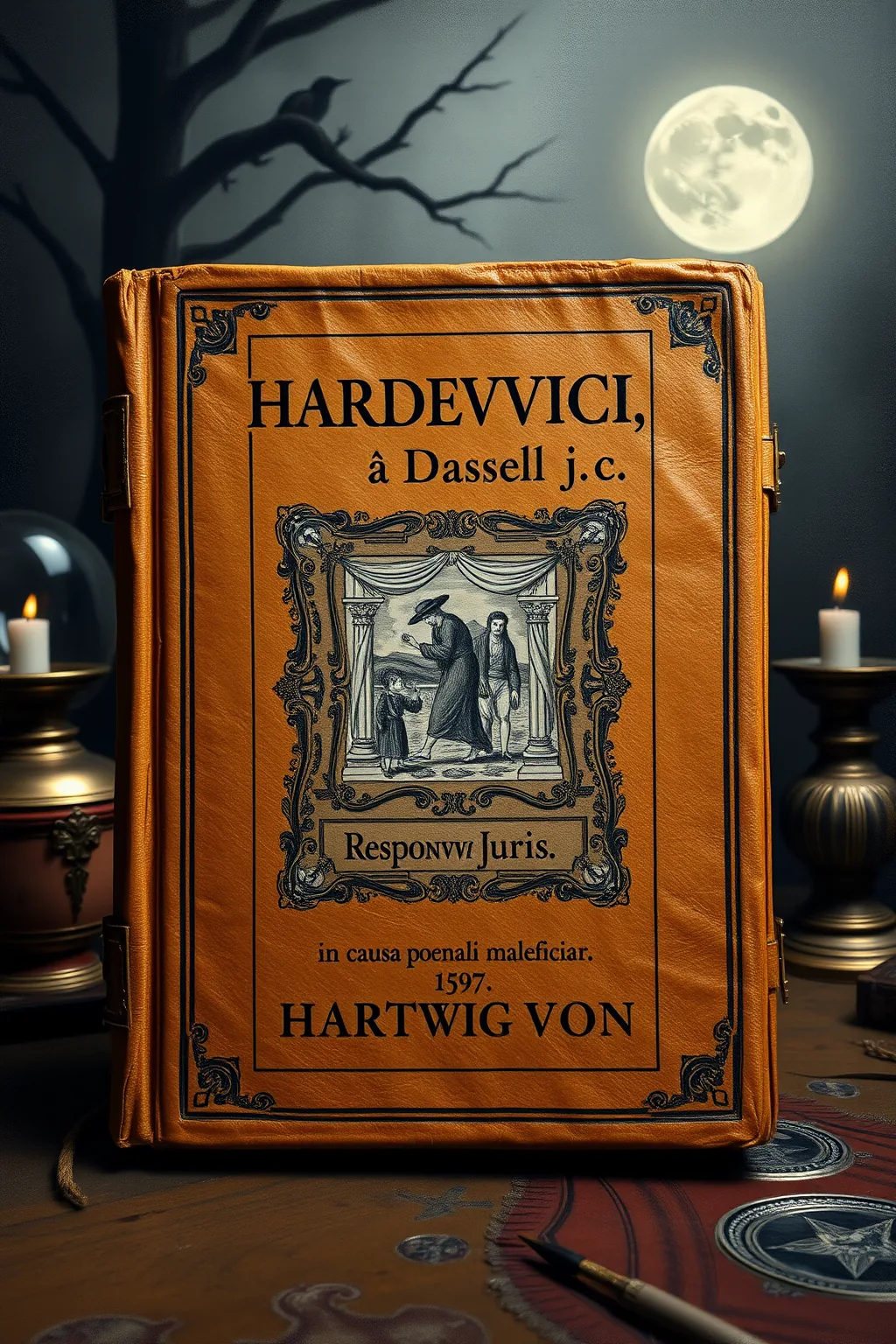
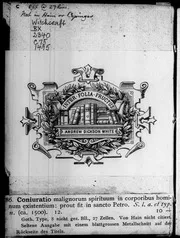
Hardevvici à Dassell j. c. Responsvm juris, in causa poenali maleficarum Vinsiensium. 1597: Iss 247
 83
83

Hardevvici à Dassell j. c. Responsvm juris, in causa poenali maleficarum Vinsiensium. 1597: Iss 247



Aurelia Blackwood (Occult Philosophy Critic) — Hartwig von Dassell's "Responsvm juris" is a seminal, albeit grim, artifact from the height of European witch trials. Dassell's rigorous legalistic approach to cases of alleged maleficium, particularly in the Vins region, provides an unparalleled glimpse into the juridical mechanisms and societal fears that underpinned these prosecutions. While the subject matter is disturbing, the text's value lies in its detailed exposition of the prevailing beliefs about witchcraft, demonology, and the perceived threat of magical arts. It offers crucial insights for scholars of occult history, legal history, and the anthropology of fear. An indispensable primary source for understanding the prosecution of those accused of witchcraft.
📝 Description
83
Hartwig von Dassell's 1597 "Responsvm juris" details legal proceedings against alleged witches in the Vins region.
Published in 1597, Hartwig von Dassell's "Responsvm juris, in causa poenali maleficarum Vinsiensium" examines the legal framework and theological underpinnings of witchcraft accusations in the Vins region. Dassell, a jurist of his time, analyzes the procedures and justifications used in trials concerning maleficium. The text reveals the prevailing anxieties and occult beliefs that informed these persecutions.
This work serves as a historical record of a period when perceptions of the supernatural directly influenced legal outcomes. It shows how faith, fear, and occult knowledge intersected within early modern European society. For readers interested in the historical context of occult persecution, this treatise sheds light on the period's understanding of heresy and sorcery.
This text belongs to the tradition of demonological and legal treatises that became prominent during the early modern period, particularly in response to the intensified witch hunts. It reflects a legal and theological attempt to categorize, prosecute, and explain perceived malevolent supernatural activity. While grounded in legal practice, it engages with concepts of occult forces and their supposed influence, placing it within a broader historical context of how societies grappled with the unseen and the forbidden.
💡 Why Read This Book?
Uncover the historical legal framework surrounding witchcraft accusations and understand the societal anxieties of 16th-century Europe. This text offers a unique perspective on the intersection of law, religion, and occult beliefs, essential for scholars, practitioners of esoteric history, and anyone seeking to comprehend the dark chapters of our past.
⭐ Reader Reviews
Honest opinions from readers who have explored this book.
❓ Frequently Asked Questions
What is the primary focus of this legal text?
The primary focus is the juridical response to accusations of witchcraft and malevolent magic in the Vins region during the late 16th century, as documented in 1597.
Who was Hartwig von Dassell?
Hartwig von Dassell was a jurist, a learned legal scholar whose work here examines the legal proceedings and justifications used in witchcraft trials of his era.
What does 'maleficarum' refer to in this context?
'Maleficarum' is Latin for 'of evil deeds' or 'of witches,' referring to the alleged magical actions and malevolent sorcery attributed to those accused of witchcraft.
Is this book suitable for modern witchcraft practitioners?
While not a practical guide, it offers crucial historical context for understanding the persecution of witchcraft, which can inform modern esoteric studies and historical awareness.
What historical period does this work illuminate?
This work specifically illuminates the late Renaissance/early modern period, a time marked by intense fear and prosecution of individuals accused of witchcraft across Europe.
🔮 Key Themes & Symbolism
The Legal Apparatus of Accusation
This theme looks at the intricate legal procedures and justifications employed by jurists like Dassell when confronting accusations of witchcraft. It explores how established legal frameworks were adapted, or strained, to address perceived supernatural transgressions. The text meticulously dissects the evidence sought, the testimonies considered, and the philosophical underpinnings of punishing those deemed 'maleficarum.' Understanding this aspect is crucial for grasping the historical reality of the witch trials, moving beyond sensationalism to the structured, albeit flawed, mechanisms of justice in the era.
Societal Fears and Occult Beliefs
The 'Responsvm juris' serves as a potent reflection of the deep-seated societal fears and pervasive occult beliefs that permeated 16th-century Europe. Dassell's work implicitly reveals the anxieties surrounding unknown forces, the perceived influence of demonic powers, and the fear of societal disruption through sorcery. It highlights how widespread belief in the efficacy of witchcraft shaped communal life and judicial responses, demonstrating the powerful symbiosis between religious dogma, folk magic, and juridical action in the period.
The Jurist as Archivist of the Arcane
Hartwig von Dassell, through his legal scholarship, inadvertently becomes an archivist of the arcane. His 'Responsvm juris' meticulously documents the 'evidence' and reasoning used in witchcraft cases, preserving for posterity a unique insight into the mindset of those who judged and condemned. This theme explores the dual role of the jurist: as an enforcer of law and, in this context, as a recorder of beliefs and practices that skirted the edges of accepted knowledge and often the boundaries of the visible world. His work offers a scholarly lens on phenomena often relegated to folklore.
💬 Memorable Quotes
Direct passages from the work, attributed to the author.
“The shadow of suspicion falls on the unseen hand.”
— This evocative phrase suggests that accusations often stemmed from intangible fears and unseen forces, highlighting the difficulty in proving or disproving accusations of witchcraft in the 16th century.
“Words of accusation tie the threads of fate.”
— This highlights the immense power of spoken allegations in the judicial process of witch trials, where accusations alone could irrevocably alter a person's destiny and lead to severe punishment.
“The law grapples with the impossible.”
— This points to the inherent challenge faced by legal systems when dealing with accusations of witchcraft, which often involved phenomena that defied rational explanation or empirical proof.
“In Vins, the scales of justice weighed the soul.”
— This suggests that the legal proceedings in Vins were not solely concerned with earthly transgressions but also with the spiritual state and perceived allegiance of the accused, implying a heavy spiritual burden on the accused.
💡 Key Ideas
Editorial paraphrase of the work's core concepts — not direct quotes.
Justice must confront the spectral realm.
This quote underscores the era's belief that legal and spiritual realms were intertwined, and that courts were tasked with addressing perceived supernatural offenses and demonic influences.
🌙 Esoteric Significance
Tradition
This work primarily engages with the legal and theological traditions surrounding the persecution of witchcraft, which, while not an organized 'esoteric tradition' in the modern sense, represented a codified societal belief system about forbidden knowledge and practices. It touches upon the edge of what was considered occult, demonological, and heretical, reflecting the historical intersection of official religious doctrine and popular belief in supernatural forces.
Symbolism
The symbolism here is largely negative and fear-driven, inherent in the accusations of maleficium. The 'witch' herself became a potent symbol of societal anxieties: pacts with the devil symbolized ultimate betrayal and corruption; curses and hexes represented the fear of unseen malevolent forces disrupting natural order; and sabbaths symbolized a perverse inversion of religious rites. Dassell's legal analysis, by dissecting these accusations, implicitly engages with the symbolic language of fear and damnation prevalent in the era.
Modern Relevance
In contemporary esoteric studies, this text is vital for understanding the historical roots of demonization and persecution. It offers a stark reminder of how fear and misinformation can lead to systemic injustice, and how 'occult' practices have been historically defined and suppressed by dominant powers. For practitioners, it provides critical context for the historical challenges faced by those on the fringes of society, informing a more nuanced and historically aware approach to modern esoteric paths.
👥 Who Should Read This Book
This profound legal document is essential for scholars of early modern history, legal history, and the history of religion and magic. It will deeply resonate with students of occult philosophy and those interested in the anthropological roots of fear and persecution. Practitioners of witchcraft and paganism will find invaluable historical context for understanding the long and often tragic trajectory of their practices. For the general reader, it offers a compelling, albeit somber, insight into the societal anxieties and belief systems that shaped a dark chapter in human history, useful the complex relationship between law, faith, and the unseen.
📜 Historical Context
The year 1597 places Hartwig von Dassell's "Responsvm juris" squarely within the tumultuous era of the early modern witch hunts, a period characterized by widespread panic, religious upheaval, and a fervent belief in the tangible threat of witchcraft. Across Europe, thousands were accused, tried, and often executed for alleged pacts with the devil and acts of maleficium. This legal treatise emerges from a context where theological doctrines, demonic lore, and nascent legal frameworks converged to prosecute those perceived as enemies of God and society. The specific focus on the Vins region suggests local manifestations of this broader European phenomenon. The text provides a crucial primary source for understanding how legal minds grappled with the complexities of evidence, intent, and the supernatural in a society deeply influenced by both faith and fear.
📔 Journal Prompts
How did the legal framework described by Dassell reflect or shape societal beliefs about witchcraft?
Analyze the 'evidence' presented in such cases – what does it reveal about the mindset of accusers and judges?
Consider the role of fear in driving these legal prosecutions. How does this compare to modern societal fears?
Reflect on the concept of 'maleficium' and its impact on the accused. How does this differ from modern understandings of harm?
What lessons can be learned from this historical account for contemporary discussions on justice, belief, and societal scapegoating?
🗂️ Glossary
Maleficium
Latin term for 'evil deed' or 'harmful magic,' referring to witchcraft as understood in the context of causing damage or misfortune through supernatural means.
Jurisconsult
A learned jurist or legal expert, someone highly skilled in law and jurisprudence, like the author Hartwig von Dassell.
Poenalis
Relating to punishment or penalties; concerning criminal law and its consequences.
Vins
A geographical region or town, likely in Europe, where the specific witchcraft trials discussed in the text took place.
Maleficarum
The genitive plural of 'malefica,' meaning 'of evil women' or 'of witches,' used here to denote cases or accusations pertaining to witches.
This book appears in 2 collections
🔮 Readers Also Liked
Browse all →






From the “Witchcraft” Collection
View all →






More Free Witchcraft & Paganism Books
View all →