Theosophy Vol-L,No-9,July 1962

 74
74

Theosophy Vol-L,No-9,July 1962


Cassian Rothmann (Senior Critic, Ancient Wisdom) — This July 1962 installment of 'Theosophy' offers a potent distillation of esoteric principles, presented with clarity and profound depth. The unknown author masterfully navigates complex spiritual doctrines, making them accessible without sacrificing their inherent mystery. Its strength lies in its ability to ignite inner contemplation, offering practical applications of theosophical tenets for personal transformation. Essential reading for students of Helena Blavatsky's work and anyone seeking to grasp the universal truths that transcend dogma. A vital contribution to the ongoing dialogue of spiritual science.
📝 Description
74
The July 1962 issue of Theosophy magazine discusses the divine spark within humanity.
This issue of Theosophy magazine, published in July 1962, focuses on metaphysical and spiritual concepts. The articles aim to shed light on the symbolic language used in spiritual traditions and the interconnectedness of existence. It examines the inherent divine nature within humans and the universal laws that shape reality. The content encourages deep thought and philosophical inquiry for those seeking a greater understanding of life's fundamental principles.
The publication addresses those who question the purely material view of the world. It offers insights into spiritual dimensions and the enduring nature of the spirit. The writers approach these subjects with a tone of serious contemplation, suitable for individuals dedicated to spiritual development and philosophical exploration. The aim is to guide the reader toward a comprehension of truths that lie beyond ordinary perception.
Published in 1962, this issue of Theosophy magazine engages with themes central to the Theosophical Society's teachings. These include the perennial philosophy, the concept of a divine essence in all beings, and the idea of subtle planes of existence. The magazine's content reflects a continuing interest in the synthesis of Eastern and Western esoteric thought, a hallmark of the Theosophical movement since its late 19th-century origins. It addresses concepts such as spiritual evolution and universal laws, consistent with the broader esoteric milieu of the mid-20th century.
💡 Why Read This Book?
Uncover forgotten spiritual truths and unlock profound insights into the nature of reality. This issue is essential for seekers of hidden knowledge, students of comparative religion, and practitioners of inner development. It offers a rare glimpse into the timeless wisdom that guides spiritual evolution, providing a framework for understanding your place in the cosmos.
⭐ Reader Reviews
Honest opinions from readers who have explored this book.
❓ Frequently Asked Questions
What is the primary focus of this issue?
This issue delves into core theosophical concepts, exploring themes of reincarnation, karma, the evolution of consciousness, and the interconnectedness of the spiritual and material realms through a mystical lens.
Is this publication suitable for beginners?
While theosophy can be complex, this installment aims for clarity. Beginners will find it a valuable introduction to foundational concepts, though prior familiarity with spiritual philosophies may enhance comprehension.
Who was the author of this specific issue?
The author is listed as 'Unknown'. This often signifies a collaborative effort or a contribution intended to represent the collective wisdom of the Theosophical Society at the time.
What makes theosophy unique?
Theosophy synthesizes ancient wisdom traditions, presenting a universalist philosophy that seeks to understand the underlying principles of all religions and sciences, emphasizing spiritual evolution and the divine potential within humanity.
Where can I find more information on theosophy?
Further exploration can be found through the Theosophical Society's official publications, libraries, and online resources dedicated to the study of Helena Blavatsky's foundational texts and subsequent theosophical literature.
🔮 Key Themes & Symbolism
The Cosmic Dance of Evolution
This issue illuminates the grand evolutionary scheme of the cosmos, detailing humanity's journey through cycles of birth, death, and rebirth. It explores the concept of karma as a guiding force, shaping destinies and fostering spiritual growth across lifetimes. The text reveals the intricate mechanisms of spiritual evolution, emphasizing the inherent divinity within each being and the ultimate goal of achieving higher states of consciousness through conscious effort and understanding of universal laws.
Unveiling the Sevenfold Nature of Man
Explore the profound understanding of the human constitution as described in theosophical teachings. This theme explores the intricate interplay of the physical, astral, and psychic bodies, culminating in the spiritual monad. It dissects the subtle vehicles through which consciousness operates, offering insights into the higher principles that govern our thoughts, emotions, and spiritual aspirations. Understanding this sevenfold structure is key to unlocking latent potentials and reading through the path of self-realization.
The Language of Symbolism in Ancient Wisdom
Explore the wide range of symbolism that permeates ancient spiritual traditions. This theme deciphers the hidden meanings embedded within myths, allegories, and sacred geometry, revealing them as keys to understanding profound metaphysical truths. It showcases how symbols act as a universal language, bridging the gap between the manifest and the unmanifest, and guiding the aspirant towards deeper spiritual comprehension. The issue posits that true wisdom is often conveyed through these potent archetypal representations.
💬 Memorable Quotes
Direct passages from the work, attributed to the author.
“Karma is not punishment, but consequence.”
— This highlights the impersonal and natural law aspect of karma, emphasizing that actions yield predictable results, guiding spiritual learning rather than imposing arbitrary retribution.
“The microcosm reflects the macrocosm.”
— This fundamental principle asserts that the individual human being (microcosm) contains within them the same laws and patterns as the entire universe (macrocosm).
“Seek within, for the divine resides there.”
— This points to the inner spiritual journey, suggesting that the ultimate truth and divine essence are not external but are to be discovered through introspection and self-awareness.
“Wisdom is gained through the evolution of consciousness.”
— This emphasizes that true understanding and enlightenment are not static but are achieved through a gradual and progressive expansion of one's awareness and spiritual perception.
💡 Key Ideas
Editorial paraphrase of the work's core concepts — not direct quotes.
The universe is a thought of the Absolute.
This quote expresses theosophical idealism, suggesting that all existence, from the grandest cosmic structures to the smallest particle, originates from a divine consciousness or universal mind.
🌙 Esoteric Significance
Tradition
This issue is firmly rooted in the Western Esoteric Tradition, specifically within the framework of Theosophy as pioneered by Helena Blavatsky. It draws upon a synthesis of Eastern philosophies (particularly Hinduism and Buddhism), Hermeticism, Kabbalah, and Gnosticism, aiming to present a universal, non-sectarian spiritual science that reveals the underlying unity of all religions and the evolutionary path of consciousness.
Symbolism
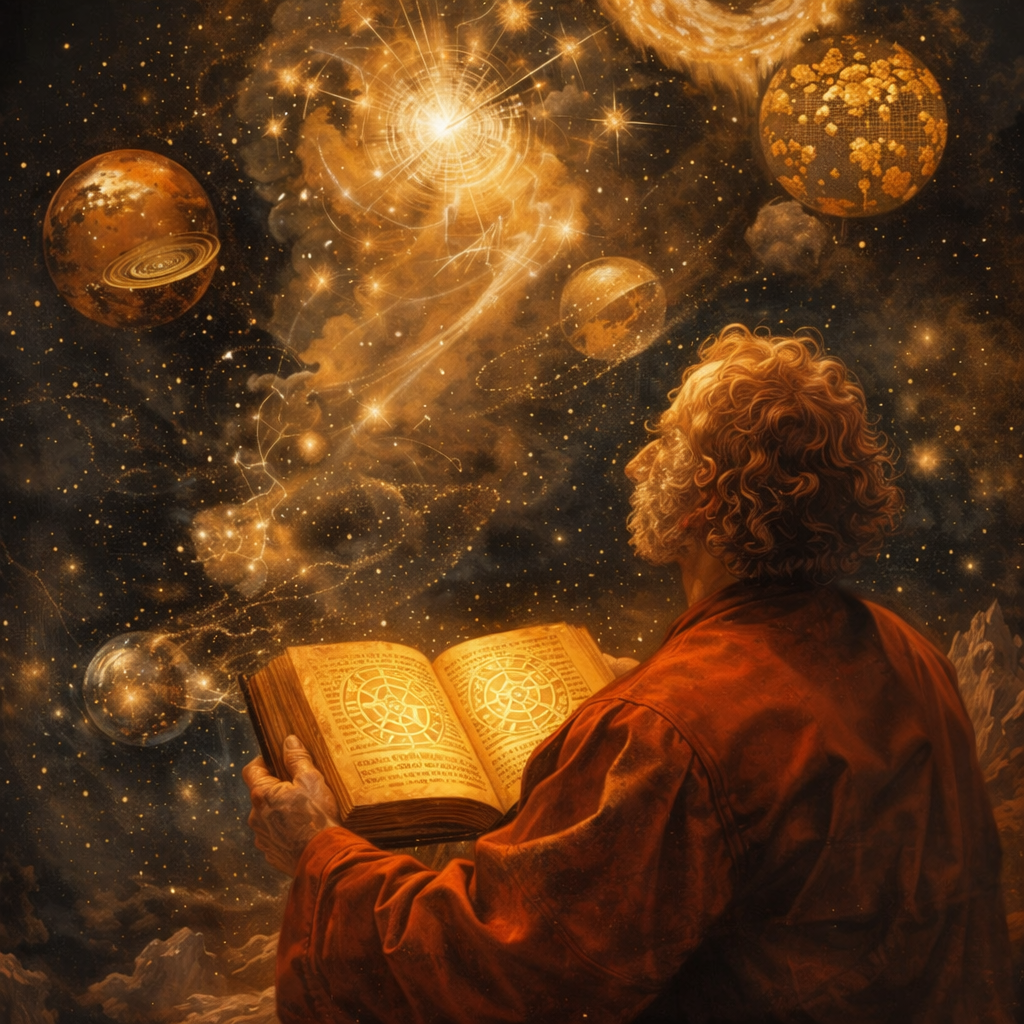
The text likely employs detailed symbolism, using archetypal imagery from ancient mythologies and sacred texts to convey complex metaphysical concepts. Expect references to celestial bodies, geometric patterns, elemental forces, and mythological figures as symbolic representations of spiritual principles, cosmic laws, and stages of human evolution. These symbols serve as keys to unlock deeper layers of meaning beyond the literal interpretation.
Modern Relevance
In an age often characterized by existential questioning and a search for meaning, theosophical principles offer a timeless framework for understanding purpose, interconnectedness, and the potential for spiritual growth. The emphasis on karma, reincarnation, and the inherent divinity within humanity appeals to contemporary discussions on consciousness, personal responsibility, and the quest for holistic well-being and spiritual liberation.
👥 Who Should Read This Book
This issue is a rich source for dedicated students of esoteric philosophy, particularly those drawn to the foundational teachings of Theosophy. Scholars of comparative religion and mysticism will find valuable insights into the historical development of spiritual thought. Seekers of hidden knowledge and practitioners of meditation or inner contemplation will benefit from its profound explorations of consciousness and universal laws. Beginners to theosophy may find it an engaging, albeit dense, introduction to its core tenets, provided they approach it with an open and inquisitive mind.
📜 Historical Context
Published in July 1962, this issue of 'Theosophy' emerges during a period of significant global change and intellectual ferment. The mid-20th century witnessed a burgeoning interest in Eastern philosophies and esoteric traditions, partly as a counter-cultural response to prevailing materialism and scientific rationalism. Theosophy, with its roots in the late 19th century, continued to be a vital source for those seeking spiritual alternatives and a deeper understanding of the universe beyond conventional religious and scientific paradigms. This era saw continued efforts to synthesize ancient wisdom with modern thought, making publications like this crucial for disseminating those ideas to a receptive audience eager for metaphysical exploration.
📔 Journal Prompts
Reflect on a recent event and consider how the law of karma might have played a role in its unfolding. What lessons are you learning?
Consider the concept of the 'microcosm reflecting the macrocosm.' How can you observe universal principles in your own daily life and actions?
Explore a symbol from nature or mythology that appeals to you. What deeper spiritual meaning might it hold?
How does the idea of the sevenfold nature of man inform your understanding of your own inner experiences and motivations?
If the universe is a 'thought of the Absolute,' how does this perspective influence your view of your own existence and purpose?
🗂️ Glossary
Theosophy
A spiritual philosophy that seeks to understand the underlying principles of all religions and sciences, promoting universal brotherhood and the study of comparative religion, philosophy, and science to reveal the divine wisdom inherent in existence.
Karma
The universal law of cause and effect, where actions (causes) inevitably lead to corresponding reactions or consequences (effects), shaping an individual's present and future experiences across lifetimes.
Reincarnation
The doctrine that the soul or spirit, after biological death, begins a new life in a new body. It is seen as a process of spiritual evolution through successive earthly existences.
Monad
In theosophy, the divine spark or eternal spiritual individuality within each being, considered the ultimate source of consciousness and the driving force behind spiritual evolution.
Astral Body
A subtle, non-physical body composed of 'astral' matter, believed to be a vehicle for emotions, desires, and perceptions, and to survive physical death, often associated with dreams and psychic experiences.
This book appears in 2 collections
🔮 Readers Also Liked
Browse all →



From the “Theosophy” Collection
View all →




More Free Theosophy & Anthroposophy Books
View all →