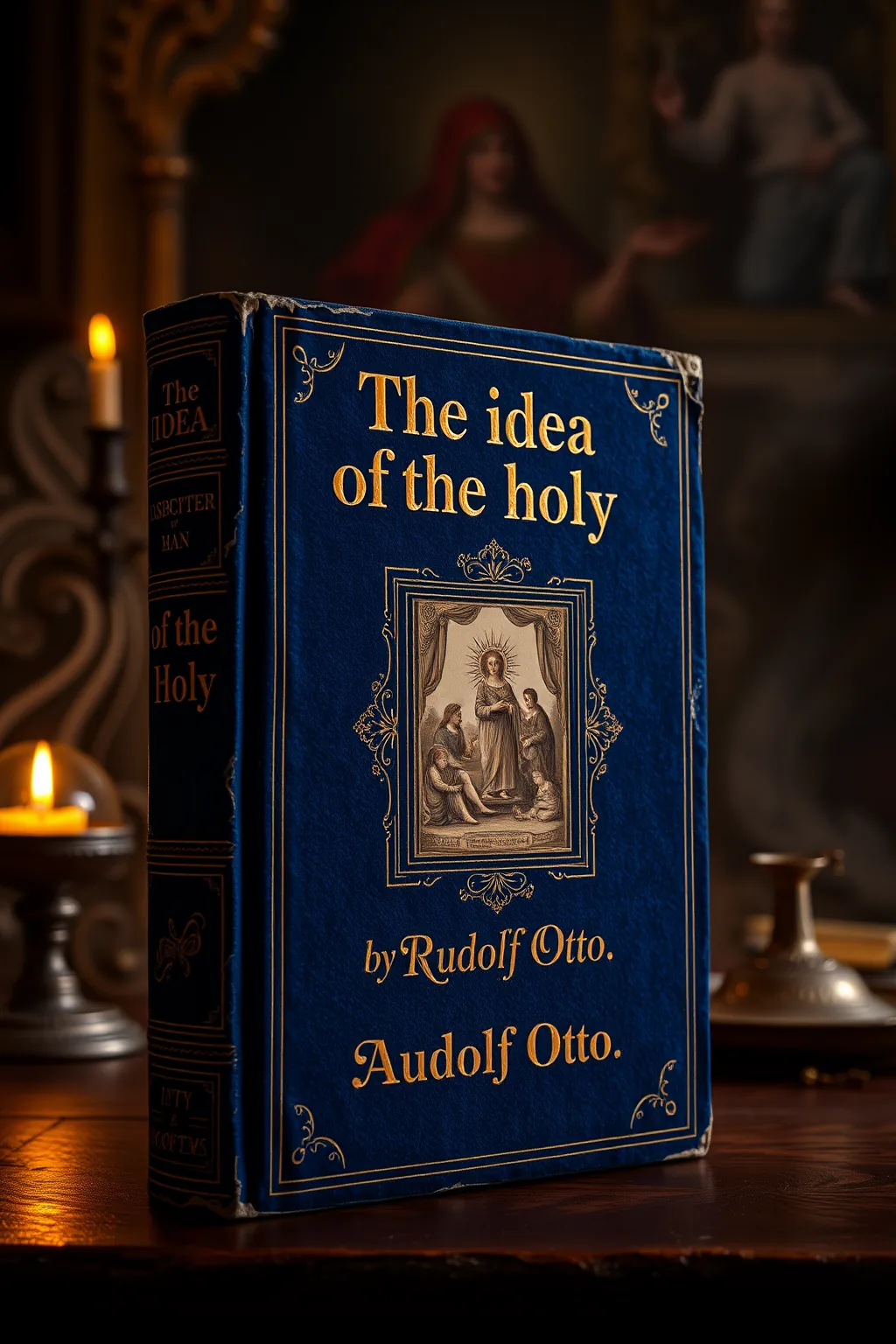
The idea of the holy
 76
76

The idea of the holy


Rudolf Otto's 'The Idea of the Holy' remains an indispensable cornerstone for anyone plumbing the depths of the sacred. Cassian Rothmann commends Otto's groundbreaking identification of the 'numinous' – that irreducible, affective experience of the divine that lies beyond mere intellectual assent. This work brilliantly dissects the irrational components of religious consciousness, revealing its power to both terrify and enthrall. Esoteric scholars and practitioners will find here a potent articulation of the primal encounter with the Other. Its enduring strength lies in its capacity to illuminate the mysterious roots of faith, offering a richer, more visceral understanding of holiness for the modern seeker.
📝 Description
76
Rudolf Otto published 'The Idea of the Holy' in 1917, defining the 'numinous'.
Rudolf Otto's 1917 book, 'The Idea of the Holy,' attempts to describe the experience of the sacred. He argues that the core of religious feeling is not rational but emotional, a quality he terms the 'numinous.' Otto identifies this numinous quality with the Latin phrase 'mysterium tremendum et fascinans,' which he translates as a terrifying and fascinating mystery. He suggests this experience is the common ground for all religions, preceding theological doctrines or moral codes.
Otto breaks down the numinous into its components: the feeling of being confronted by the absolutely other, evoking both dread and fascination. He uses examples from various religious traditions to illustrate how this feeling manifests, even in experiences that seem ordinary. The book aims to provide a framework for understanding religious responses that go beyond intellectual assent, focusing instead on a direct, affective encounter with the divine.
Published in the early 20th century, 'The Idea of the Holy' emerged during a period of renewed interest in subjective religious experience and the limits of rationalism. While not strictly an esoteric text in the vein of occultism, Otto's work resonated with movements like theurgy and anthroposophy that sought direct, experiential access to spiritual realities. His concept of the numinous offered a way to articulate the powerful, often ineffable, feelings associated with the sacred that traditional theology struggled to explain. This approach provided a vocabulary for those exploring the deeper psychological and emotional dimensions of faith, aligning with a broader trend towards interiority in spiritual seeking.
✍️ Author
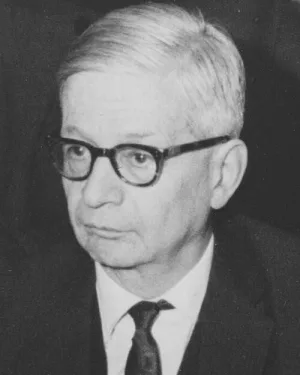
Rudolf Otto . What does it actually mean
Sir Rudolf Ernst Peierls, (; German: [ˈpaɪɐls]; 5 June 1907 – 19 September 1995) was a German-born British physicist who played a major role in Tube Alloys, Britain's nuclear weapon programme, as well as the subsequent Manhattan Project, the combined Allie…
💡 Why Read This Book?
Uncover the primal roots of religious experience beyond dogma. 'The Idea of the Holy' offers a profound exploration of the numinous – the awe-inspiring, mysterious, and captivating aspect of the divine. Ideal for seekers, theologians, philosophers, and practitioners who wish to understand the non-rational, affective dimensions of faith and spirituality. Discover the language of the ineffable and deepen your connection to the sacred.
⭐ Reader Reviews
Honest opinions from readers who have explored this book.
❓ Frequently Asked Questions
What is the core concept of 'The Idea of the Holy'?
The book's core concept is the 'numinous,' a unique, non-rational feeling of awe, dread, and fascination that arises from encountering the divine. It's the primal, affective experience underlying all religious sentiment.
Who was Rudolf Otto and what was his background?
Rudolf Otto (1869-1937) was a German Lutheran theologian, mystic, and scholar of comparative religion. His work sought to bridge the gap between rational theology and the direct, emotional experience of the divine.
How does Otto differentiate the 'holy' from the merely 'good'?
Otto argues that 'holy' encompasses more than moral goodness. It includes the 'mysterium tremendum' (terrifying mystery) and the 'mysterium fascinans' (fascinating mystery), aspects that evoke awe and dread beyond rational ethical categories.
Is this book suitable for beginners in theology?
Yes, while profound, Otto's writing is accessible to earnest beginners. It provides a fundamental vocabulary for understanding religious experience, making it an excellent starting point for exploring spirituality beyond surface-level doctrines.
What is the significance of the 'mysterium tremendum et fascinans'?
This Latin phrase captures the dual nature of the numinous: 'tremendum' refers to the overwhelming power that inspires dread and awe, while 'fascinans' denotes the irresistible charm and captivating fascination that draws one closer to the divine mystery.
🔮 Key Themes & Symbolism
The Numinous Experience
Otto's groundbreaking concept of the 'numinous' is central, defining it as a unique affective experience of the divine that is both terrifying and fascinating. This primal encounter transcends rational thought and moral categories, forming the irreducible core of religious feeling. It is the 'mysterium tremendum et fascinans,' the awe-inspiring, dread-evoking, yet utterly captivating power that lies at the heart of all sacred experiences, from ancient shamanic rituals to the quiet contemplation of a modern mystic.
The Non-Rational Factor in Divinity
This work challenges purely rationalistic interpretations of religion by championing the primacy of the non-rational, emotional, and intuitive apprehension of the divine. Otto meticulously demonstrates how doctrines, moral codes, and rational theology, while important, are secondary elaborations built upon this foundational, ineffable experience. He argues that understanding the 'holy' requires acknowledging its inherent mystery and its power to evoke profound emotional responses that cannot be fully explained by logic or intellect alone.
Symbolism and the Divine Encounter
Otto explores how various religious symbols, rituals, and narratives serve as conduits for the numinous experience. These elements are not mere intellectual constructs but potent evocations of the sacred that can trigger the primal feelings of awe and fascination. The book studies how different cultures and traditions have attempted to articulate and channel this ineffable encounter, highlighting the universal human yearning to connect with a reality that lies beyond the mundane and the comprehensible.
💬 Memorable Quotes
Direct passages from the work, attributed to the author.
“It is the creature's response to the creature.”
— This highlights the primal, instinctive reaction of the human soul when confronted with the divine, emphasizing an inherent connection and response that predates conscious thought.
“The category of the 'holy' is not to be looked for in the field of reason.”
— This underscores Otto's central thesis: the true essence of holiness lies beyond logical explanation, residing in a field of direct, affective experience and intuitive apprehension.
“The ultimate mystery of the divine is a mystery that is both terrible and attractive.”
— This captures the 'mysterium tremendum et fascinans,' the paradox of the numinous – its power to inspire both profound dread and irresistible fascination simultaneously.
“It is the 'wholly other'.”
— A concise articulation of the divine's transcendent nature, emphasizing its absolute difference and otherness from the mundane world, a concept crucial to understanding its numinous quality.
“Religion is the expression of the soul's most secret life.”
— This suggests that true religion is not an outward show but an internal, deeply personal, and often ineffable communion with the sacred, rooted in the individual's innermost being.
🌙 Esoteric Significance
Tradition
Otto's work is foundational for understanding the psychological and phenomenological aspects within Western esoteric traditions, particularly those concerned with direct spiritual experience and the nature of consciousness. While not overtly occult, his analysis of the 'numinous' provides a crucial framework for interpreting mystical encounters, ecstatic states, and the apprehension of transcendent realities often discussed in Hermeticism, Theosophy, and Anthroposophy.
Symbolism
The book illuminates how religious symbols, from the cross to the Dervish's dance, are not mere representations but potent vehicles for evoking the numinous. They act as 'iconic triggers' for the 'mysterium tremendum et fascinans,' bypassing rational intellect to connect the practitioner directly with the awe-inspiring, unfathomable nature of the divine. Otto's analysis provides a lens for understanding the power of sacred art, music, and ritual in esoteric practices.
Modern Relevance
In an age often characterized by secularism and intellectualism, Otto's exploration of the non-rational, affective core of spirituality is more relevant than ever. It offers a path for re-enchanting the world and reconnecting with the profound sense of wonder and mystery that underpins human existence. For modern seekers, practitioners, and scholars, 'The Idea of the Holy' provides essential tools for understanding the visceral impact of the sacred and the enduring human need for transcendent experience.
👥 Who Should Read This Book
This profound work is essential for theologians and religious scholars seeking to understand the affective roots of faith. Mystics and spiritual practitioners will find a sophisticated articulation of the ineffable experiences they encounter. Philosophers grappling with the nature of consciousness and ultimate reality will find fertile ground for contemplation. Even the curious beginner yearning to grasp the elusive nature of the sacred will discover a clear, compelling guide to the most fundamental aspects of religious experience beyond dogma and doctrine.
📜 Historical Context
Published in 1917 in German and 1923 in English, 'The Idea of the Holy' emerged during a period of profound societal upheaval and intellectual re-evaluation following World War I. The early 20th century saw a surge of interest in psychology, anthropology, and comparative religion, challenging established positivistic and rationalistic paradigms. Otto's work resonated with a generation seeking meaning beyond the superficial, grappling with the limitations of scientific materialism, and exploring the depths of human consciousness and the spiritual impulse. It contributed significantly to the burgeoning fields of religious studies and phenomenology, offering a vital counterpoint to purely intellectual approaches to faith.
📔 Journal Prompts
Describe a time you felt a profound sense of awe or dread that transcended rational explanation. What was the context, and how did it feel?
How do you currently define 'holiness' in your own life? Does Otto's concept of the numinous resonate with or challenge your understanding?
Identify a symbol, piece of music, or natural phenomenon that evokes a powerful emotional or spiritual response in you. What qualities make it so potent?
Consider a moment when you felt a deep connection to something 'other' or greater than yourself. What were the characteristics of that experience?
How might incorporating the 'non-rational factor' of the holy enrich or alter your spiritual practice or worldview?
🗂️ Glossary
Numinous
The core concept, referring to the irreducible, non-rational affective experience of the divine, characterized by awe, dread, and fascination (mysterium tremendum et fascinans).
Mysterium Tremendum
The terrifying mystery aspect of the numinous, evoking feelings of awe, dread, and one's own insignificance in the face of divine power.
Mysterium Fascinans
The fascinating mystery aspect of the numinous, drawing one in with its irresistible charm, allure, and captivating power.
Rational Factor
The elements of religious experience that can be understood through logic, reason, and moral concepts, such as doctrines, ethical teachings, and theological arguments.
Non-Rational Factor
The affective, emotional, and intuitive dimension of religious experience that cannot be fully grasped by reason alone, the domain of the numinous.
This book appears in 2 collections
🔮 Readers Also Liked
Browse all →

From the “Theosophy” Collection
View all →






More Free Theosophy & Anthroposophy Books
View all →