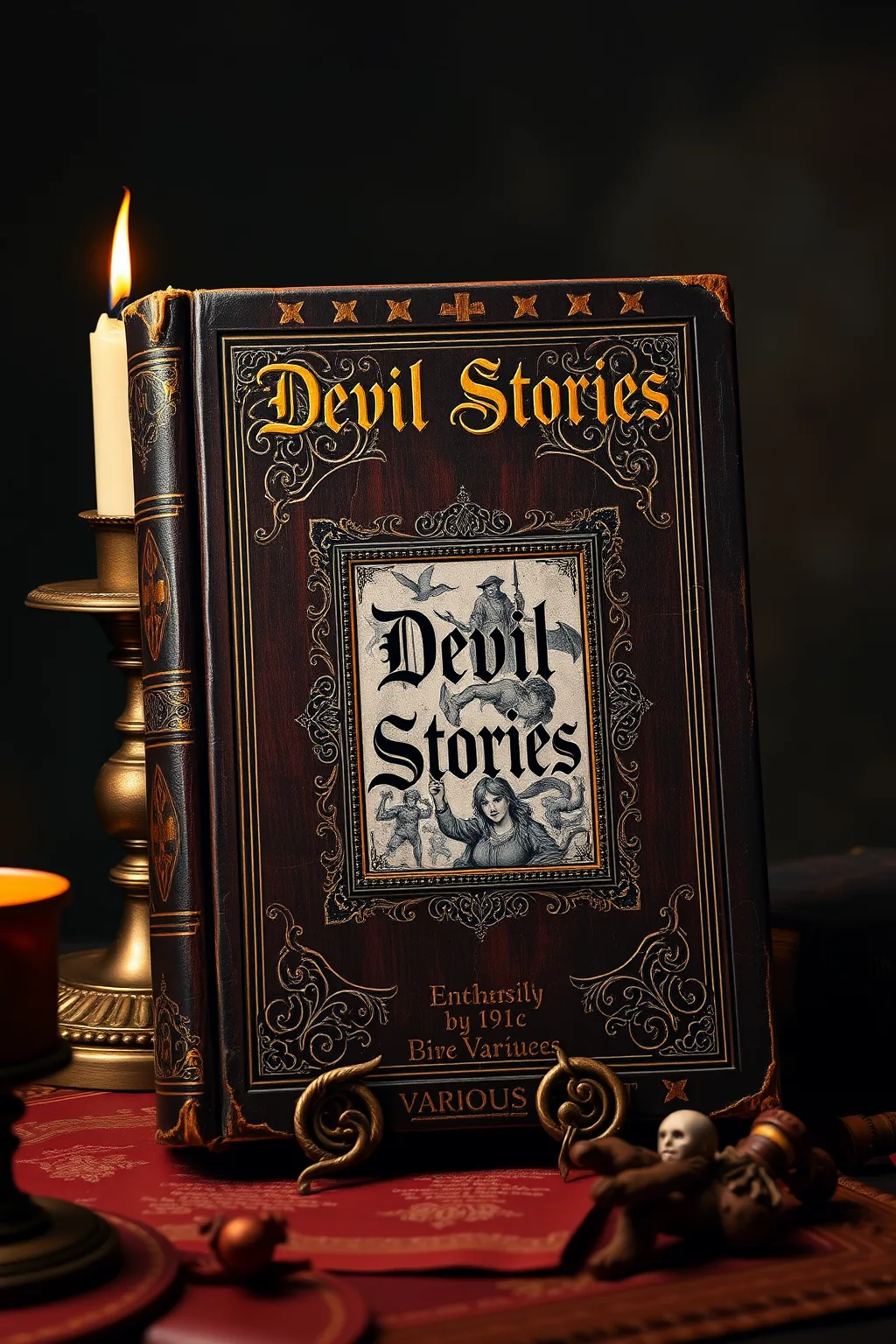
Devil Stories
 73
73

Devil Stories


Silas Hawthorne (Hermetic Studies Editor) — This collection is a treasure trove for students of occult lore and literary history. 'Devil Stories' transcends mere horror, offering profound allegorical explorations of temptation, consequence, and the nature of evil. The inclusion of Poe and Thackeray, alongside lesser-known but equally insightful authors, provides a rich tapestry of diabolical archetypes. Readers will find compelling narratives that resonate with ancient Gnostic and Hermetic themes, illuminating the symbolic roles the 'Fallen Angel' has played across centuries of human thought. It’s a testament to the enduring power of these narratives to probe the darker corners of the soul and the universe. A must-have for any serious practitioner or scholar of the metaphysical.
📝 Description
73
'Devil Stories,' first published in 1921, collects twenty tales of the infernal.
This 1921 anthology presents twenty stories about the devil, featuring authors like Edgar Allan Poe, William Makepeace Thackeray, Guy de Maupassant, and Washington Irving. The collection examines the devil not just as a frightening entity, but as a symbol of temptation, forbidden knowledge, and the human conflict between sin and redemption. These narratives touch on desperate bargains and the subtle workings of infernal forces, offering insights into human philosophy and metaphysics. The stories reflect our deepest fears and desires, portraying the devil as a mirror to the human condition.
The anthology aims to help readers understand the symbolic language within occult traditions and the persistent presence of the diabolical in human thought. It is a deep dive into the darker aspects of storytelling, intended for those interested in the esoteric dimensions of literature and the mysteries that lie beyond normal awareness. The collection provides a look at how these themes have been depicted in fiction.
First released in 1921, this collection engages with a long tradition of occult and supernatural literature. It aligns with esoteric interests in exploring the symbolic representation of spiritual or psychological forces, often personified as demonic figures. The stories touch on themes of temptation and hidden knowledge, common in occult studies that seek to understand the darker aspects of consciousness and the hidden influences that shape human experience. It reflects a period where interest in spiritualism and the occult was prominent.
✍️ Author
💡 Why Read This Book?
Uncover the symbolic power of the devil across literary history. Explore timeless themes of temptation, pacts, and the human condition through masterful storytelling. Gain insights into esoteric philosophy and occult archetypes. Ideal for seekers of hidden knowledge, literary scholars, and practitioners interested in the symbolic representation of the infernal.
⭐ Reader Reviews
Honest opinions from readers who have explored this book.
❓ Frequently Asked Questions
What is the primary focus of this anthology?
The anthology's primary focus is on exploring the multifaceted symbolism and narrative presence of the devil across various literary traditions, delving into themes of temptation, pacts, and the human condition.
Which notable authors are featured in 'Devil Stories'?
'Devil Stories' features seminal works from literary giants such as Edgar Allan Poe, William Makepeace Thackeray, Guy de Maupassant, and Washington Irving, among others.
Is this book suitable for beginners in occult studies?
Yes, while rich in esoteric themes, the accessible narrative style of the stories makes it suitable for beginners interested in exploring occult literature and symbolism.
What year was 'Devil Stories' originally published?
This significant collection of diabolical tales was first published in the year 1921.
What kind of 'esoteric' themes can readers expect?
Readers can expect themes related to forbidden knowledge, the nature of sin and redemption, the symbolic representation of temptation, and the infernal as a philosophical concept.
🔮 Key Themes & Symbolism
The Pact and Forbidden Knowledge
Many tales in this anthology center on the infernal pact, a central to diabolical lore. These narratives explore the allure of forbidden knowledge, the temptation of power, and the often-dire consequences of bartering one's soul for worldly gain or occult secrets. The devil, in these stories, acts as the gatekeeper to hidden realms, offering insight at a steep price, thereby informative the human desire for understanding that transcends conventional boundaries, and the inherent risks involved in seeking such power.
The Devil as Mirror and Symbol
Beyond a mere antagonist, the devil in these stories functions as a profound symbol and a mirror reflecting humanity's own shadow self. He embodies primal desires, societal transgressions, and the innate capacity for evil that resides within. Authors utilize his presence to dissect moral ambiguities, expose hypocrisy, and question the very nature of good and evil. This symbolic representation invites readers to confront their own inner demons and understand the devil not as an external force, but as an intrinsic aspect of the human psyche.
Infernal Influence and Moral Ambiguity
The collection meticulously details the subtle and overt ways in which infernal influence can manifest in the human world. Stories often navigate a range of moral ambiguity, where characters are not simply good or evil but are caught in webs of circumstance and temptation. The devil's machinations are portrayed as intricate and persuasive, often exploiting human weaknesses, pride, and despair. This exploration highlights the complex interplay between free will and external forces, challenging readers to consider the ethical dimensions of their choices.
💬 Memorable Quotes
Direct passages from the work, attributed to the author.
“The devil is not merely a tempter, but a teacher.”
— This suggests the devil's role extends beyond simple seduction, implying he offers lessons or insights, albeit often through dark means, revealing truths about the human condition.
“A soul's true price is paid in whispers.”
— This points to the insidious nature of diabolical bargains, where the gravest costs are not obvious but are subtle, psychological, or spiritual tolls exacted over time.
“In every shadow, a bargain waits.”
— This evokes the pervasive presence of temptation and opportunity for infernal influence, suggesting that moments of darkness or vulnerability are fertile ground for diabolical propositions.
“He who seeks the abyss must first know himself.”
— This implies that confronting dark forces or deep truths requires profound self-awareness, suggesting introspection is a prerequisite for understanding or engaging with the infernal.
💡 Key Ideas
Editorial paraphrase of the work's core concepts — not direct quotes.
The greatest trick is to be unseen.
This quote highlights the devil's cunning and elusive nature, suggesting his most effective power lies not in overt displays, but in subtle, undetected manipulation and influence.
🌙 Esoteric Significance
Tradition
This anthology resonates deeply with the Western esoteric tradition, particularly within Hermeticism, Gnosticism, and Kabbalistic studies. The devil figure often represents the forces of opposition, the Qliphoth (shells or husks in Kabbalah), or the embodiment of material ignorance and temptation that veils true spiritual illumination. The stories explore archetypal struggles between spirit and matter, divine and infernal forces, mirroring the alchemical process of transformation through confronting and integrating the shadow.
Symbolism
The devil in these stories is a body of symbolism, representing not only sin and damnation but also forbidden knowledge, rebellion against divine order, and the primal forces of chaos. He can symbolize the 'shadow self' that must be integrated, the threshold guardian to deeper mysteries, or the personification of societal taboos and human failings. His various forms—from charming tempter to monstrous entity—reflect the complex nature of temptation, illusion, and the profound psychological and spiritual challenges humanity faces.
Modern Relevance
In contemporary times, 'Devil Stories' remains profoundly relevant for its exploration of enduring human themes. The archetypes of temptation, power, and consequence are timeless. In an age saturated with information and complex ethical dilemmas, the stories offer a lens through which to examine the seductive nature of technology, the allure of unchecked ambition, and the importance of discerning truth from deception. They serve as a potent reminder of the internal battles for integrity and the ongoing human quest for meaning amidst darkness.
👥 Who Should Read This Book
This anthology is a compelling read for a diverse audience. **Seekers of Esoteric Knowledge** will find rich allegorical content, exploring symbolic representations of the infernal and its place in spiritual philosophy. **Literary Scholars and Enthusiasts** will appreciate the masterful storytelling and the historical context of occult themes in classic literature. **Practitioners of the Metaphysical Arts** can gain insights into archetypal representations of adversarial forces and the psychological underpinnings of temptation. **Beginners** curious about the occult will find accessible narratives that introduce complex concepts in an engaging and thought-provoking manner, offering a foundational understanding of diabolical lore.
📜 Historical Context
Published in 1921, 'Devil Stories' emerged from a period deeply influenced by the lingering shadows of Victorian morality, the burgeoning spiritualist movements, and a growing fascination with the occult. The early 20th century saw a resurgence of interest in folklore, demonology, and the darker aspects of human psychology, fueled by the societal upheavals of World War I and a desire to explore the subconscious. This era's literary landscape was fertile ground for tales that examined the supernatural, the uncanny, and the philosophical implications of evil. Authors were often inspired by classical grimoires, medieval bestiaries, and the Romantic era's fascination with the sublime and the terrifying, tying these threads into narratives that reflected both timeless anxieties and contemporary intellectual currents. The anthology stands as a proof of the enduring power of diabolical narratives in exploring the human condition.
📔 Journal Prompts
Reflect on a personal experience where you felt tempted by forbidden knowledge or a shortcut. How did this echo the themes in the stories?
Analyze the devil's role in one of the stories. Is he purely evil, a catalyst for change, or a reflection of human nature?
Consider the concept of a 'pact.' What are modern-day equivalents of making a pact with the devil?
How does the portrayal of the devil in these stories differ from or align with your own understanding of evil?
Explore the idea of 'shadow integration.' How can confronting the 'devil within' lead to personal growth and wisdom?
🗂️ Glossary
Infernal
Pertaining to hell or the underworld; extremely bad or unpleasant. In esoteric contexts, it often refers to the field of demonic forces or the symbolic representation of lower consciousness.
Archetype
A typical example of a person or thing; a recurring symbol or motif in literature and mythology. In psychology, Jungian archetypes represent universal patterns of behavior and imagery.
Esoteric
Intended for or likely to be understood by only a small number of people with a specialized knowledge or interest; relating to mysterious or secret knowledge.
Metaphysical
Based on abstract reasoning or thinking; relating to the fundamental nature of reality, including the relationship between mind and matter, substance and attribute, and potentiality and actuality.
Qliphoth
In Kabbalistic mysticism, the Qliphoth are the 'husks' or 'shells' that represent the negative or impure aspects of creation, often associated with demonic forces and the opposite of divine emanation.
This book appears in 2 collections
🔮 Readers Also Liked
Browse all →





More by Various
All books →


From the “Transcendental Meditation” Collection
View all →




More Free Supernatural & Occult Fiction Books
View all →