The Legend of Sleepy Hollow
 72
72

The Legend of Sleepy Hollow
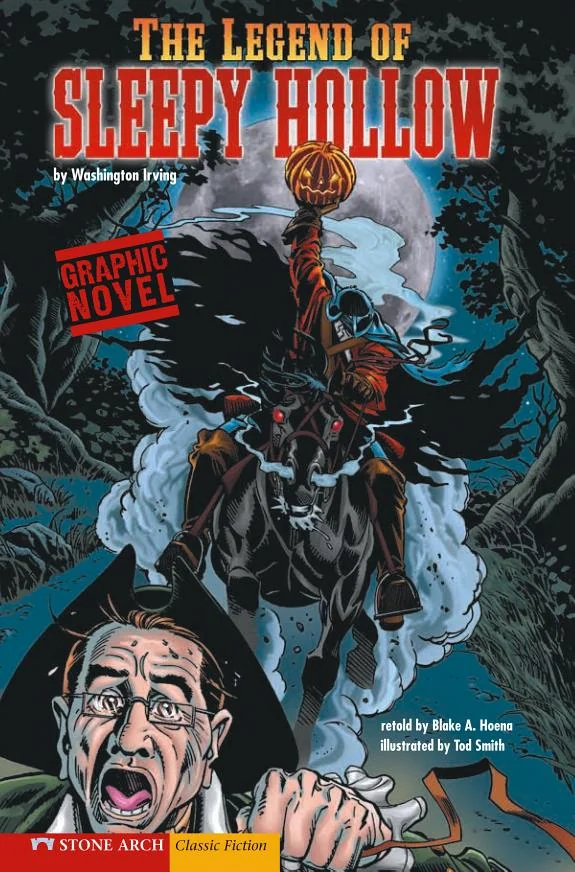
Irving's "Sleepy Hollow" remains a singular piece of American gothic, less for its overt scares and more for its masterful evocation of atmosphere and psychological unease. The character of Ichabod Crane, a man whose anxieties are amplified by his own credulity, is brilliantly drawn. His lanky frame and superstitious nature make him the perfect foil for the story's unsettling climax. The tale's strength lies in its ambiguity; the resolution leaves the reader questioning the reality of the supernatural encounter. A minor limitation is the somewhat abrupt ending, which, while effective in its uncertainty, can feel less satisfying than a more definitive conclusion. The passage describing Ichabod's terrified ride through the glen, with the relentless pursuit of the horseman, perfectly captures the story's blend of folklore and mounting terror. It's a compact, enduring narrative that explores the fragility of reason when confronted by deeply ingrained local fears.
📝 Description
72
Washington Irving's "The Legend of Sleepy Hollow" appeared in 1820.
Published in 1820 as part of *The Sketch Book of Geoffrey Crayon, Gent.*, this short story follows Ichabod Crane, a superstitious schoolmaster, to Tarry Town, New York. He encounters the local legend of the Headless Horseman, a ghost said to roam Sleepy Hollow. The narrative mixes humor with a growing sense of unease as Ichabod's beliefs are tested.
Irving wrote the story from Europe, aiming to capture the distinct character of the Hudson Valley. It is set after the Revolutionary War, weaving in echoes of Hessian soldiers and local folklore. This tale became a significant example of early American gothic fiction, drawing on European traditions but firmly rooted in an American setting.
Within the broader tradition of gothic literature, "The Legend of Sleepy Hollow" uses folk superstition as a primary driver of its supernatural atmosphere. The story examines how local beliefs and oral traditions can create a palpable sense of dread and influence individual perception, particularly for an outsider like Ichabod Crane. Its focus on a specific, haunted locale and the psychological impact of fear aligns it with tales that explore the uncanny and the porous boundary between the natural and the spectral.
💡 Why Read This Book?
• Understand the origins of iconic American folklore, specifically the legend of the Headless Horseman as first codified by Washington Irving in 1820, offering a unique glimpse into early American ghost stories. • Experience the power of atmosphere and suggestion in storytelling, learning how Irving uses the isolated setting of Tarry Town and the local superstitions to build suspense. • Analyze the character of Ichabod Crane, a complex figure whose intellectual pursuits clash with his profound susceptibility to fear, illustrating the human tendency to believe what is most terrifying.
⭐ Reader Reviews
Honest opinions from readers who have explored this book.
❓ Frequently Asked Questions
When was 'The Legend of Sleepy Hollow' originally published?
Washington Irving's "The Legend of Sleepy Hollow" was first published in 1820 as part of his collection *The Sketch Book of Geoffrey Crayon, Gent.*
What is the primary setting for the story?
The story is set in and around the small, secluded Dutch settlement of Tarry Town, nestled in the valley of Sleepy Hollow, New York.
Who is the protagonist of 'The Legend of Sleepy Hollow'?
The protagonist is Ichabod Crane, a tall, lanky, and superstitious schoolmaster who arrives in Sleepy Hollow.
What is the central legend that haunts Sleepy Hollow?
The central legend is that of the Headless Horseman, the ghost of a Hessian trooper from the Revolutionary War, who is said to ride in search of his lost head.
Does Washington Irving provide a definitive explanation for the Headless Horseman's actions?
No, Irving masterfully leaves the explanation ambiguous, allowing readers to ponder whether the events were supernatural or a cleverly executed prank.
What historical event is referenced in relation to the Headless Horseman?
The Headless Horseman is identified as the ghost of a Hessian trooper, a mercenary soldier who fought for the British during the American Revolutionary War.
🔮 Key Themes & Symbolism
The Power of Folklore
The narrative meticulously details how local legends and superstitions take root and influence the lives of Tarry Town's inhabitants. The story of the Headless Horseman, a phantom Hessian trooper, is presented not just as a tale but as a palpable force that shapes Ichabod Crane's perception and actions. Irving explores how shared narratives, particularly those steeped in fear and the supernatural, can create a collective reality, demonstrating the potent psychological impact of folklore on a community and its individuals.
Superstition vs. Rationality
Ichabod Crane embodies the conflict between intellect and credulity. As a schoolmaster, he is ostensibly a figure of reason and education, yet he is deeply susceptible to the ghost stories circulating in Sleepy Hollow. His fear, amplified by his reading of Cotton Mather's *History of New England Witchcraft*, makes him vulnerable. The story contrasts his superstitious dread with the more grounded, pragmatic nature of other characters, highlighting the delicate balance between logic and the pervasive influence of the irrational in human experience.
The Lingering Past
The Headless Horseman serves as a potent symbol of historical trauma and the unresolved conflicts of the past. As a Hessian mercenary from the Revolutionary War, his spectral presence in Sleepy Hollow represents the enduring impact of conflict and foreign occupation on the American landscape. The legend suggests that the past is not truly buried but can manifest in terrifying ways, haunting the present and influencing the lives of those who inhabit the historical sites of past struggles.
Outsider Status and Social Dynamics
Ichabod Crane's position as an outsider in Tarry Town is central to his vulnerability. His lanky appearance, his profession as a wandering schoolmaster, and his peculiar habits mark him as different. This social isolation makes him an easy target for both the local superstitions and, potentially, the prank orchestrated by Brom Bones. The story examines how social hierarchies and the treatment of outsiders can play into the unfolding drama, highlighting themes of jealousy, rivalry, and the precariousness of belonging.
💬 Memorable Quotes
“The bridge is said to be haunted by the ghost of a headless Hessian trooper.”
— This iconic line establishes the core supernatural threat of the story. It grounds the legend in a specific location, the bridge, and identifies the spectral entity, linking it to historical conflict and creating an immediate sense of dread for the protagonist.
“His appetite for knowledge, however, was even greater than his appetite for food.”
— This interpretation of Ichabod's character highlights his dual nature: a scholar driven by intellectual curiosity but also a man with base, earthly desires, particularly his hunger and his infatuation with Katrina Van Tassel.
“Ichabod Crane was a native of Connecticut, a State which supplies most of the Standing armies of America with fodder.”
— This observation, likely a jab at Connecticut's perceived subservience or role in providing resources for the nascent United States, frames Ichabod as a product of this particular regional identity, subtly contributing to his outsider status in New York.
“The tales of witchcraft, the stories of ghosts, the whispers of the supernatural were all too real for Ichabod.”
— This paraphrased concept captures Ichabod's deep-seated superstitious nature, emphasizing how the local folklore and supernatural lore he encounters profoundly affect his psychological state and perception of reality.
“He had heard that the Headless Horseman always carried his head upon the pommel of his saddle.”
— This detail, often repeated in retellings, serves to illustrate the specific, gruesome imagery associated with the legend, intensifying the horror and making the threat more concrete and terrifying for Ichabod.
🌙 Esoteric Significance
Tradition
While not directly tied to a specific esoteric lineage like Hermeticism or Kabbalah, "The Legend of Sleepy Hollow" resonates with folk magic and animistic beliefs found in pre-Christian European traditions and early American folk practices. The story's emphasis on localized spirits, the power of place (Sleepy Hollow itself), and the influence of spectral entities aligns with a belief system where the natural world is imbued with supernatural forces and ancestral presences.
Symbolism
The Headless Horseman is a potent symbol of the severed connection to the past, representing both literal dismemberment and the fractured historical consciousness resulting from war. His search for his head can be interpreted as a quest for wholeness or completion. The bridge he haunts symbolizes a liminal space, a threshold between the world of the living and the dead, or between rational reality and the supernatural. Ichabod Crane, conversely, represents the vulnerable, educated mind attempting to navigate a world saturated with primal fears and ancient lore.
Modern Relevance
Contemporary folklorists, cultural historians, and writers exploring American identity continue to draw from Irving's foundational tale. Its themes of how local legends persist and shape perception are relevant in discussions of modern myth-making and the impact of narrative in media. The story's exploration of psychological fear and the uncanny resonates with current interest in horror literature and film, and its iconic imagery remains a touchstone in discussions of American gothic and supernatural fiction.
👥 Who Should Read This Book
• Students of early American literature and cultural history seeking foundational texts that explore national identity and folklore. • Readers interested in gothic literature and the development of the ghost story genre, particularly those fascinated by atmospheric and psychologically driven narratives. • Enthusiasts of folklore and mythology who wish to understand how local legends are formed, perpetuated, and imbued with symbolic meaning.
📜 Historical Context
When "The Legend of Sleepy Hollow" emerged in 1820, American literature was actively seeking its own voice, distinct from European traditions. Washington Irving, residing in England at the time of its publication in *The Sketch Book*, played a pivotal role in this nascent movement. The story taps into the post-Revolutionary War era, weaving in the lingering presence of Hessian mercenaries as the basis for its central ghost. This period saw a surge of interest in American folklore and local history, a Romantic fascination with the mysterious and the gothic, exemplified by authors like Edgar Allan Poe, though Poe's darker psychological explorations would come later. Irving's work offered a distinctly American take on the ghost story, grounding it in the specific landscape and cultural memory of the Hudson Valley, and was widely celebrated, helping to establish Irving as one of America's first international literary stars. Contemporary reception was overwhelmingly positive, solidifying its place in the American literary canon.
📔 Journal Prompts
The persistent belief in the Headless Horseman within Sleepy Hollow.
Ichabod Crane's susceptibility to superstitious tales.
The symbolic meaning of the bridge in the story.
The function of local color and dialect in establishing atmosphere.
Brom Bones's role in the narrative's climax.
🗂️ Glossary
Hessian
Mercenary soldiers hired by the British Crown to fight against the American colonists during the Revolutionary War. They were known for their discipline and effectiveness in combat.
Tarry Town
The fictionalized name for the real-life village of Tarrytown, New York, located in the Hudson Valley. It serves as the primary setting for the story.
Sleepy Hollow
A glen and settlement near Tarry Town, known for its narrow, winding, and bushy roads, and its reputation as a place haunted by supernatural occurrences, most notably the Headless Horseman.
Superstition
A belief or practice resulting from ignorance, fear of the unknown, trust in magic or chance, or a false conception of causation. Ichabod Crane is particularly prone to superstitious beliefs.
Folklore
The traditions, customs, beliefs, and stories of a community, passed through generations by word of mouth. The story itself is a piece of American folklore.
Cotton Mather
A prominent Puritan minister and author in colonial Massachusetts, known for his extensive writings, including 'The Wonders of the Invisible World,' which dealt with witchcraft trials. Ichabod consults his works.
Liminal Space
A transitional or initial stage of a process, or a state of being in-between. In the story, the bridge and the hollow itself function as liminal spaces where the supernatural is more likely to manifest.