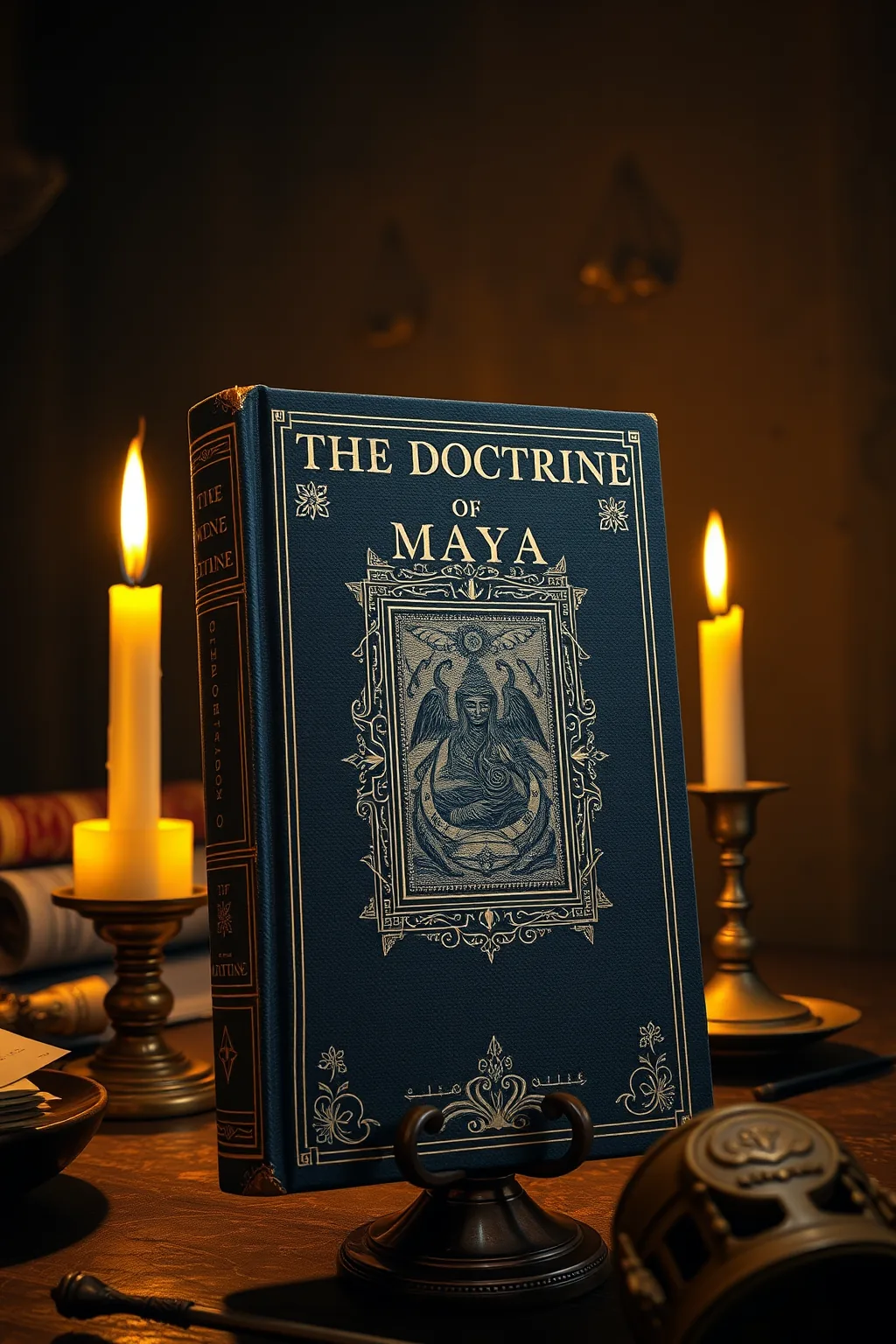
THE DOCTRINE OF MAYA
 83
83

THE DOCTRINE OF MAYA



Aurelia Blackwood (Occult Philosophy Critic) — "The Doctrine of Maya" stands as a cornerstone in the exposition of Advaita Vedanta's most profound concept. The author masterfully dissects Maya, revealing it as the intricate mechanism of cosmic delusion that imprisons the soul in a cycle of perceived duality. This text offers unparalleled clarity on the nature of empirical reality as a projection, a sophisticated illusion that conceals the immutable Brahman. Its strength lies in its rigorous philosophical exposition, making complex metaphysical ideas accessible to the earnest seeker. Essential reading for anyone drawn to the esoteric underpinnings of Eastern mysticism and the quest for absolute Truth.
📝 Description
83
Published by the Esoteric Library, "The Doctrine of Maya" examines illusion as the fabric of empirical existence.
"The Doctrine of Maya" analyzes the concept of Maya, the cosmic illusion described in Advaita Vedanta. The book argues that Maya is not simply fantasy but the fundamental structure of our perceived reality, composed of physical sensations and mental formations. It explains how this illusion shapes our limited experience and obscures the true nature of the Self.
The text aims to guide readers from a state of entangled consciousness toward recognizing the singular, luminous Self. It serves as a resource for those wishing to understand the phenomenal world and awaken to the unmanifest Truth beyond appearances. The book proposes a significant shift in consciousness, addressing the metaphysical underpinnings of spiritual freedom.
This work is situated within the Advaita Vedanta tradition of Indian philosophy, specifically addressing its nondualistic interpretation of reality. Advaita Vedanta posits that only Brahman, the ultimate reality, is real, and the phenomenal world perceived through senses and mind is illusory (Maya). The book engages with the challenge of distinguishing this perceived world from the singular, unchanging Self (Atman), which is identical to Brahman. It draws upon the philosophical framework developed by thinkers like Adi Shankara.
✍️ Author
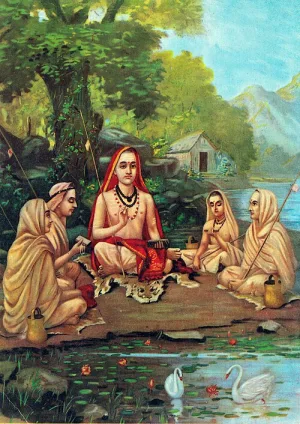
In the Philosophy of the Vedanta
Advaita Vedanta (; Sanskrit: अद्वैतवेदान्तः, IAST: Advaita Vedānta) is a Hindu tradition of Vedanta, a Brahmanical tradition of textual exegesis and philosophy; and a monastic institutional tradition nominally related to the Daśanāmi Sampradaya and propagat…
💡 Why Read This Book?
Uncover the profound philosophical underpinnings of Advaita Vedanta, revealing the nature of reality and illusion. This book offers a direct path to understanding the limitations of ordinary perception and the potential for spiritual awakening. It's ideal for seekers of truth, scholars of comparative philosophy, and practitioners of meditation seeking to deepen their grasp of consciousness.
⭐ Reader Reviews
Honest opinions from readers who have explored this book.
❓ Frequently Asked Questions
What is the core concept of Maya in Advaita Vedanta?
Maya, in Advaita Vedanta, is the cosmic illusion or power that makes the One Reality (Brahman) appear as the manifold, diverse world we perceive. It is the veiling and projecting power that creates the sense of individual selfhood and separation from the ultimate Truth.
How does Maya relate to our everyday consciousness?
Maya is the very framework of our everyday consciousness, entangling us in the limited, physical, and mental realities. It creates the subjective experience of a separate 'I' and a world of objects, obscuring the underlying unity.
Is Maya considered a literal illusion or something more complex?
While often translated as 'illusion,' Maya is more than mere deception. It is a dynamic cosmic power that both conceals the true nature of Reality and projects the phenomenal world, making it appear real to the unenlightened mind.
What is the ultimate goal of understanding Maya?
The ultimate goal is to transcend Maya by realizing the non-dual nature of existence. Through this realization, one awakens to the true Self (Atman) which is identical with Brahman, leading to liberation (Moksha) from the cycle of suffering.
Who is the intended audience for this book?
This book is for sincere seekers of spiritual truth, students of Eastern philosophy, and anyone interested in understanding the metaphysical basis of consciousness and the nature of reality as explored in Advaita Vedanta.
🔮 Key Themes & Symbolism
The Nature of Illusion (Maya)
This theme looks at Maya as the fundamental principle of perceived reality in Advaita Vedanta. It explores how this cosmic power both conceals the ultimate Truth (Brahman) and projects the manifold universe of names and forms. The discussion illuminates Maya not as a simple falsehood, but as an intricate veil that renders the impermanent and contingent appear as solid and real, creating the illusion of duality and separation from the singular, undifferentiated consciousness.
The Unitary Self (Brahman/Atman)
Central to the doctrine is the concept of the Unitary Self, the ultimate, indivisible Reality known as Brahman, which is identical with the individual soul (Atman). This theme elucidates how Maya obscures this fundamental oneness, leading to the mistaken identification with the limited ego and the phenomenal world. Understanding the Unitary Self is presented as the key to dissolving the illusion of Maya and realizing one's true, eternal nature.
The Path to Liberation (Moksha)
This theme outlines the spiritual path prescribed by Advaita Vedanta for overcoming the entanglements of Maya and achieving liberation (Moksha). It details the process of discrimination between the Real and the unreal, the importance of scriptural study, contemplation, and direct realization. The ultimate aim is the cessation of suffering and the attainment of a state of blissful, unbroken consciousness, free from the limitations imposed by the illusory world of Maya.
💬 Memorable Quotes
Direct passages from the work, attributed to the author.
“The world we see is but a dream of the Absolute.”
— Suggests that the phenomenal universe, as we experience it, is not independently real but a manifestation or projection of the Absolute Reality, akin to the ephemeral nature of a dream.
“To know yourself is to see through the illusion.”
— Highlights the introspective journey as the means to overcome Maya, implying that true self-knowledge is synonymous with the dissolution of perceived separation and illusion.
“Duality is the playground of Maya.”
— Emphasizes that the experience of separation, of 'me' and 'you,' 'this' and 'that,' is the very domain in which Maya operates and perpetuates its influence.
“The Real is One, all else is appearance.”
— A concise statement of the core Advaita principle: only Brahman is ultimately real; everything else is a transient manifestation or appearance.
💡 Key Ideas
Editorial paraphrase of the work's core concepts — not direct quotes.
Maya is the veil that hides the sun of Reality.
This quote metaphorically illustrates Maya as an obscuring force, preventing the direct perception of the ultimate Truth, which is likened to a radiant sun.
🌙 Esoteric Significance
Tradition
This doctrine is intrinsically linked to the esoteric tradition of Advaita Vedanta, a school of Hindu philosophy emphasizing non-duality. Its esoteric nature lies in its focus on direct experiential realization of the Absolute (Brahman) rather than mere intellectual assent. It offers a profound, often counter-intuitive, understanding of reality that requires deep contemplation and inner transformation to grasp fully, moving beyond surface-level perceptions.
Symbolism
Maya is symbolically represented as a veil, a mirage, or a dream—all signifying something that appears real but lacks ultimate substance or independent existence. The serpent mistaken for a rope in dim light is a classic metaphor. The cosmos itself becomes a grand illusion. The Unitary Self (Brahman/Atman) symbolizes pure consciousness, the unmoving substratum from which all perceived phenomena arise and into which they dissolve.
Modern Relevance
In our contemporary world, saturated with manufactured realities and digital illusions, the Doctrine of Maya offers critical insights. It provides a framework for questioning the perceived solidity of our digital selves, the fleeting nature of material pursuits, and the construction of our social realities. It encourages a deeper investigation into the nature of consciousness and perception, urging individuals to seek enduring truth beyond transient appearances, fostering a more grounded and authentic existence.
👥 Who Should Read This Book
This profound exploration of Maya is essential for the serious seeker of spiritual knowledge, particularly those drawn to Eastern philosophies and the concept of non-duality. Scholars of comparative religion and metaphysics will find it an indispensable resource for understanding the nuances of Advaita Vedanta. Practitioners of meditation and mindfulness will benefit immensely, as the text provides a philosophical bedrock for their inner work, helping to deconstruct habitual perceptions and deepen their understanding of consciousness. Even those new to these concepts will find a compelling invitation to question the nature of reality and their place within it.
📜 Historical Context
The Doctrine of Maya emerges from the rich intellectual and spiritual range of ancient India, specifically within the flourishing tradition of Vedanta philosophy, which reached its zenith between the 8th and 16th centuries CE. This era witnessed profound philosophical debates and the systematization of spiritual insights. Advaita Vedanta, championed by figures like Adi Shankaracharya, presented a radical monistic interpretation of the Upanishads, challenging prevailing dualistic views. The concept of Maya became central to explaining how the singular, unchanging Brahman could be perceived as the dynamic, diverse, and often illusory world. This philosophical framework profoundly influenced not only Indian religious thought but also subsequent mystical traditions globally, offering a sophisticated metaphysical model for understanding existence, consciousness, and the nature of ultimate reality.
📔 Journal Prompts
Reflect on a recent experience where your perception of a situation was significantly different from the reality.
Describe a 'veil' in your life that you feel obscures a deeper truth about yourself or the world.
How does the idea of the world as a 'dream' resonate with your personal experiences?
What are the 'appearances' you currently hold as most real, and what might be their underlying nature?
Consider a moment when you felt a deep sense of unity or oneness; what might this point to regarding Maya?
🗂️ Glossary
Advaita Vedanta
A prominent school of Hindu philosophy that asserts the non-dual nature of reality, positing that the individual self (Atman) is identical with the ultimate reality (Brahman).
Brahman
The ultimate, unchanging, and all-pervading reality or consciousness in Hindu philosophy; the absolute ground of all existence.
Atman
The individual soul or self, which in Advaita Vedanta is understood to be identical with Brahman.
Moksha
Liberation or release from the cycle of birth, death, and rebirth (samsara); the ultimate goal of spiritual practice in Hinduism.
Samsara
The continuous cycle of birth, death, and rebirth driven by karma and ignorance, from which liberation (Moksha) is sought.
This book appears in 5 collections
🔮 Readers Also Liked
Browse all →









From the “Yoga” Collection
View all →








More Free Spiritual Development Books
View all →