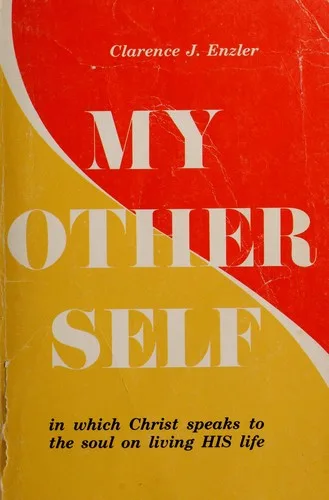
My Other Self
 75
75

My Other Self
Clarence J. Enzler’s "My Other Self" attempts to articulate a fundamental spiritual truth: that we are more than our immediate, surface-level personalities. The book’s strength lies in its direct, unpretentious language, making complex ideas about the self accessible. Enzler avoids the dense jargon that often encumbers similar works, which is commendable. However, this very simplicity can sometimes lead to a lack of analytical depth. For instance, the discussion on the "inner voice" feels somewhat underdeveloped, offering reassurance without fully exploring the potential for misinterpretation or the mechanics of discerning authentic guidance from mere egoic projection. The concept of the "other self" is compellingly presented as a source of wisdom, yet the practical methods for accessing it could benefit from more detailed exposition.
Ultimately, "My Other Self" offers a gentle invitation to explore one’s inner landscape, providing a useful starting point for those new to such inquiries.
📝 Description
75
Clarence J. Enzler's 2011 book, My Other Self, proposes an authentic self beyond ordinary consciousness.
My Other Self, published in 2011, examines the idea that a deeper, more expansive self exists beyond our everyday ego. Enzler argues that this 'other self' is not a distant concept but an accessible reality within us. The book guides readers to recognize and connect with this inner dimension. It speaks to those who sense a gap between their daily lives and a more profound inner reality. Individuals interested in self-discovery, spiritual psychology, and applying esoteric principles to daily life will find this work useful. It is for anyone ready to look closely at their own consciousness.
Enzler's work touches on perennialist themes found across many wisdom traditions. It engages with ideas similar to those explored by Carl Jung regarding the Self and by earlier mystics discussing the soul's path. The book appeared when consciousness studies and alternative spiritualities were gaining attention. It connects introspective practices with philosophical thought.
Published in 2011, My Other Self engages with perennialist themes common across diverse spiritual and philosophical traditions. It echoes inquiries into the Self, notably explored by Carl Jung, and earlier mystical writings on the soul's development. The book emerged during a time of heightened interest in consciousness studies and alternative spiritualities, bridging introspective practices with philosophical contemplation.
💡 Why Read This Book?
• Gain a practical framework for recognizing a deeper, more intuitive aspect of yourself, distinct from your everyday personality, as explored through Enzler's concept of the "other self." • Learn to interpret and trust your "inner voice" as a guide, understanding its role in spiritual development as presented in the book's 2011 publication. • Discover methods for cultivating inner harmony, moving beyond superficial self-awareness to connect with a more integrated state of being, a core theme of the work.
⭐ Reader Reviews
Honest opinions from readers who have explored this book.
❓ Frequently Asked Questions
What is the core concept of Clarence J. Enzler's "My Other Self"?
The book's central idea is the existence of a "My Other Self" beyond the ordinary personality. Enzler suggests this deeper self is a source of wisdom and guidance, accessible through inner work and self-awareness.
When was "My Other Self" first published?
"My Other Self" by Clarence J. Enzler was first published in 2011, making it a contemporary exploration of perennial spiritual themes.
Does the book offer practical exercises?
While not a manual of detailed exercises, "My Other Self" encourages introspection and a shift in perspective. It guides readers toward recognizing and heeding their inner guidance, implying practical application in daily life.
What kind of reader would benefit most from this book?
Individuals seeking self-understanding, spiritual growth, and a deeper connection to their inner life would find "My Other Self" beneficial. It appeals to those questioning their identity and looking for meaning beyond the material.
How does Enzler's work relate to psychological concepts like Jung's Self?
Enzler's concept of the "other self" shares thematic similarities with Carl Jung's idea of the Self, representing a totality of the psyche and a source of integration. Both explore a deeper, more unified center of consciousness.
Is "My Other Self" considered a religious text?
While drawing on spiritual and philosophical ideas common in many traditions, "My Other Self" is not tied to a specific religion. It functions more as a guide to inner experience and self-discovery applicable across different belief systems.
🔮 Key Themes & Symbolism
The Dual Nature of Self
The work posits that human consciousness is not monolithic but possesses at least two primary layers: the familiar ego-driven personality and a deeper, more authentic "other self." This distinction is crucial for understanding internal conflicts and aspirations. Enzler suggests this higher self is not an external entity but an inherent part of our being, accessible through focused attention and introspection. The exploration of this duality is central to achieving a more integrated and meaningful existence.
Inner Guidance and Intuition
A significant theme is the concept of the "inner voice" as a direct communication channel from the "other self." Enzler emphasizes the importance of learning to discern this subtle guidance amidst the noise of daily thoughts and external pressures. The book encourages cultivating a receptive state of mind to better access intuitive insights, presenting them as essential tools for navigating life's challenges and making choices aligned with one's true nature.
The Practice of Inner Work
Enzler frames self-discovery not merely as intellectual understanding but as an active "inner work." This involves a conscious effort to align the outer personality with the wisdom of the inner self. The book implies that consistent practice, characterized by self-observation and a willingness to confront one's conditioned patterns, is key to this process. It's presented as a path toward psychological wholeness and spiritual awakening.
Universal Consciousness
Beyond the individual self, the work touches upon the idea that our "other self" is connected to a broader, universal consciousness. This concept suggests an underlying unity connecting all beings and phenomena. By recognizing and engaging with our deeper self, we can potentially tap into this universal intelligence, fostering a sense of interconnectedness and belonging within the grander scheme of existence.
💬 Memorable Quotes
Direct passages from the work, attributed to the author.
“The surface self is the mask; the other self is the face behind it.”
— This concise statement highlights the core distinction Enzler makes between the persona we present to the world and our deeper, authentic identity. It suggests that true self-knowledge requires looking beyond appearances.
“Your true nature is not what you do, but what you are.”
— This captures the essence of distinguishing between action and essence. Enzler guides the reader to understand that identity is rooted in being, not merely in external activities or social roles.
“The path inward is the only path outward.”
— This aphorism suggests that genuine external progress or understanding is contingent upon internal development. It posits that self-knowledge is the prerequisite for effectively engaging with the external world.
“When the student is ready, the teacher appears.”
— While a common adage, Enzler applies it to the inner realm, implying that the "other self" or inner guidance becomes accessible and perceptible once an individual is truly prepared to receive its wisdom.
💡 Key Ideas
Editorial paraphrase of the work's core concepts — not direct quotes.
Listen not just with your ears, but with your whole being.
This quote emphasizes a holistic approach to perception and understanding. It suggests that true wisdom comes not just from intellectual processing but from a deeper, intuitive awareness that engages the entire self.
🌙 Esoteric Significance
Tradition
Enzler's work draws implicitly from perennialist philosophy, which posits universal truths underlying diverse spiritual traditions. It appeals to Gnostic ideas of the divine spark within humanity and Hermetic principles of "As Above, So Below," suggesting an inner correspondence to outer reality. While not strictly adhering to Kabbalah or Theosophy, the emphasis on an inner, higher self aligns with mystical interpretations found across these lineages, offering a modern, accessible articulation.
Symbolism
The primary symbol is the "other self" itself, representing the higher, unified consciousness distinct from the conditioned personality. The "inner voice" functions as a symbolic conduit for this higher awareness, acting as a compass for spiritual direction. The concept of "inner work" symbolizes the process of integration and transformation, akin to alchemical refinement, where the base aspects of the personality are transmuted into gold – spiritual awareness.
Modern Relevance
Contemporary mindfulness practices, integral psychology, and coaching methodologies often echo Enzler's themes. Thinkers and practitioners focused on authentic living, shadow work (building on Jungian concepts), and cultivating intuition find resonance. His accessible approach makes the exploration of the inner self relevant to individuals seeking deeper meaning in a secularized or spiritually diverse world, bridging psychological well-being with spiritual aspiration.
👥 Who Should Read This Book
• Individuals new to self-exploration: Those beginning their journey into understanding consciousness and seeking a clear, non-dogmatic introduction to the idea of a deeper self. • Seekers of personal meaning: Readers feeling a disconnect between their external life and internal experience, looking for guidance on integrating these aspects. • Students of comparative spirituality: Those interested in how concepts of the soul, higher self, and inner guidance manifest across different wisdom traditions, presented in a modern context.
📜 Historical Context
Clarence J. Enzler's "My Other Self," published in 2011, emerged in a landscape influenced by the New Age movement and the ongoing popularization of Jungian psychology. While not directly affiliated with specific movements like 20th-century Theosophy or Anthroposophy, its exploration of the inner self echoes perennial philosophical concerns about consciousness and identity. The early 21st century saw a continued interest in mindfulness, meditation, and self-help literature, providing a fertile ground for works that bridge psychological introspection with spiritual inquiry. Enzler’s approach, however, offers a more direct engagement with the concept of a distinct "other self" than much contemporary self-help, which often focuses on optimizing the existing personality. Unlike earlier esoteric writers who might have tied such concepts to specific religious cosmologies, Enzler’s work presents them in a more universal, psychologically-oriented framework, making it accessible to a broad audience seeking personal growth.
📔 Journal Prompts
Reflect on a recent decision where your "inner voice" offered conflicting advice.
Describe a situation where you felt more aligned with your "other self."
How does the "mask" of your personality differ from your perceived "face behind it"?
What does "inner work" mean in the context of your daily routine?
When has the "path inward" influenced your "path outward"?
🗂️ Glossary
Other Self
The deeper, more authentic aspect of consciousness that exists beyond the ordinary, conditioned personality. It is presented as a source of wisdom and guidance.
Inner Voice
The subtle communication or intuitive guidance perceived to originate from the "other self." It serves as an internal compass for decision-making and self-awareness.
Inner Work
The conscious process of self-observation, introspection, and aligning one's actions and thoughts with the wisdom of the "other self." It implies active engagement in personal transformation.
Surface Self
The conventional personality or ego; the part of ourselves that is most aware of our daily life, social interactions, and immediate desires and fears.
Consciousness
In the context of the book, consciousness refers to the entirety of subjective experience, including both the ordinary waking state and deeper levels of awareness.
Alignment
The state of harmony and congruence achieved when the surface self acts in accordance with the insights and direction provided by the "other self."
Discernment
The ability to differentiate between the "inner voice" of the "other self" and the habitual thoughts or desires of the surface personality.
🔮 Readers Also Liked
Browse all →









More Free Spiritual Development Books
View all →