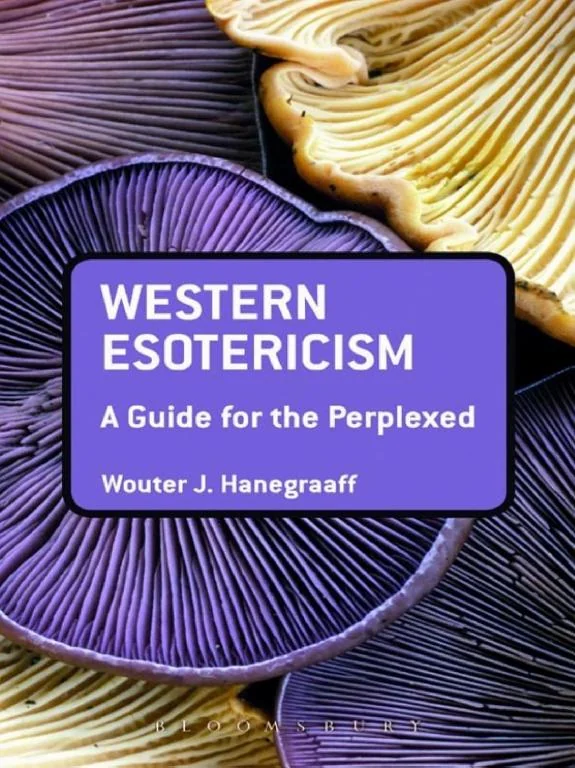
Western Esotericism: A Guide for the Perplexed
 72
72

Western Esotericism: A Guide for the Perplexed
Wouter J. Hanegraaff's "Western Esotericism: A Guide for the Perplexed" effectively demystifies a field long obscured by popular sensationalism and academic neglect. The author's strength lies in his clear, systematic approach, providing a much-needed framework for understanding the diverse currents within Western esotericism. Hanegraaff skillfully delineates the historical development and conceptual underpinnings of traditions ranging from Hermetism to Renaissance magic. A notable limitation, however, is the book's academic tone, which, while precise, might feel somewhat dry to readers seeking a more experiential engagement. The section detailing the evolution of the term 'esotericism' itself is particularly illuminating, highlighting the shifting academic and cultural perceptions. This work provides an indispensable scholarly foundation for anyone serious about studying the subject.
📝 Description
72
### What It Is
This book serves as an introductory survey to the field of Western esotericism, a complex and often misunderstood area of study. It aims to clarify the subject matter for those encountering it for the first time, distinguishing it from popular misinterpretations. The work meticulously defines the boundaries of Western esotericism, differentiating it from broader categories of religious studies and occultism.
### Who It's For
Geared towards academic students, curious general readers, and anyone bewildered by the diverse phenomena labeled 'esoteric,' this guide offers foundational knowledge. It's designed for those seeking a structured understanding of movements and figures often relegated to the fringes of Western intellectual history. It assumes no prior expertise but encourages critical engagement.
### Historical Context
Western esotericism has a long trajectory, stretching from late antiquity through the Renaissance and into modern times. The book situates this history, noting how scholarly attention lagged significantly behind the subject's cultural presence. It acknowledges the historical prejudice and misconceptions that scholars had to overcome to establish the field as a legitimate area of academic inquiry.
### Key Concepts
The text introduces fundamental concepts essential for understanding esoteric traditions. It explores the relationships between various currents such as Gnosticism, Hermetism, Kabbalah, and Renaissance magic. The work also addresses the 'occult sciences' like astrology and alchemy, examining their historical roles and intellectual underpinnings within the broader esoteric landscape.
💡 Why Read This Book?
• Gain a foundational understanding of the academic field of Western esotericism, distinguishing it from popular occultism, by exploring its historical trajectory since late antiquity. • Learn to identify and differentiate key esoteric currents like Gnosticism, Hermetism, and Kabbalah, understanding their intellectual connections as presented in the book. • Appreciate the scholarly methodology required to study phenomena historically dismissed, enabling critical analysis of movements like Renaissance magic and alchemy.
⭐ Reader Reviews
Honest opinions from readers who have explored this book.
❓ Frequently Asked Questions
What is the primary goal of Wouter J. Hanegraaff's "Western Esotericism: A Guide for the Perplexed"?
The book aims to provide a clear, accessible introduction to the academic field of Western esotericism for students and general readers, demystifying its complex history and diverse traditions.
When was "Western Esotericism: A Guide for the Perplexed" first published?
The first edition of "Western Esotericism: A Guide for the Perplexed" was published on February 14, 2013.
What historical periods does the book cover regarding Western esotericism?
The book covers the historical presence of Western esotericism from late antiquity through to contemporary times, examining its evolution across centuries.
How does Hanegraaff define Western esotericism?
Hanegraaff defines Western esotericism as a complex set of traditions and movements within Western culture, characterized by specific philosophical and spiritual orientations, distinct from mainstream religious or philosophical systems.
What are some examples of traditions discussed in the guide?
The guide discusses traditions such as Gnosticism, Hermetism, Kabbalah, astrology, alchemy, and Renaissance magic, among others.
Is this book suitable for beginners in esoteric studies?
Yes, the book is specifically designed as a guide for the perplexed, offering basic knowledge and tools for those new to the bewildering but fascinating field of Western esotericism.
🔮 Key Themes & Symbolism
Defining Esotericism
This theme centers on establishing a clear academic definition for 'Western esotericism.' Hanegraaff addresses the historical challenges and prejudices that have surrounded this field, differentiating it from both mainstream Western thought and popular occultism. The work explores the intellectual and spiritual currents that constitute esoteric traditions, emphasizing their distinct methodologies and aims, often involving a search for hidden knowledge or spiritual transformation beyond conventional religious frameworks. It highlights the scholarly effort to legitimize this area of study.
Historical Trajectory
The book traces the historical development of Western esoteric traditions from their roots in late antiquity to the present day. It examines key periods and movements, such as the influence of Hermetism and Gnosticism, the intellectual ferment of the Renaissance with its revival of Neoplatonism and Hermetic texts, and the rise of 'occult sciences' like alchemy and astrology. This chronological approach reveals how these traditions have evolved, adapted, and influenced broader Western culture, often existing in parallel or in tension with dominant religious and philosophical paradigms.
Diversity of Traditions
A core theme is the sheer diversity within Western esotericism. Hanegraaff presents a panorama of seemingly disparate phenomena, including ancient Gnosticism, medieval Kabbalah, Renaissance magic, and early modern astrology and alchemy. The work seeks to identify unifying principles or shared characteristics that allow these diverse elements to be studied under the umbrella term 'esotericism,' while respecting their individual historical contexts and theoretical frameworks. It underscores the interconnectedness and cross-pollination between these various esoteric streams.
Scholarly Methodology
The book implicitly and explicitly engages with the methodology of studying Western esotericism. It advocates for an objective, critical approach, moving beyond both uncritical acceptance and dismissive prejudice. Hanegraaff discusses the importance of source criticism, historical context, and comparative analysis in understanding esoteric ideas and practices. This theme addresses the academic challenges of researching subjects that often operate outside conventional historical records and institutional structures, requiring careful interpretation of often esoteric language and symbolism.
💬 Memorable Quotes
“Western esotericism has been a pervasive presence in Western culture from late antiquity to the present day.”
— This foundational statement underscores the book's central argument: that esoteric traditions are not fringe anomalies but integral, albeit often hidden, components of Western civilization's intellectual and spiritual history.
“until recently it was largely ignored by scholars and surrounded by misconceptions and prejudice.”
— This highlights the historical academic neglect and societal bias against esoteric subjects, setting the stage for the book's aim to provide a scholarly and accessible introduction.
“This accessible guide provides readers with the basic knowledge and tools that will allow them to find their way in this bewildering but fascinating field.”
— This conveys the book's purpose: to equip newcomers with the essential concepts and historical context needed to navigate the complexities of Western esotericism.
“What is it that unites phenomena as diverse as ancient gnosticism and hermetism, the 'occult sciences' of astrology, alchemy, and magic?”
— This question encapsulates the book's challenge: to synthesize a coherent understanding of the varied traditions that fall under the umbrella of Western esotericism, seeking common threads and distinctions.
“The field of Western esotericism is not monolithic but comprises a multitude of distinct traditions.”
— This interpretation emphasizes that the book acknowledges the internal diversity within esotericism, moving beyond simplistic categorizations to explore the nuances of individual movements and their historical development.
🌙 Esoteric Significance
Tradition
This work engages primarily with the broad lineage of Western esotericism, drawing from Hermeticism, Gnosticism, Kabbalah, and Renaissance occult philosophy. It positions itself not as a practitioner's manual but as a scholarly elucidation of these traditions' historical development and intellectual content. Hanegraaff's approach departs from earlier, often esoteric-focused scholarship by emphasizing critical historical analysis, seeking to understand these traditions as historical phenomena within Western culture rather than solely as pathways to spiritual realization.
Symbolism
The book implicitly addresses the symbolic language inherent in traditions like alchemy and astrology. For instance, the alchemical pursuit of the Philosopher's Stone can be interpreted not just as a literal material transformation but also as a metaphor for spiritual purification and enlightenment. Similarly, astrological symbolism, which maps celestial bodies and their movements onto human affairs, represents a worldview where the cosmos is seen as imbued with meaning and interconnectedness, reflecting an underlying order accessible through symbolic interpretation.
Modern Relevance
Contemporary thinkers and schools exploring consciousness studies, comparative religion, and the history of ideas often reference Hanegraaff's work as a foundational text. Its clear definitions and historical mapping provide essential context for understanding modern spiritual movements influenced by Neoplatonism, Hermeticism, or Kabbalistic concepts. Researchers and students engaging with the resurgence of interest in topics like Jungian psychology's engagement with alchemy, or contemporary magical orders, find his scholarly framework invaluable for critical analysis.
👥 Who Should Read This Book
['• Beginning students of religious studies or philosophy seeking to understand a significant, often overlooked, dimension of Western thought.', '• Researchers in comparative mythology and symbolism needing a structured overview of esoteric traditions and their historical contexts.', '• General readers curious about the historical roots of concepts like astrology, alchemy, and magic, wanting a reliable, non-sensationalist introduction.']
📜 Historical Context
When Wouter J. Hanegraaff's "Western Esotericism: A Guide for the Perplexed" was first published in 2013, the academic study of Western esotericism was still establishing its footing. For centuries, figures and movements like Gnosticism, Hermetism, alchemy, and astrology were often dismissed as mere superstition or fringe beliefs, overshadowed by dominant religious doctrines and rationalist philosophies. Scholarly attention, when it existed, was often fragmented or focused on individual figures rather than systemic analysis. Hanegraaff's work emerged in a period where scholars like Frances Yates had already laid crucial groundwork, particularly concerning the Renaissance, but a comprehensive, accessible overview for students was still lacking. The book implicitly responds to decades of scholarly debate and the need for a clear definitional framework, helping to consolidate the field against lingering prejudices and misconceptions within academia.
📔 Journal Prompts
The historical presence of Western esotericism.
Distinguishing Hermetism from Gnosticism.
The role of 'occult sciences' like astrology.
Understanding the concept of 'esotericism' itself.
Analyzing the scholarly reception of esoteric studies.
🗂️ Glossary
Western Esotericism
A broad category encompassing diverse historical movements and traditions within Western culture characterized by esoteric, spiritual, or philosophical aims, often distinct from mainstream religious or secular thought.
Gnosticism
An ancient religious and philosophical movement emphasizing personal spiritual knowledge (gnosis) for salvation, often involving a complex cosmology and dualistic worldview.
Hermetism
A philosophical and religious tradition based primarily upon writings attributed to Hermes Trismegistus, concerned with the nature of the cosmos, divinity, and humanity, and often involving magical and alchemical practices.
Kabbalah
A system of Jewish mysticism and esoteric interpretation of the Torah, exploring the divine nature and the creation of the universe through symbolic methods, notably the Tree of Life.
Alchemy
An ancient practice combining chemistry, metallurgy, philosophy, and mysticism, often focused on the transmutation of base metals into gold and the search for an elixir of life or spiritual perfection.
Astrology
The study of the movements and relative positions of celestial bodies interpreted as having an influence on human affairs and terrestrial events, viewed as a symbolic language of cosmic order.
Occult Sciences
A general term historically used to refer to various esoteric disciplines such as astrology, alchemy, magic, and divination, often pursued outside mainstream scientific or religious institutions.