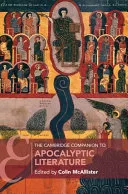
The Cambridge Companion to Apocalyptic Literature
 71
71

The Cambridge Companion to Apocalyptic Literature
Colin McAllister’s collection offers a commendable sweep of apocalyptic literature, moving beyond mere historical cataloging to explore the persistent anxieties these narratives address. The strength lies in its breadth, touching upon canonical texts and lesser-known traditions with equal scholarly rigor. A particularly illuminating section details the reception history of Revelation, showing how its interpretation shifted dramatically between early Christian exegesis and later millenarian movements. However, the sheer volume of material sometimes leads to a somewhat condensed treatment of individual works, leaving the reader with a desire for deeper engagement with specific authors like Joachim of Fiore, whose complex eschatological schema warrants more extended analysis. Despite this, the collection provides an essential reference point for understanding a pervasive literary and theological mode.
📝 Description
71
### What It Is This volume serves as a comprehensive survey of apocalyptic literature, tracing its development and enduring presence across human history. It examines foundational texts, analyzes their interpretative histories, and assesses their continued significance in understanding societal anxieties and eschatological thought. The collection aims to provide a structured overview for scholars and enthusiasts alike.
### Who It's For The companion is designed for students of literature, religious studies, and cultural history, as well as anyone interested in the persistent human fascination with endings and beginnings. It is particularly valuable for those seeking to understand the historical and thematic evolution of apocalyptic narratives, from ancient prophecies to modern interpretations.
### Historical Context Apocalyptic literature has a lineage stretching back over two millennia, with roots in ancient Near Eastern cosmologies and prophetic traditions. The emergence of texts like the Book of Daniel in the Second Temple period (c. 167 BCE) set precedents for symbolic language and eschatological visions. This companion contextualizes such early works within their sociopolitical environments and traces their influence through Christian, Gnostic, and Islamic traditions, up to their modern manifestations.
### Key Concepts The exploration encompasses a range of critical concepts, including the nature of prophecy, the symbolism of divine judgment and cosmic renewal, and the role of apocalyptic thought in times of crisis. It dissects the recurring motifs of revelation, final battles, and the establishment of new orders, examining how these elements function across diverse cultural and temporal landscapes.
💡 Why Read This Book?
• Gain insight into the textual origins of apocalyptic thought, understanding how works like the Book of Daniel (c. 167 BCE) established foundational themes. • Analyze the evolving symbolism of divine judgment and cosmic renewal across different historical epochs, recognizing recurring patterns in narratives of societal transformation. • Appreciate the scholarly methodologies for interpreting eschatological texts, learning how critical approaches illuminate the historical reception and modern relevance of works like Revelation.
⭐ Reader Reviews
Honest opinions from readers who have explored this book.
❓ Frequently Asked Questions
What historical periods does 'The Cambridge Companion to Apocalyptic Literature' cover?
The companion spans over two millennia, beginning with ancient Near Eastern cosmologies and prophetic traditions, extending through early Christian and Gnostic texts, and reaching contemporary manifestations of apocalyptic thought.
Which specific ancient texts are discussed in the book?
Key ancient texts examined include foundational works like the Book of Daniel, alongside discussions of early Christian apocalyptic writings and their predecessors in Second Temple Judaism.
How does the book address the reception history of apocalyptic literature?
It explores how specific apocalyptic texts, such as the Book of Revelation, have been interpreted and reinterpreted across different historical periods and by various religious or philosophical movements.
What is the scholarly approach taken in this companion?
The approach is scholarly and analytical, surveying source texts, their historical reception, and their ongoing relevance without resorting to speculative or overly devotional interpretations.
Is this book suitable for individuals new to apocalyptic studies?
Yes, its structured survey format and clear explanations of key concepts make it accessible for newcomers while offering depth for seasoned scholars.
What role does 'The Cambridge Companion to Apocalyptic Literature' play in contemporary discourse?
It situates apocalyptic literature within broader cultural and historical contexts, demonstrating its persistent influence on societal anxieties and visions of the future.
🔮 Key Themes & Symbolism
Endings and New Beginnings
This theme examines the pervasive human impulse to envision societal or cosmic cessation followed by renewal. From the cyclical cosmologies of ancient Near Eastern cultures to the linear eschatologies found in Abrahamic traditions, the companion analyzes how narratives of finality often contain seeds of rebirth. It dissects the symbolic language used to describe these transformations, highlighting motifs of judgment, purification, and the establishment of paradisiacal states or perfected orders, revealing a consistent thread in human attempts to make sense of historical transitions and ultimate destinies.
Prophecy and Revelation
The collection critically engages with the nature of prophetic utterance and revelatory experience as depicted in apocalyptic texts. It explores the historical context for claims of divine insight, particularly within periods of political or religious upheaval. The companion investigates the structural elements of revelation, such as angelic mediation, symbolic visions, and the unveiling of hidden truths about the divine plan and future events. This analysis moves beyond simple prediction to understand prophecy as a rhetorical and theological tool for social commentary and spiritual guidance.
Symbolism of Cosmic Conflict
A central focus is the recurring symbolism of cosmic struggle, often manifesting as a battle between forces of good and evil, order and chaos, or divine and demonic powers. The companion unpacks the archetypal nature of these conflicts, tracing their roots from mythological traditions to their sophisticated theological expressions in works like the Book of Revelation. It examines how figures such as dragons, beasts, and celestial armies function as potent metaphors for historical struggles and ultimate eschatological confrontations, providing a framework for understanding the dynamics of perceived ultimate realities.
Reception and Reinterpretation
This theme addresses the dynamic life of apocalyptic literature through its reception history. The companion demonstrates how canonical texts have been continuously reinterpreted by subsequent generations, often in response to contemporary crises or theologies. It analyzes how different movements, from early Christian communities to later millenarian groups, have selectively emphasized or recontextualized specific passages to support their own eschatological frameworks and social agendas, illustrating the fluid and context-dependent nature of meaning in these potent narratives.
💬 Memorable Quotes
“Apocalyptic literature has addressed human concerns for over two millennia.”
— This foundational statement underscores the enduring relevance and historical depth of the subject matter, positioning apocalyptic narratives as a continuous dialogue with fundamental human anxieties about existence and destiny.
“This volume surveys the source texts, their reception, and relevance.”
— This concise summary outlines the companion's tripartite approach: examining the original literary works, tracing how they have been understood and applied historically, and assessing their continued significance.
“Interpretation of Revelation shifted dramatically between early Christian exegesis and later millenarian movements.”
— This observation highlights the fluidity of meaning in apocalyptic texts, demonstrating how historical context and the needs of specific communities profoundly shape the understanding and application of prophetic visions.
“The emergence of texts like the Book of Daniel in the Second Temple period set precedents for symbolic language and eschatological visions.”
— This highlights a crucial historical anchor, identifying a key text that established conventions for the genre, influencing subsequent literature with its characteristic use of symbolism and future-oriented prophecy.
“Apocalyptic thought functions in times of crisis.”
— This interpretive insight suggests that the genre often arises and gains traction during periods of societal stress, offering frameworks for understanding calamity and envisioning ultimate resolution or divine intervention.
🌙 Esoteric Significance
Tradition
While not strictly an esoteric text itself, apocalyptic literature serves as a vital source for various esoteric traditions, particularly Gnosticism and certain branches of Hermeticism. These traditions often find in apocalyptic narratives symbolic maps of cosmic drama, divine intervention, and the eventual triumph of spiritual forces over material illusion. The concept of a hidden divine plan revealed through visions aligns with esoteric methodologies of seeking gnosis or direct spiritual knowledge, often bypassing conventional religious structures.
Symbolism
Key symbols frequently drawn upon by esoteric practitioners include the dragon (representing primal chaos or the material realm), the Lamb (symbolizing divine purity and sacrifice), and the New Jerusalem (a metaphor for a perfected spiritual state or a higher plane of existence). These motifs are often interpreted not just as historical or future events, but as internal psychological or spiritual processes within the initiate's journey toward enlightenment.
Modern Relevance
Contemporary esoteric thinkers and practitioners often engage with apocalyptic literature to understand archetypal patterns of destruction and creation. It informs discussions on societal collapse, spiritual evolution, and the potential for paradigm shifts. The symbolic language provides a framework for navigating modern anxieties, viewing current events through a lens of cosmic cycles and transformative potential, echoing themes found in modern occultism and New Age philosophies.
👥 Who Should Read This Book
• Students of comparative religion and theology seeking to understand the development of eschatological thought across diverse traditions. • Scholars of ancient and medieval literature interested in the historical context and literary techniques of apocalyptic narratives. • Individuals exploring the philosophical and psychological dimensions of societal anxieties and visions of the future, particularly those drawn to symbolic interpretations. • Practitioners of esoteric traditions who utilize apocalyptic symbolism for understanding cosmic cycles and spiritual transformation.
📜 Historical Context
The study of apocalyptic literature finds fertile ground in periods of societal upheaval and existential questioning. The Second Temple period in Judaism, particularly around the Maccabean revolt (c. 167 BCE), saw the composition of texts like the Book of Daniel, which employed complex symbolism to articulate hope amidst foreign domination. This tradition profoundly influenced early Christianity, with the Book of Revelation becoming a cornerstone of Western eschatological thought. Throughout the Middle Ages, figures like Joachim of Fiore developed elaborate millennial schemes, often diverging from strict Pauline interpretations. The Reformation and subsequent centuries witnessed further proliferation and contestation of apocalyptic ideas, influencing various Protestant sects. By the early 20th century, scholars like Albert Schweitzer were critically examining the historical Jesus through the lens of apocalypticism, a competing school of thought that emphasized the genre's eschatological urgency over its ethical teachings.
📔 Journal Prompts
The Book of Daniel's use of symbolic beasts and its historical context.
Recurring motifs of cosmic conflict and their modern parallels.
The evolving interpretation of Revelation across different historical epochs.
Visions of societal renewal and their function during times of crisis.
The relationship between prophecy and the unveiling of hidden truths.
🗂️ Glossary
Eschatology
The branch of theology concerned with the final events of history, or the ultimate destiny of humanity and the world, often involving concepts of judgment, salvation, and the end times.
Second Temple Period
The era of Jewish history from the construction of the Second Temple in Jerusalem (c. 516 BCE) to its destruction by the Romans (70 CE), a period of significant theological and literary development.
Millenarianism
A belief system centered on the idea of an imminent, large-scale, and transformative event (often a divine intervention) that will bring about a radically new and better world, often associated with a thousand-year reign.
Gnosticism
A diverse set of religious and philosophical systems originating in the early centuries CE, emphasizing personal spiritual knowledge (gnosis) as the means of salvation from the material world.
Book of Revelation
The final book of the New Testament, an apocalyptic work attributed to John of Patmos, characterized by symbolic visions of divine judgment, cosmic battles, and the ultimate triumph of God.
Cosmology
The study of the origin, evolution, and eventual fate of the universe, often incorporating religious or mythological beliefs about the structure and order of existence.
Hermeticism
A body of religious, philosophical, and esoteric traditions based on writings attributed to Hermes Trismegistus, emphasizing divine knowledge, the correspondence between the macrocosm and microcosm, and spiritual ascent.