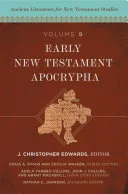
Early New Testament Apocrypha
 76
76

Early New Testament Apocrypha
The extensive corpus of early Christian apocrypha often presents a formidable barrier to entry. Zondervan's *Early New Testament Apocrypha* endeavors to dismantle that barrier, succeeding admirably in its aim to introduce these texts to a wider audience. The work's strength lies in its methodical organization and clear prose, making complex theological ideas and historical contexts comprehensible. A particularly illuminating section details the reception history of texts like the Gospel of Mary, illustrating how their content challenged established orthodoxies and later led to their exclusion from the canon. However, the book sometimes treads a fine line between introduction and exhaustive analysis, occasionally leaving the reader wishing for deeper engagement with the more esoteric interpretations of certain texts. Despite this, it serves as an essential primer for anyone seeking to understand the full spectrum of early Christian literature. It effectively broadens the scope of New Testament studies.
📝 Description
76
### What It Is Early New Testament Apocrypha offers an accessible introduction to a collection of ancient texts that, while not part of the canonical New Testament, shed significant light on early Christian thought and practice. Published in 2022, this work serves as a foundational guide, presenting these often-overlooked documents in a context that aids understanding of their historical and theological environment. It aims to demystify a corpus of literature that has often been confined to specialized academic study.
### Who It's For This book is designed for students of early Christianity, theology, and comparative religion who seek to expand their knowledge beyond the standard biblical texts. It is particularly valuable for those encountering apocryphal literature for the first time, offering clear explanations and historical background. Scholars looking for a concise overview or a starting point for further research will also find it useful. It bridges the gap between primary sources and introductory scholarship.
### Historical Context The texts compiled and discussed emerged during the formative centuries of Christianity, a period marked by diverse interpretations of Jesus' teachings and the development of various Christian traditions. These apocryphal writings circulated alongside the texts that would eventually form the New Testament canon, influencing and sometimes challenging prevailing doctrines. Their study is crucial for understanding the broader intellectual landscape in which Christianity took shape, a landscape populated by figures like Marcion and movements such as Gnosticism.
### Key Concepts Central to this volume is the concept of the 'larger world' surrounding the New Testament. This involves understanding that the canonical texts did not arise in a vacuum but were part of a vibrant, often contentious, literary and theological milieu. The book explores how these apocryphal texts, such as the Gospel of Thomas or the Acts of Paul, offer alternative perspectives on early Christian beliefs, practices, and narratives, providing a richer, more nuanced picture of the period.
💡 Why Read This Book?
• You will learn to contextualize canonical texts by examining the non-canonical writings that circulated concurrently, such as the Gospel of Thomas, understanding their role in the broader early Christian landscape. • You will gain insight into the historical process of canon formation, appreciating why certain texts were included in the New Testament while others, like the Acts of Paul, were excluded by early Church Fathers. • You will discover specific alternative narratives and theological perspectives from the 2nd and 3rd centuries, such as those found in the Gospel of Mary, which offer a different lens on early Christian beliefs and figures.
⭐ Reader Reviews
Honest opinions from readers who have explored this book.
❓ Frequently Asked Questions
What is the primary purpose of studying New Testament apocrypha?
Studying apocrypha provides a broader understanding of the historical and intellectual environment in which the canonical New Testament texts were written and received, revealing diverse early Christian beliefs and practices.
When were most of these early Christian apocryphal texts written?
The majority of early New Testament apocryphal texts were composed between the 2nd and 4th centuries CE, a period crucial for the development of Christian doctrine and the formation of the biblical canon.
How does *Early New Testament Apocrypha* differ from studying the canonical New Testament?
While the canonical New Testament presents a curated selection of texts, this book explores writings that were considered by some early Christians but ultimately excluded, offering alternative theological viewpoints and narratives.
Are these apocryphal texts considered scripture by any modern groups?
While not part of mainstream Christian scripture, some texts may hold interest for specific esoteric or Gnostic revivalist groups, though their primary value today is historical and comparative.
Who were some key figures involved in the canonization process that excluded these texts?
Figures like Irenaeus of Lyons and Athanasius of Alexandria were influential in defining the boundaries of the New Testament canon, often arguing against the authenticity or orthodoxy of apocryphal writings.
Does this book discuss the Gnostic interpretations of Jesus' teachings?
Yes, the work explores texts often associated with Gnosticism, such as the Gospel of Thomas, providing context for their unique interpretations of Jesus' sayings and the nature of salvation.
🔮 Key Themes & Symbolism
Canon Formation
The book illuminates the complex historical and theological processes that led to the establishment of the New Testament canon. It details how certain texts, such as the Shepherd of Hermas, were widely read and influential in the 2nd and 3rd centuries, yet ultimately did not achieve canonical status. Understanding this selection process is key to appreciating the boundaries of accepted Christian scripture and the criteria (authorship, orthodoxy, widespread acceptance) applied by early Church leaders like Eusebius of Caesarea.
Alternative Christologies
Early New Testament Apocrypha presents a fascinating array of alternative understandings of Jesus Christ and his message. Texts like the Infancy Gospel of Thomas offer narratives focusing on Jesus' miraculous childhood, differing significantly from the canonical Gospels. The book explores how these variations provided different theological frameworks, sometimes emphasizing esoteric knowledge (Gnosis) or different aspects of Christ's divine and human nature, challenging the developing orthodox consensus.
The 'Larger World' of Early Christianity
This collection emphasizes that the New Testament emerged from a vibrant and diverse intellectual milieu. By studying apocryphal texts, readers gain access to this 'larger world,' encountering a spectrum of beliefs, practices, and literary genres that coexisted with nascent Christianity. This includes influences from Hellenistic philosophy and Jewish traditions, revealing a dynamic period of religious synthesis and divergence that shaped Christianity's early identity.
Reception and Influence
The work examines how these apocryphal texts were received, circulated, and debated within early Christian communities. It highlights instances where texts were popular for centuries, influencing art, liturgy, and theological discourse, before eventually being marginalized or condemned by authoritative figures. This critical analysis reveals the ongoing dialogue and conflict that characterized early Christianity and the shifting landscape of accepted doctrine.
💬 Memorable Quotes
“To understand the New Testament well, it is important to study the larger world surrounding it, and one of the primary avenues for this exploration is through reading related ancient texts.”
— This foundational statement underscores the book's core premise: canonical scripture cannot be fully grasped in isolation. It advocates for a contextual approach, viewing biblical texts as products of a specific historical and literary environment, necessitating engagement with contemporary non-canonical writings.
“The Ancient Literature for New Testament Studies series aims to bridge this gap between the sheer size of the ancient literary corpora and the needs of scholars and novices.”
— This quote highlights the series' practical objective: to make a vast and complex body of ancient literature accessible. It positions the volume as a crucial tool for democratizing access to texts that might otherwise remain obscure due to their volume and specialized nature.
“But this task is daunting for scholars and novices alike given the sheer size of the ancient literary corpora.”
— This acknowledges the significant challenge faced by anyone attempting to study the extensive body of ancient literature. It validates the reader's potential feelings of overwhelm and sets the stage for the book's role as a guide through this vast textual landscape.
“Broaden the scope of your New Testament studies with this introduction to early Christian apocryphal literature.”
— This serves as a direct invitation to the reader, promising an expanded perspective on early Christian history and theology. It clearly defines the book's content and its benefit: moving beyond the standard biblical texts to include a wider range of early Christian writings.
“One of the primary avenues for this exploration is through reading related ancient texts.”
— This emphasizes the method advocated by the book: textual engagement. It suggests that direct study of the apocrypha is not merely supplementary but a fundamental way to gain deeper insights into the world that produced the New Testament.
🌙 Esoteric Significance
Tradition
While not strictly adhering to a single esoteric lineage like Kabbalah or Theosophy, Early New Testament Apocrypha resonates strongly with Gnostic traditions. Many of the texts discussed, such as the Gospel of Thomas or the Apocryphon of John, contain dualistic cosmologies, secret knowledge (Gnosis) imparted by Jesus, and alternative creation narratives characteristic of Gnosticism. The work fits within esoteric studies by presenting these texts not merely as historical curiosities but as repositories of alternative spiritual paths and understandings of the divine.
Symbolism
The texts often employ rich symbolism. For instance, the 'Kingdom of Heaven' in the Gospel of Thomas is frequently interpreted not as an external place but as an inner state of realization, a concept central to many mystical traditions. Water can symbolize purification or the unconscious, while light often represents divine knowledge or enlightenment. The figure of Jesus himself becomes a potent symbol of the awakened consciousness or the divine spark within humanity, guiding seekers toward spiritual liberation.
Modern Relevance
Contemporary esoteric practitioners and scholars of mysticism frequently engage with these apocryphal texts. Gnostic revivalist movements, Jungian psychology's exploration of archetypes, and various New Age spiritualities draw inspiration from the alternative Christologies and emphasis on inner knowledge found in works like the Gospel of Mary. The texts offer alternative frameworks for understanding divinity, consciousness, and spiritual awakening, providing fertile ground for modern seekers exploring paths beyond conventional religious structures.
👥 Who Should Read This Book
• Beginning students of Gnosticism and early esoteric Christianity seeking foundational texts and contextual analysis of writings excluded from the mainstream canon. • Comparative religion scholars and theologians interested in understanding the full spectrum of early Christian thought and the dynamics of canon formation. • Individuals exploring alternative spiritual narratives and seeking deeper, less conventional interpretations of Jesus' teachings and early Christian cosmology.
📜 Historical Context
The texts explored in *Early New Testament Apocrypha* emerged during a tumultuous period in early Christianity, primarily between the 2nd and 4th centuries CE. This era witnessed intense theological debate and the gradual consolidation of orthodox doctrine, often in response to diverse interpretations. Key figures like Irenaeus of Lyons, writing in the late 2nd century, actively polemicized against what he considered heretical writings, including many Gnostic texts. The intellectual currents were shaped by Hellenistic philosophy, Jewish traditions, and the developing organizational structures of the Church. Competing schools of thought, such as various Gnostic systems and proto-orthodox Christianity, vied for influence. The reception of these apocryphal works varied significantly; some were widely circulated and respected for generations, while others were quickly suppressed or condemned by emerging authorities, shaping the very definition of acceptable Christian scripture.
📔 Journal Prompts
The concept of the 'larger world' surrounding the New Testament: how does this idea reshape your understanding of canonical texts?
Reflect on the criteria used by figures like Athanasius of Alexandria to define the New Testament canon.
Consider the implications of alternative Christologies presented in texts like the Infancy Gospel of Thomas.
Analyze the symbolic meaning of 'inner realization' versus external salvation in Gnostic-influenced apocrypha.
Explore the historical tension between proto-orthodox claims and Gnostic interpretations of Jesus' teachings.
🗂️ Glossary
Apocrypha
A collection of ancient Jewish and Christian writings that were not included in the canonical scriptures. These texts often offer alternative narratives, teachings, or perspectives on biblical figures and events.
Canon
The official list of books considered by a religious community to be authoritative scripture. For Christians, the New Testament canon was largely settled by the 4th century CE.
Gnosticism
A diverse set of religious and philosophical movements prominent in the early centuries CE, characterized by a belief in salvation through esoteric knowledge (gnosis) and often featuring dualistic worldviews.
Proto-orthodox Christianity
The developing stream of early Christianity that eventually became the dominant form, characterized by doctrines that would later be formalized as orthodox, often in opposition to Gnostic and other 'heretical' movements.
Heretical
In the context of early Christianity, referring to beliefs or teachings deemed by the emerging orthodox authorities to be contrary to accepted doctrine.
Logia
Sayings or teachings, particularly referring to collections of Jesus' sayings, such as those found in the Gospel of Thomas.
Eschatology
The branch of theology concerned with the final destiny of the soul and of the world; beliefs about the end times, judgment, and the afterlife.