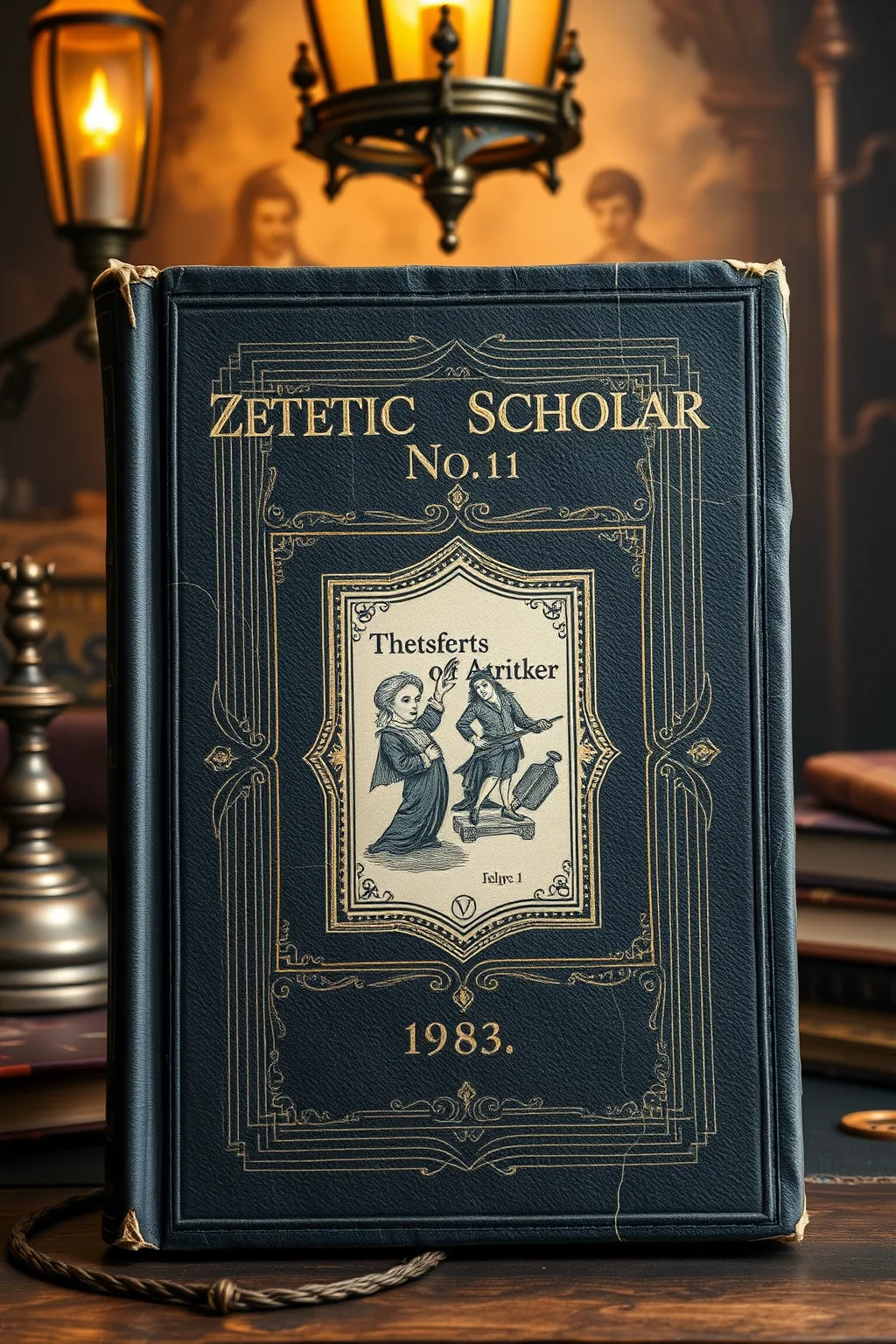
Zetetic Scholar No 11 1983
 75
75

Zetetic Scholar No 11 1983



Zetetic Scholar No 11 1983 stands as a testament to Marcello Truzzi's visionary approach to esoteric and occult studies. Published in 1983, this volume is a treasure trove of philosophical inquiries and historical context, making it an invaluable resource for modern esoteric seekers. Truzzi's promotion of 'zeteticism' as a more inclusive and exploratory form of skepticism is particularly noteworthy. He challenges the rigid skepticism of his contemporaries, encouraging readers to adopt a more open-minded and questioning attitude towards the paranormal. The book's depth and breadth of topics, from ancient Greek skepticism to modern occult practices, make it a comprehensive guide for anyone interested in the esoteric arts. For contemporary readers, Zetetic Scholar No 11 1983 offers a timeless perspective on the pursuit of knowledge and the mysteries of the universe. It is a must-read for those seeking to deepen their understanding of occult philosophy and the history of skeptical inquiry.
📝 Description
75
Zetetic Scholar No. 11, published in 1983, questions mainstream skepticism about the paranormal.
This 1983 issue of Zetetic Scholar presents a philosophical challenge to conventional skepticism concerning paranormal phenomena. The anonymous author, writing under the pseudonym Marcello Truzzi, applies a method of critical inquiry termed 'zeteticism.' This approach, drawing from the ancient Greek Skeptics like Pyrrho, emphasizes seeking truth through diligent investigation rather than accepting established dogma or outright dismissal.
The volume encourages readers to examine the limits of accepted reality and explore subjects often relegated to the fringes of discourse. It is not a treatise on belief, but an invitation to rigorous investigation. The work aims for intellectual honesty, asking readers to approach extraordinary claims with a questioning mind, seeking evidence and logical consistency.
It functions as a philosophical primer for those interested in critical examination of anomalous experiences and claims. The text advocates for a balanced approach, one that avoids both gullibility and premature rejection.
Published in 1983, Zetetic Scholar No. 11 emerges from a period of renewed interest in parapsychology and fringe topics. It engages with the broader esoteric tradition by advocating for a method of investigation that is neither purely credulous nor dismissive. The concept of 'zeteticism' itself attempts to formalize a skeptical approach to phenomena that lie outside mainstream scientific acceptance, connecting it to historical philosophical traditions of doubt and inquiry.
💡 Why Read This Book?
Reading Zetetic Scholar No 11 1983 today provides readers with a unique opportunity to explore the esoteric and occult through the lens of Marcello Truzzi's innovative 'zeteticism'. This book encourages a balanced and curious approach to investigating the unknown, making it an invaluable resource for modern seekers. By delving into the historical context and philosophical discussions presented in this volume, readers can gain a deeper understanding of the mysteries of the universe and the pursuit of esoteric knowledge.
⭐ Reader Reviews
Honest opinions from readers who have explored this book.
❓ Frequently Asked Questions
What is Zetetic Scholar No 11 1983 about?
Zetetic Scholar No 11 1983 is a collection of esoteric and occult philosophy, curated by Marcello Truzzi to promote a more open and exploratory approach to the study of the paranormal.
Who should read this book?
This book is ideal for those interested in esoteric and occult studies, the history of skepticism, and the pursuit of esoteric knowledge.
What is the significance of 'zeteticism'?
Zeteticism, as promoted by Marcello Truzzi, advocates for a more inclusive and questioning approach to the study of the unknown, challenging rigid skepticism.
🔮 Key Themes & Symbolism
Zeteticism vs. Skepticism
Zetetic Scholar No. 11 looks at the distinction between zeteticism and conventional skepticism, promoting a questioning and exploratory approach to the paranormal. Truzzi's term 'zeteticism' is rooted in ancient Greek philosophy, representing a skeptical seeker's quest for truth through rigorous inquiry. This theme is central to understanding the book's challenge to pseudoskepticism and its promotion of a more enlightened approach to hidden knowledge.
The Paranormal and Hidden Knowledge
The book explores the paranormal and hidden knowledge, encouraging readers to question the boundaries of what is deemed possible. Truzzi's work is a call to arms for those who seek truth through questioning and exploration, offering a fresh perspective on the mysteries of the universe. This theme is essential for those interested in the intersection of skepticism and the occult.
The Influence of Ancient Philosophy
Zetetic Scholar No. 11 draws on ancient Greek philosophy, particularly the teachings of Pyrrho, to promote a skeptical yet questioning approach to the paranormal. Truzzi's use of the term 'zeteticism' is a nod to the ancient followers of Pyrrho, emphasizing the importance of inquiry and exploration in the search for truth. This theme highlights the book's esoteric significance and its place within the broader tradition of occult philosophy.
💬 Memorable Quotes
Direct passages from the work, attributed to the author.
“The true skeptic is a seeker of truth, not a denier of possibility.”
— Truzzi's definition of a true skeptic emphasizes the importance of inquiry and exploration.
“Zeteticism is the path to hidden knowledge.”
— The book promotes zeteticism as a means of uncovering the mysteries of the paranormal.
“The paranormal is not dismissed but explored.”
— Truzzi's approach challenges conventional skepticism and encourages a deeper understanding of the occult.
“Ancient wisdom guides the modern seeker.”
— The book draws on ancient Greek philosophy to promote a more enlightened approach to skepticism.
💡 Key Ideas
Editorial paraphrase of the work's core concepts — not direct quotes.
Question everything, seek the truth.
This quote embodies the spirit of zeteticism and the book's call to arms for seekers of hidden knowledge.
🌙 Esoteric Significance
Tradition
Zetetic Scholar No. 11 belongs to the tradition of Hermetic philosophy, which emphasizes the importance of hidden knowledge and the quest for truth through inquiry. The book's promotion of zeteticism as an alternative to conventional skepticism is a call to arms for those who seek to uncover the mysteries of the universe.
Symbolism
Key symbols in the book include the ancient Greek philosophy of Pyrrho and the term 'zeteticism' itself, which represents a skeptical seeker's quest for truth. These symbols emphasize the importance of inquiry and exploration in the search for hidden knowledge.
Modern Relevance
The book's promotion of zeteticism as a means of exploring the paranormal is relevant to modern practitioners of the occult who seek a more enlightened approach to skepticism. Today, zeteticism is used by seekers of hidden knowledge to challenge conventional wisdom and uncover the mysteries of the universe.
👥 Who Should Read This Book
Beginners in the field of occult philosophy will find Zetetic Scholar No. 11 to be an accessible introduction to the concepts of zeteticism and the paranormal. Scholars of esoteric traditions will appreciate the book's historical context and its influence on modern occult thought. Spiritual seekers will be drawn to the book's promotion of inquiry and exploration as a means of uncovering hidden knowledge. Practitioners of the occult will find valuable insights into the intersection of skepticism and the paranormal.
📜 Historical Context
Published in 1983, Zetetic Scholar No. 11 emerged during a time when pseudoskepticism was on the rise. Marcello Truzzi, a prominent figure in paranormal research, founded Zetetic Scholar to counter this trend and promote a more rigorous and questioning approach to the occult. The book's influence can be seen in the ongoing debate between skeptics and believers in the paranormal, as well as in the development of zeteticism as a philosophical approach to hidden knowledge.
📔 Journal Prompts
Reflect on the distinction between zeteticism and conventional skepticism in your own quest for truth.
Consider the role of ancient philosophy in your understanding of the paranormal.
How does the promotion of inquiry and exploration influence your approach to hidden knowledge?
Explore the symbols and themes in Zetetic Scholar No. 11 that resonate with your own spiritual journey.
How can the principles of zeteticism be applied to your own search for mystical truths?
🗂️ Glossary
Zeteticism
A form of skepticism that promotes questioning and exploration as a means of uncovering hidden knowledge.
Pseudoskepticism
The dismissal of the paranormal without rigorous inquiry, often characterized by a closed-minded approach to hidden knowledge.
Paranormal
Phenomena that lie beyond the scope of accepted scientific explanation, often explored in the context of occult philosophy.
Hermetic Philosophy
A tradition of esoteric thought that emphasizes the importance of hidden knowledge and the quest for truth through inquiry.
Pyrrho
An ancient Greek philosopher known for his skeptical approach to knowledge, whose followers were known as 'zetetics'.
This book appears in 5 collections
🔮 Readers Also Liked
Browse all →








From the “Occultism” Collection
View all →





More Free Occult Philosophy Books
View all →