Yogasūtra
 81
81

Yogasūtra
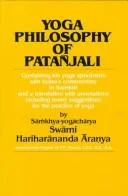
Patañjali's Yogasūtra, particularly in its early published editions like the 1922 rendition, offers a stark, unadorned glimpse into the mechanics of the mind. The terse aphorisms, when stripped of later commentary, demand intense engagement. A strength lies in its sheer systematic rigor; the progression through the eight limbs of yoga feels almost like a logical proof for spiritual attainment. However, its brevity can also be a stumbling block. For instance, the concept of *samādhi* is presented without extensive elaboration, requiring considerable interpretive effort or reliance on secondary sources to grasp its manifold states. The aphorism 'Yogas citta vrtti nirodhah' (Yoga is the cessation of the modifications of the mind) remains its most accessible, yet profoundly challenging, statement. This is not a gentle introduction but a demanding philosophical treatise for the dedicated seeker.
📝 Description
81
Composed between 400 BCE and 200 CE, Patanjali's Yogasūtra is a core text of Hindu philosophy.
The Yogasūtra by Patanjali is a Sanskrit work central to the Darśana, one of the six orthodox schools of Hindu philosophy. It systematically lays out a path to liberation (moksha) by detailing methods for controlling consciousness. This text focuses on achieving mental stillness and spiritual insight, rather than on physical postures. It explains the inner workings of the mind and its potential for transcendence.
This work is intended for serious students of yoga who wish to grasp its philosophical foundations beyond the physical practice of asanas. It will also interest those drawn to ancient Indian philosophy, meditation, and the psychology of consciousness. Readers should expect dense philosophical arguments and abstract ideas, aiming for a deeper understanding of yoga as a discipline for mental control and self-realization.
The Yogasūtra emerged during a dynamic period of Indian philosophical development, alongside traditions like Sāṃkhya. Patanjali synthesized earlier yogic practices, giving them a structured philosophical framework. This compilation provided a coherent system for understanding yogic principles. Its systematic approach to mental discipline influenced Indian religious and philosophical thought for centuries, forming a key part of the yogic tradition.
💡 Why Read This Book?
• Gain a precise philosophical framework for yoga, distinct from modern physical practices, by studying Patañjali's definition of *citta-vṛtti-nirodha*. • Understand the systematic eight-limbs of yoga (*aṣṭāṅga-yoga*) as presented in the text, offering a structured path to mental discipline beyond mere asana. • Explore the nature of mental afflictions (*kleśa*) and Patañjali's methods for their dissolution, providing ancient psychological insights into overcoming suffering.
⭐ Reader Reviews
Honest opinions from readers who have explored this book.
❓ Frequently Asked Questions
What is the primary goal of the Yogasūtra?
The primary goal of the Yogasūtra is *moksha*, liberation, achieved through the cessation of the mind's fluctuations (*citta-vṛtti-nirodha*) and the attainment of true self-knowledge.
Is the Yogasūtra about physical yoga postures?
No, while *āsana* is one of the eight limbs, the Yogasūtra primarily focuses on the philosophical and psychological aspects of yoga, emphasizing mental control and meditation.
Who was Patañjali?
Patañjali is the traditional author of the Yogasūtra, a sage credited with compiling and systematizing existing yogic knowledge, likely between 400 BCE and 200 CE.
What are the 'eight limbs' of yoga mentioned in the text?
The eight limbs are Yama, Niyama, Āsana, Prāṇāyāma, Pratyāhāra, Dhāraṇā, Dhyāna, and Samādhi, representing ethical observances, physical postures, breath control, sense withdrawal, concentration, meditation, and absorption.
Where does the Yogasūtra fit within Indian philosophy?
It is considered a foundational text of the Yoga school of Hindu philosophy, one of the six orthodox (āstika) Darśanas, closely aligned with the Sāṃkhya school.
Is the Yogasūtra freely available online?
Many translations and editions of the Yogasūtra, due to its age, are in the public domain and can be found freely available on various academic and spiritual archive websites.
🔮 Key Themes & Symbolism
Cessation of Mental Modifications
The core tenet of the Yogasūtra is *citta-vṛtti-nirodha*, the mastery and cessation of the mind's constant fluctuations. Patañjali presents this not as an annihilation of consciousness, but as a purification that allows the true self to be perceived. The text meticulously analyzes these mental modifications (*vṛtti*), categorizing them and outlining the disciplined practices necessary to still them. This theme underscores yoga's role as a profound psychological technology for achieving clarity and equanimity, moving beyond mere sensory experience.
The Eight Limbs of Yoga
Patañjali systematically lays out the *aṣṭāṅga-yoga* (eight limbs) as a progressive path toward liberation. These limbs—Yama, Niyama, Āsana, Prāṇāyāma, Pratyāhāra, Dhāraṇā, Dhyāna, and Samādhi—provide a comprehensive structure for yogic practice. They move from external ethical conduct and physical posture to internal practices of breath control, sense withdrawal, concentration, and ultimately, profound states of meditative absorption. This ordered sequence is central to the text's practical philosophical approach.
The Nature of Suffering and Liberation
A significant portion of the Yogasūtra addresses the root causes of human suffering, identified as the *kleśa* (afflictions): ignorance (*avidyā*), egoism (*asmitā*), attachment (*rāga*), aversion (*dveṣa*), and the fear of death (*abhiniveśa*). The text posits that liberation (*kaivalya*) is achieved by eradicating these afflictions through discriminative knowledge and yogic discipline. This theme highlights yoga's therapeutic potential and its aim to free the individual from the cycle of suffering.
The Puruṣa-Prakṛti Distinction
Drawing heavily from Sāṃkhya philosophy, the Yogasūtra distinguishes between *Puruṣa* (pure consciousness, the self) and *Prakṛti* (primordial matter, nature, the mind-body complex). The work explains that suffering arises from the confusion of these two realities, mistaking the transient phenomena of *Prakṛti* for the eternal nature of *Puruṣa*. True liberation involves recognizing this fundamental distinction and allowing *Puruṣa* to rest in its own true nature.
💬 Memorable Quotes
Direct passages from the work, attributed to the author.
“Yoga is the cessation of the fluctuations of consciousness.”
— This is the sutra's definition of yoga, establishing its primary aim: not physical prowess, but profound mental stillness and control over the mind's ceaseless activity.
“Then the Seer rests in its own true nature.”
— This describes the state of liberation (*kaivalya*), where pure consciousness (*Puruṣa*) is no longer identified with the activities of the mind-body complex (*Prakṛti*).
“The afflictions are to be abandoned.”
— This points to the practical goal of yoga: to systematically dismantle the mental obscurations (*kleśa*) like ignorance and attachment that cause suffering and hinder self-realization.
“By the repeated practice of concentration and detachment.”
— This highlights the two fundamental pillars of yogic discipline: persistent effort in focusing the mind (*abhyāsa*) and non-attachment to the fruits of that effort (*vairāgya*).
“When the mind is steady, the world appears as it is.”
— This suggests that a calm, concentrated mind is essential for accurate perception, enabling one to see reality clearly, free from distortion and subjective bias.
🌙 Esoteric Significance
Tradition
The Yogasūtra is central to the Indic spiritual tradition, specifically the Hindu Darśana of Yoga. While not typically categorized under Western esoteric lineages like Hermeticism or Kabbalah, its emphasis on inner transformation, mind control, and achieving states of higher consciousness aligns with universal esoteric aims. It represents an 'inner science' focused on manipulating subjective experience to achieve spiritual liberation, a hallmark of many esoteric paths seeking transcendence.
Symbolism
Key symbols include the *lotus* (representing purity and spiritual unfolding from the mud of material existence), the *flame of a lamp* (often used as a focus for concentration, symbolizing steady, unwavering awareness), and the *eye* (representing insight, knowledge, and the witness consciousness that observes mental activity without identification). The concept of *Puruṣa* itself can be seen as a symbol for the unmanifest, eternal self.
Modern Relevance
Contemporary practitioners of mindfulness meditation, various forms of modern yoga (beyond asana), and contemplative psychology draw heavily on the Yogasūtra's principles. Thinkers in consciousness studies and transpersonal psychology often reference Patañjali's analysis of the mind. Its methodical approach to mental discipline continues to inspire secular and spiritual programs focused on stress reduction, focus enhancement, and self-awareness.
👥 Who Should Read This Book
• Dedicated yoga practitioners seeking the philosophical depth and psychological framework behind the physical practices, moving beyond asana to understand *citta-vṛtti-nirodha*. • Students of comparative religion and ancient Indian philosophy interested in the foundational texts of Hindu Darśana and the historical development of yogic thought. • Individuals exploring meditation and consciousness studies who wish to engage with a systematic, classical approach to mental discipline and self-realization.
📜 Historical Context
The Yogasūtra, likely compiled between 400 BCE and 200 CE, emerged during a vibrant period of Indian philosophical inquiry. It stands as a central to the orthodox Hindu tradition, specifically the Yoga school, which shares foundational principles with Sāṃkhya. Patañjali's genius lay in systematizing diverse yogic practices and theories into a coherent philosophical framework. This text provided a structured path to spiritual realization, influencing countless thinkers and practitioners across India. While specific contemporary reception details are scarce due to the era's manuscript culture, its enduring influence is undeniable. It offered a distinct yet complementary path to other prominent philosophical systems of the time, such as early forms of Buddhism and various Upanishadic thought.
📔 Journal Prompts
The nature of *citta-vṛtti-nirodha* and its practical application in daily life.
The role of *yama* and *niyama* in preparing the mind for deeper practice.
An exploration of *kleśa* (afflictions) and their manifestation in personal experience.
The distinction between *Puruṣa* and *Prakṛti* as perceived through meditative awareness.
Reflecting on the states of *dhāraṇā*, *dhyāna*, and *samādhi* in the context of sustained concentration.
🗂️ Glossary
Citta
Consciousness; the mind as a whole, encompassing intellect, ego, and memory.
Vṛtti
A modification or fluctuation of consciousness; a thought-form or mental state.
Nirodha
Cessation, restraint, control, or suppression.
Aṣṭāṅga-yoga
The eight limbs of yoga, a progressive path outlined by Patañjali.
Kleśa
Afflictions or impurities that cloud the mind and cause suffering.
Puruṣa
Pure consciousness; the true Self, distinct from the mind and material nature.
Prakṛti
Primordial matter or nature; the phenomenal world, including the mind-body complex.
🔮 Readers Also Liked
Browse all →









More by Patañjali.
All books →
More Free Occult Philosophy Books
View all →