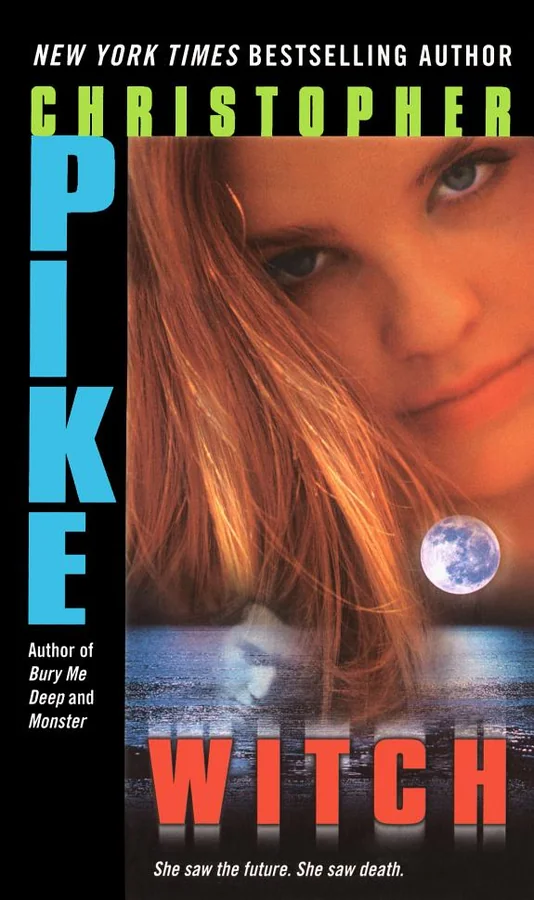
Witch
 71
71

Witch
Christopher Pike’s "Witch" presents a familiar adolescent protagonist grappling with extraordinary abilities, a trope that can easily fall into predictable patterns. However, the book distinguishes itself by focusing on the sheer terror and overwhelming burden of precognition, rather than its heroic applications. Julia's first significant vision—a violent shooting—is depicted with a visceral immediacy that underscores the narrative's darker undertones. The strength lies in Pike's ability to imbue the supernatural with a sense of genuine threat and psychological distress, making Julia’s predicament feel less like a superpower and more like a terrifying affliction.
A notable limitation is the pacing; at times, the plot meanders, and certain character motivations remain underdeveloped, particularly among the supporting cast who often serve more as plot devices than fully realized individuals. The exploration of witchcraft itself, while central to the title, feels somewhat secondary to the mechanics of precognition and the immediate dangers Julia faces. Despite these points, the scene where Julia attempts to warn the intended victim, only to be met with disbelief and suspicion, powerfully illustrates the isolation and futility that often accompany foreknowledge. "Witch" offers a suspenseful, albeit uneven, look at the dark side of seeing the future.
📝 Description
71
### What It Is Christopher Pike's novel "Witch," first published in 2001, centers on seventeen-year-old Julia, whose life takes a dramatic turn when she experiences a terrifying precognitive vision. This vision involves a young man being fatally shot, thrusting Julia into a world where the future is not just a concept but a tangible, often perilous, reality she can perceive. The narrative follows her struggle to understand and control these newfound abilities while navigating the dangerous circumstances that seem to follow her visions.
### Who It's For This book appeals to readers interested in the intersection of the supernatural and young adult fiction. It will particularly engage those who enjoy stories about characters discovering hidden powers, facing destiny, and dealing with the moral and practical implications of precognition. Fans of suspenseful plots with a touch of the occult, and narratives exploring themes of fate versus free will, will find "Witch" compelling.
### Historical Context Published in 2001, "Witch" emerged during a period of renewed interest in supernatural and paranormal themes in popular culture, following the success of franchises like "Buffy the Vampire Slayer" (which debuted in 1997). While not strictly an esoteric text in academic circles, Pike's work tapped into a broader cultural fascination with witchcraft, psychic abilities, and hidden knowledge, often drawing parallels with earlier works that explored similar themes. Its publication predates the significant boom in paranormal romance and urban fantasy that would dominate the mid-to-late 2000s.
### Key Concepts The novel prominently features the concept of precognition, exploring how an individual might react to seeing future events, particularly violent ones. It delves into the psychological impact of such visions and the protagonist's quest for agency in the face of predetermined outcomes. The narrative also touches upon the idea of inherited or latent magical abilities, questioning whether these powers are a gift or a curse, and examining the isolation that can accompany possessing extraordinary capabilities.
💡 Why Read This Book?
• Gain insight into the psychological toll of precognition, moving beyond simplistic portrayals of psychic powers as solely beneficial, as seen in Julia's initial visions. • Understand the narrative's grounding in young adult suspense, which gained traction in the early 2000s, offering a specific cultural context for supernatural fiction. • Explore the theme of inherited abilities and their potential for both danger and isolation, as Julia confronts her latent witchcraft.
⭐ Reader Reviews
Honest opinions from readers who have explored this book.
❓ Frequently Asked Questions
When was Christopher Pike's novel 'Witch' originally published?
Christopher Pike's novel "Witch" was first published in September 2001, placing it within a wave of supernatural and paranormal fiction gaining popularity in the early 2000s.
What is the central supernatural ability explored in 'Witch'?
The central supernatural ability explored in "Witch" is precognition, the psychic capacity to see future events, particularly violent ones, as experienced by the protagonist, Julia.
Does 'Witch' feature traditional witchcraft elements alongside psychic abilities?
Yes, while precognition is the primary focus, the novel's title and themes suggest an exploration of witchcraft, hinting at latent or inherited abilities that may connect to Julia's visions.
Who is the main character in Christopher Pike's 'Witch'?
The main character in Christopher Pike's "Witch" is seventeen-year-old Julia, who discovers her ability to see the future after a disturbing vision of a murder.
What kind of tone does 'Witch' generally adopt?
The novel "Witch" adopts a suspenseful and often dark tone, emphasizing the psychological burden and danger associated with seeing future events, rather than presenting them as mere superpowers.
Is 'Witch' considered a classic of the occult genre?
While "Witch" taps into popular occult themes, it is primarily categorized as young adult supernatural fiction. Its significance lies more in its contribution to the genre's trends in the early 2000s than as a foundational esoteric text.
🔮 Key Themes & Symbolism
The Burden of Precognition
The novel intensely focuses on precognition not as a gift, but as a terrifying burden. Julia's visions of future violence, particularly the shooting, are depicted as involuntary and psychologically damaging. This theme challenges the romanticized notion of psychic powers, highlighting the anxiety, isolation, and moral quandaries that arise when one can foresee impending disaster but struggles to avert it or is disbelieved.
Latent Abilities and Identity
Julia's discovery of her ability to see the future is intertwined with the concept of latent witchcraft. The narrative explores the idea that these powers might be inherited or innate, surfacing under duress. This theme delves into how discovering such extraordinary capabilities shapes a young person's identity, forcing them to question who they are and what they are capable of, often in secret.
Fate vs. Free Will
A central tension in "Witch" revolves around the classic philosophical debate of fate versus free will. Julia's visions present potential future events, raising questions about whether these outcomes are fixed or if her knowledge and actions can alter destiny. The story probes the protagonist's struggle for agency against seemingly predetermined paths, exploring the consequences of attempting to defy what the future holds.
Isolation and Secrecy
Possessing abilities that others cannot comprehend or believe inevitably leads to isolation and the need for secrecy. Julia finds herself increasingly alone as she grapples with her visions and the implications of her witchcraft. This theme underscores the social and emotional cost of being different, particularly for a teenager trying to navigate both normal adolescent life and supernatural phenomena.
💬 Memorable Quotes
“Julia sees a young man being shot and killed.”
— This is the inciting incident, a vivid precognitive vision that shatters Julia's ordinary life and thrusts her into the terrifying reality of her psychic abilities and the dangers they entail.
“The narrative explores Julia's struggle to control or understand her visions.”
— This highlights the core conflict: Julia isn't just a passive observer of the future, but an active participant trying to make sense of and manage powers she never asked for.
“The protagonist questions whether her knowledge of the future allows her to change it.”
— This points to the central philosophical theme of fate versus free will, questioning the extent of human agency when confronted with foreknowledge of potentially unavoidable events.
“Julia's experiences suggest her abilities are more curse than gift.”
— This interpretation emphasizes the psychological toll and inherent danger associated with precognition, framing Julia's powers as a source of fear and isolation rather than empowerment.
“The book touches upon latent, possibly inherited, witchcraft.”
— This suggests an underlying esoteric current, linking Julia's psychic experiences to a broader tradition of hidden magical potential and identity formation.
🌙 Esoteric Significance
Tradition
While not explicitly aligned with a single esoteric tradition, "Witch" draws from broader archetypes found in occult lore, particularly concerning latent psychic abilities and the concept of witchcraft as an inherent power. It resonates with themes found in modern witchcraft movements that emphasize personal power and intuition, though it presents these concepts through a suspense-driven narrative lens rather than a didactic one.
Symbolism
The primary symbol is precognition itself, representing a form of 'seeing' that transcends ordinary perception, often manifesting as a dangerous or overwhelming force. The concept of 'witchcraft' functions symbolically as a metaphor for hidden potential and inherited power, a force that must be understood and integrated. The violence Julia foresees can be interpreted as symbolic of the disruptive forces that threaten balance or signal impending transformation.
Modern Relevance
The novel's exploration of precognition and hidden potential remains relevant in contemporary discussions about psychic phenomena, intuition, and the psychological impact of perceived destiny. It speaks to modern interests in self-discovery and the integration of 'shadow' aspects of the self, themes echoed in various psychological and spiritual self-help movements and contemporary urban fantasy narratives.
👥 Who Should Read This Book
• Young adult readers interested in supernatural thrillers that explore psychic abilities and the darker side of destiny. • Fans of Christopher Pike's previous works seeking another suspenseful narrative with teenage protagonists facing extraordinary circumstances. • Readers curious about fictional explorations of precognition and its psychological impact, moving beyond simplistic portrayals of psychic powers.
📜 Historical Context
Christopher Pike's "Witch," published in 2001, emerged during a significant cultural moment where supernatural themes were permeating young adult literature and popular media. This period saw a surge in interest, fueled by series like "Buffy the Vampire Slayer" (1997-2003) and the burgeoning paranormal romance genre. While "Witch" is not a scholarly work on esoteric traditions, it tapped into this zeitgeist, offering readers a suspenseful narrative about witchcraft and psychic abilities. It predates the massive boom in urban fantasy and vampire fiction that characterized the mid-to-late 2000s. Pike's contemporary, R.L. Stine, with his "Goosebumps" series, had already established a precedent for young adult horror and supernatural tales, though Pike often delved into more mature psychological themes. The reception of "Witch" was within the context of a market eager for stories that explored the darker, more mysterious aspects of the supernatural, often focusing on teenage protagonists discovering hidden powers.
📔 Journal Prompts
Julia's first vision of the shooting: How might seeing such a violent future affect one's perception of reality?
The isolation stemming from Julia's secret abilities: Reflect on the challenges of holding knowledge others lack.
Latent witchcraft as an inherited power: Consider the idea of hidden potential within oneself.
The conflict between fate and free will: Explore instances where you felt destiny was fixed versus malleable.
Julia's struggle to control her precognition: What are the implications of uncontrolled psychic phenomena?
🗂️ Glossary
Precognition
The psychic ability to perceive or foresee future events. In "Witch," this manifests as involuntary visions of impending danger, primarily experienced by the protagonist, Julia.
Witchcraft
In the context of the novel, this refers to latent, possibly inherited, supernatural abilities possessed by the protagonist, Julia. It is explored more as an innate power than a practice.
Vision
A supernatural or psychic experience of seeing events that have not yet occurred. Julia's visions are often disturbing and serve as the primary catalyst for the plot.
Destiny
The predetermined course of events, often viewed as inescapable. The novel explores whether Julia's actions can alter her perceived destiny or that of others.
Latent Ability
A power or skill that exists within a person but has not yet been developed or expressed. Julia's witchcraft is presented as a latent ability.
Psychic Burden
The negative psychological and emotional toll associated with possessing psychic powers, such as anxiety, fear, and isolation, as experienced by Julia.
Agency
The capacity of individuals to act independently and make their own free choices. Julia's struggle involves asserting her agency against the perceived inevitability of her visions.