When he was bad

 73
73

When he was bad
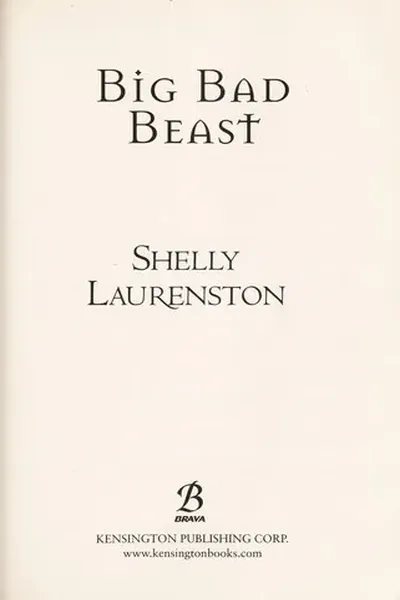
Shelly Laurenston's "When He Was Bad" offers a compelling, if occasionally uneven, exploration of primal urges and societal constraints. The narrative shines when focusing on the internal tug-of-war its characters experience, particularly the protagonist's struggle to reconcile her innate capabilities with her desire for normalcy. A specific passage detailing the protagonist's visceral reaction to a perceived threat highlights Laurenston's talent for conveying raw emotion and instinct. However, the pacing occasionally falters, with certain subplots feeling less developed than the central conflict. Despite this, the book succeeds in posing questions about the fluid nature of identity and the consequences of embracing one's true self, even when that self is deemed 'bad' by external standards. It’s a solid entry for those who enjoy supernatural tales with a psychological bent.
📝 Description
73
### What It Is "When He Was Bad," first published in 2014 by Shelly Laurenston, is a work that operates within the broader esoteric fiction genre. It presents a narrative that, while seemingly focused on character dynamics and plot, often gestures towards underlying philosophical or metaphysical currents. The book explores themes of transformation and the nature of perceived 'goodness' and 'badness,' often through the lens of supernatural or heightened human capabilities. Its structure allows for an examination of individual agency versus predetermined fate, a recurring motif in various occult philosophies.
### Who It's For This book is suited for readers who appreciate genre fiction that offers more than surface-level entertainment. Those interested in exploring the blurred lines between morality and instinct, or who enjoy narratives where characters grapple with internal conflicts that have external consequences, will find material here. It appeals to those who seek stories that prompt reflection on personal power and responsibility, particularly when characters are placed in extraordinary circumstances. Readers who enjoy character-driven stories with a speculative edge will likely engage with its premise.
### Historical Context Published in 2014, "When He Was Bad" emerged during a period of significant popular interest in paranormal romance and urban fantasy, genres that often incorporate elements of the supernatural and explore human nature under duress. This era saw authors like Laurell K. Hamilton and Patricia Briggs enjoying substantial readership, establishing a market for stories featuring complex supernatural beings and intricate lore. Laurenston's work, while fitting within this landscape, often distinguishes itself by focusing on the psychological and philosophical implications of its characters' extraordinary natures, rather than solely on action or romance.
### Key Concepts The narrative frequently engages with the concept of inherent nature versus learned behavior. Characters often struggle with impulses and abilities that challenge societal norms or personal ethics. The book also touches upon the idea of destiny and free will, exploring whether individuals are bound by their origins or can forge their own paths. It examines the consequences of power, both overt and latent, and how it shapes individuals and their relationships. The exploration of 'otherness' and the societal perceptions of those who deviate from the norm is another central element.
💡 Why Read This Book?
• You will explore the concept of inherent nature versus learned behavior, as seen in the protagonist's struggle with her extraordinary abilities, offering a unique perspective on self-acceptance. • You will gain insight into the societal perception of 'otherness,' examining how characters are judged based on their origins and capabilities, a theme prominent since the early 2000s paranormal boom. • You will experience a character-driven narrative that questions the dichotomy of good and evil, specifically through the protagonist's moral quandaries in a world that fears her kind.
⭐ Reader Reviews
Honest opinions from readers who have explored this book.
❓ Frequently Asked Questions
What is the primary genre of "When He Was Bad" by Shelly Laurenston?
"When He Was Bad" is primarily categorized as esoteric fiction, often incorporating elements of paranormal romance and urban fantasy. It delves into supernatural themes and character transformations, first published in 2014.
Does "When He Was Bad" explore themes of morality?
Yes, the book significantly explores themes of morality, particularly the blurred lines between inherent nature and societal expectations. It examines how characters grapple with their perceived 'badness' and the consequences of their actions.
What makes the book 'esoteric'?
Its esoteric nature stems from its focus on internal transformation, the exploration of primal instincts, and the examination of characters possessing abilities that transcend ordinary human experience, prompting reflection on deeper philosophical questions.
Who would enjoy reading "When He Was Bad"?
Readers who appreciate character-driven narratives with supernatural elements, those interested in exploring the complexities of morality and identity, and fans of paranormal romance or urban fantasy seeking a more introspective story will likely enjoy it.
When was "When He Was Bad" first published?
The book "When He Was Bad" by Shelly Laurenston was first published in 2014.
Are there specific symbols or motifs discussed in the book?
While not explicitly detailed in the blurb, the narrative likely uses motifs related to transformation, instinct, and societal exclusion to explore its esoteric themes of inherent nature versus learned behavior.
🔮 Key Themes & Symbolism
Inherent Nature vs. Learned Behavior
The narrative deeply interrogates the notion of whether one's core essence is predetermined or shaped by experience. Characters often grapple with powerful, instinctual drives that clash with societal expectations and personal ethical frameworks. This conflict is central to their development, forcing them to confront the duality of their existence and the consequences of embracing or suppressing their true selves. The book suggests that understanding and integrating these inherent aspects, even those deemed 'bad,' is crucial for genuine self-realization.
The Perception of 'Otherness'
A significant theme is how individuals who possess extraordinary abilities or deviate from the norm are perceived and treated by society. The book explores the fear and judgment often directed towards those deemed 'different,' highlighting the psychological impact of such ostracization. Characters frequently battle external prejudice and internal self-doubt, questioning their place in a world that readily labels them. This theme prompts reflection on empathy and the dangers of conformity, suggesting that true understanding requires looking beyond superficial distinctions.
Consequences of Power and Agency
The work examines the ethical implications of power, both overt and latent. Characters who wield significant influence or possess unique capabilities are constantly tested, facing moral dilemmas that challenge their choices and responsibilities. The book explores how power can corrupt or liberate, depending on the individual's internal compass and their willingness to exercise agency responsibly. It underscores the idea that true strength lies not just in having power, but in how one chooses to wield it and the impact it has on oneself and others.
Moral Ambiguity and Identity
Laurenston's work deliberately blurs the lines between conventional morality and individual truth. Characters are often presented in shades of gray, making it difficult to categorize them as purely 'good' or 'evil.' This moral ambiguity forces readers to question their own definitions of right and wrong, and how identity is constructed. The book suggests that embracing all facets of oneself, including the darker aspects, can lead to a more authentic and integrated sense of self, even if it challenges societal norms.
💬 Memorable Quotes
“The instinct to protect surged, a primal roar she couldn't silence.”
— This highlights the theme of inherent nature, suggesting that certain powerful drives are innate and difficult to control, often overriding learned behavior or rational thought.
“They feared what they didn't understand, and they understood nothing of her.”
— This directly addresses the concept of 'otherness,' illustrating how fear and ignorance fuel prejudice against those who are perceived as different or alien.
“Her power was a part of her, not a choice she made.”
— This reinforces the idea of inherent nature, suggesting that certain abilities or aspects of being are fundamental to an individual's identity, rather than voluntary acquisitions.
“The line between predator and protector was thinner than she ever imagined.”
— This points to the moral ambiguity explored in the book, showing how roles and intentions can be fluid and dependent on context, challenging simplistic definitions of good and evil.
“She had to choose: the cage of normalcy, or the wild freedom of her true self.”
— This encapsulates the central conflict of agency versus societal constraint, presenting a stark choice between conformity and authentic self-expression, even with its potential dangers.
🌙 Esoteric Significance
Tradition
While not explicitly tied to a single esoteric lineage, "When He Was Bad" resonates with Gnostic themes of inherent divinity or power trapped within a flawed material world, or misunderstood by a lesser demiurge (society). It also touches upon Hermetic principles regarding the microcosm reflecting the macrocosm, where the internal struggles of the individual mirror larger cosmic battles between opposing forces. The exploration of innate 'otherness' can be seen through various occult lenses that discuss hidden potentials or ancestral legacies.
Symbolism
The book likely employs symbolism related to animalistic transformation, representing the raw, untamed aspects of the psyche or primal instincts that characters must confront. The motif of confinement (literal or psychological) can symbolize the suppression of true self or spiritual essence, common in narratives about liberation from material or societal constraints. The contrast between light and shadow in character portrayals or settings often signifies the internal conflict between societal norms and one's authentic, perhaps darker, nature.
Modern Relevance
Contemporary esoteric thought, particularly in self-help and spiritual development circles, often emphasizes embracing one's shadow self and authentic power, concepts directly mirrored in "When He Was Bad." Thinkers and practitioners exploring the integration of instinctual energies, the deconstruction of societal conditioning, and the validation of non-normative identities find resonance in narratives like Laurenston's. It speaks to modern discussions on power dynamics, personal sovereignty, and the psychological underpinnings of perceived 'good' and 'evil'.
👥 Who Should Read This Book
• Readers interested in the psychological underpinnings of paranormal fiction, seeking stories that explore the internal conflicts of supernatural beings beyond simple romance. • Individuals drawn to philosophical discussions on nature versus nurture and the construction of identity, particularly when examining characters who possess abilities beyond the ordinary. • Fans of urban fantasy and esoteric literature who appreciate narratives that delve into moral ambiguity and the societal perception of 'otherness' from a character-driven perspective.
📜 Historical Context
Published in 2014, "When He Was Bad" emerged within a vibrant landscape of paranormal and urban fantasy literature that had been gaining significant traction since the early 2000s. Authors like Charlaine Harris (with her Sookie Stackhouse series, adapted into the HBO show *True Blood* starting in 2008) and Jim Butcher (whose Dresden Files series had been running since 2000) had paved the way for complex supernatural narratives. Laurenston's work joined this milieu, often distinguished by its focus on the internal psychological struggles of its characters and their inherent natures, rather than solely on romantic entanglements or action sequences. The 2014 publication date placed it in an era where readers were increasingly open to exploring the darker, more ambiguous aspects of supernatural beings and their interactions with the human world. While not directly engaging with specific philosophical movements, the book tapped into a broader cultural fascination with the primal and the supernatural, reflecting a continued interest in how ordinary individuals (or those with extraordinary abilities) navigate societal expectations and their own inner conflicts.
📔 Journal Prompts
The protagonist's struggle with her inherent nature versus societal expectations.
Instances where 'badness' served a protective or necessary function.
The societal fear of the 'other' as depicted through character interactions.
Moments where power was wielded, and the subsequent consequences.
Reconciling one's own perceived 'shadow' aspects with personal identity.
🗂️ Glossary
Inherent Nature
Refers to the fundamental qualities, instincts, or abilities believed to be innate to an individual, existing from birth rather than acquired through learning or experience.
Esoteric Fiction
A genre of literature that explores mystical, spiritual, or occult themes, often delving into hidden knowledge, inner transformation, and non-ordinary states of consciousness.
Moral Ambiguity
The quality of characters or situations that lack clear definition between right and wrong, good and evil, forcing readers to question conventional ethical judgments.
Primal Urges
Basic, instinctual drives or impulses rooted in survival, reproduction, or aggression that are considered fundamental to living beings.
Societal Conditioning
The process by which individuals internalize the norms, values, and beliefs of their society, influencing their behavior and perception of self.
Otherness
The quality of being different or alien, often leading to social exclusion, fear, or misunderstanding from the dominant group or society.
Agency
The capacity of individuals to act independently and make their own free choices, particularly in the face of external constraints or predetermined destinies.