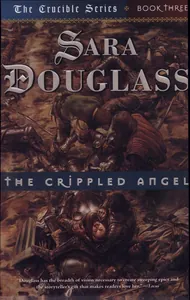
Threshold

 72
72

Threshold
Sara Douglass’s Threshold offers an intriguing, if occasionally uneven, exploration of how ancient energies might subtly influence historical currents. The strength of the work lies in its imaginative premise, weaving a narrative that suggests a continuity of esoteric power through millennia. Douglass effectively grounds her speculative elements in historical settings, making the fantastical feel plausible within the story's framework. However, the pacing can sometimes falter, particularly in sections where exposition on arcane lore threatens to overshadow character development. A particularly memorable passage involves the protagonist’s unexpected connection to a site of ancient power, revealing a latent sensitivity that drives the plot forward. While the ambition is commendable, the execution occasionally strains under its own conceptual weight. Ultimately, Threshold provides a stimulating, if imperfect, blend of historical fiction and metaphysical adventure.
📝 Description
72
### What It Is Threshold, published in 2003 by Sara Douglass, is a novel that explores the intersection of historical events and esoteric beliefs. It presents a narrative rich with exploration of ancient lore, personal transformation, and the discovery of hidden connections within the fabric of reality. The book offers a fictional lens through which to examine concepts often relegated to the fringes of mainstream discourse, presenting them as vital forces shaping human destiny.
### Who It's For This work is intended for readers who appreciate speculative fiction with a strong undercurrent of metaphysical inquiry. It will appeal to those interested in how historical periods and figures might be influenced by forces beyond conventional understanding. Readers seeking narratives that blend adventure with philosophical contemplation, particularly concerning the nature of consciousness and destiny, will find fertile ground here. It is for the curious mind that questions the visible world and seeks to understand the unseen mechanics that may govern it.
### Historical Context Released in 2003, Threshold emerged during a period of burgeoning interest in alternative spirituality and esoteric studies, mirroring trends seen in the works of authors like Lynn Picknett and Clive Prince. The early 2000s saw a greater public accessibility to previously obscure texts and concepts, partly fueled by the internet. Douglass’s novel fits within this wave, offering a narrative that taps into a growing desire to reconcile ancient wisdom with modern skepticism. It engaged with a landscape where historical mysteries and spiritual quests were increasingly popular, often drawing parallels with the reception of works by authors like Dan Brown, albeit with a more focused esoteric intent.
### Key Concepts The novel engages with several core esoteric concepts. It explores the idea of ancestral memory and the persistence of ancient energies through time, suggesting that significant historical locations and artifacts can act as conduits for these forces. The narrative also touches upon themes of initiation and spiritual awakening, depicting characters who undergo profound personal changes as they encounter these hidden realities. The concept of synchronicity, where seemingly random events hold deeper meaning, is also central, guiding characters towards their destined paths and revelations.
💡 Why Read This Book?
• Gain a narrative perspective on how historical locations might retain energetic imprints, a concept explored through the protagonist’s connection to ancient sites. • Understand the novel’s exploration of ancestral memory, a key theme showing how past influences can manifest in present-day characters. • Experience the specific narrative device of synchronicity as a guiding force, illustrating how seemingly random events are presented as part of a larger esoteric design.
⭐ Reader Reviews
Honest opinions from readers who have explored this book.
❓ Frequently Asked Questions
When was Sara Douglass's novel 'Threshold' first published?
Sara Douglass's novel 'Threshold' was first published in 2003, placing it within the early 21st-century wave of interest in esoteric and historically-tinged speculative fiction.
What are the main themes explored in 'Threshold' by Sara Douglass?
The primary themes include ancestral memory, the energetic resonance of historical sites, personal initiation, and the role of synchronicity in guiding destinies.
Does 'Threshold' require prior knowledge of esoteric traditions?
While prior knowledge can enhance the reading experience, 'Threshold' is written to be accessible. Douglass explains necessary concepts within the narrative, allowing new readers to engage with its esoteric elements.
What kind of historical periods does 'Threshold' draw upon?
The novel draws upon various historical periods, hinting at ancient origins and their persistent influence, though specific eras are woven into the plot rather than being the sole focus.
Is 'Threshold' part of a series by Sara Douglass?
While Sara Douglass wrote several novels exploring similar themes, 'Threshold' is generally considered a standalone work, though it shares thematic kinship with her other writings.
What is the general tone of 'Threshold'?
The tone is one of mystery and discovery, blending elements of historical fiction with speculative and metaphysical inquiry, often carrying a sense of unfolding revelation.
🔮 Key Themes & Symbolism
Ancestral Memory and Energetic Echoes
Threshold posits that historical locations and significant artifacts can retain energetic imprints from past events and individuals. This concept suggests that ancestral memory is not merely a psychological phenomenon but an active, palpable force that can influence present-day consciousness and events. Douglass explores how certain characters might become sensitive to these echoes, experiencing visions or intuitions tied to bygone eras. This theme invites readers to consider the idea that history is not a static record but a living presence, capable of interacting with the contemporary world through subtle energetic channels.
The Path of Initiation
Central to Threshold is the theme of personal initiation, where characters undergo profound transformations as they confront and integrate esoteric knowledge. This process is depicted not as a passive reception of information but as an active journey involving trials, self-discovery, and the awakening of latent abilities. The novel illustrates how encountering hidden realities can challenge an individual's worldview, forcing them to re-evaluate their identity and purpose. This journey of initiation suggests that true understanding comes through direct experience and the courage to embrace the unknown.
Synchronicity as Cosmic Navigation
The narrative employs synchronicity – meaningful coincidences – as a key mechanism for plot progression and character development. Douglass suggests that these are not random occurrences but rather guiding signs from a deeper, underlying order. Characters often find themselves at critical junctures due to a series of seemingly unrelated events, leading them towards crucial revelations or encounters. This theme emphasizes the interconnectedness of all things and posits that by paying attention to these subtle patterns, individuals can align themselves with their destined paths and unlock greater wisdom.
The Persistence of Ancient Wisdom
Threshold explores the idea that ancient wisdom traditions and their associated powers persist across time, often hidden within the fabric of society or in sacred geographical sites. The book implies that these ancient forces continue to shape human affairs, influencing individuals and collective destinies in ways not recognized by conventional history. Douglass hints at a lineage of knowledge keepers and esoteric practitioners who have maintained this wisdom through the ages, suggesting that its rediscovery is vital for understanding the present and navigating the future.
💬 Memorable Quotes
“The stones remember what the years have tried to erase.”
— This paraphrased concept highlights the book's theme that historical locations hold energetic imprints of past events and people, suggesting a form of material memory.
“Destiny is not a path laid out, but a river carved by choice.”
— This interpretation reflects the novel's exploration of free will within a framework of destiny, suggesting that while a general direction may exist, individual actions shape the ultimate outcome.
“Some awakenings are quiet, others demand the earth to tremble.”
— This quote, or concept, illustrates the varying intensity of spiritual or conscious awakenings depicted in the book, ranging from subtle internal shifts to dramatic, world-altering events.
“The veil between then and now is thinner than we believe.”
— This sentiment suggests the book's core idea that the past is not entirely separate from the present, and that ancient energies or influences can readily cross into contemporary consciousness.
“To see the pattern is to begin to understand the weave.”
— This reflects the importance of recognizing synchronicity and interconnectedness within the narrative, implying that perceiving these underlying patterns is the first step towards true comprehension.
🌙 Esoteric Significance
Tradition
Threshold draws loosely from Western Esotericism, particularly themes found within Hermeticism and certain interpretations of Gnosticism, focusing on hidden knowledge and the awakening of latent spiritual potential. It departs from strict adherence to any single tradition by synthesizing elements into a narrative framework. The work aligns with a modern esoteric approach that emphasizes personal experience and the interconnectedness of various ancient wisdom streams, rather than a dogmatic or lineage-bound practice.
Symbolism
The novel frequently employs the symbolism of ancient sites and stones, representing enduring energetic imprints and anchors to the past. Water, often depicted as a medium for revelation or transition, symbolizes the fluid nature of consciousness and the subconscious depths from which hidden truths can emerge. Additionally, the concept of a 'veil' serves as a powerful symbol for the perceived separation between ordinary reality and the esoteric dimensions, a barrier that characters must penetrate to gain deeper understanding.
Modern Relevance
Contemporary practitioners of spiritual psychology and those exploring archetypal psychology may find resonance with 'Threshold's' depiction of the inner journey and the awakening of dormant potentials. Its themes of energetic memory in locations are also relevant to modern psychogeography and landscape spirituality. The novel’s exploration of hidden histories and esoteric lineages continues to inform discussions within modern paganism and alternative history circles, offering fictional interpretations of enduring mystical concepts.
👥 Who Should Read This Book
• Readers interested in speculative fiction that integrates historical settings with metaphysical concepts, particularly those who enjoy exploring the idea of energetic echoes in ancient places. • Individuals drawn to narratives of personal transformation and spiritual awakening, who appreciate stories where characters uncover hidden aspects of themselves and the world. • Those curious about how ancient wisdom traditions might be interpreted and applied in a contemporary context, seeking fictional examples of synchronicity and destiny.
📜 Historical Context
Published in 2003, Sara Douglass's 'Threshold' arrived during a period of significant public engagement with esoteric ideas, often filtered through popular fiction. This era saw a growing interest in historical mysteries and hidden spiritual traditions, a trend amplified by authors like Dan Brown, whose 'The Da Vinci Code' (2003) also explored similar thematic territories of ancient secrets. Douglass’s work engaged with a cultural milieu where theosophy, Gnosticism, and pre-Christian European paganism were becoming more accessible through online resources and a burgeoning New Age movement. While not directly engaging in academic debate, 'Threshold' contributed to a broader cultural conversation about the potential for ancient belief systems to offer alternative frameworks for understanding the world, existing alongside more secular or purely historical interpretations of the past. The reception of such works often highlighted a tension between genuine intellectual curiosity and sensationalized interpretations of esoteric lore.
📔 Journal Prompts
The energetic resonance of specific historical locations mentioned in Threshold.
The protagonist’s experience of initiating into hidden knowledge.
Reflecting on moments of synchronicity encountered in your own life, as depicted in the novel.
The symbolic meaning of the 'veil' and its thinning in the narrative.
Comparing the novel's portrayal of ancestral memory to personal or familial recollections.
🗂️ Glossary
Ancestral Memory
The concept, as explored in Threshold, that memories, experiences, or energetic imprints from one's ancestors can be inherited or accessed, influencing present consciousness and events.
Esoteric
Relating to or dealing with the occult, mystical, or supernatural. In Threshold, it refers to hidden knowledge and spiritual practices not widely known or understood.
Initiation
A process of undergoing a rite of passage or ritual that leads to a new level of understanding, awareness, or spiritual attainment, as depicted for characters in the novel.
Synchronicity
Meaningful coincidences that appear to have no causal relationship, interpreted within the book as guiding forces or signs from a deeper order of reality.
Energetic Imprint
The residual psychic or spiritual energy left behind in a place or object by significant events or individuals, a concept central to the novel's exploration of historical sites.
Veil
A metaphorical barrier in Threshold separating ordinary perception from esoteric or spiritual realities, which characters may thin or penetrate.
Destiny
The predetermined course of events, explored in the novel as a force that can be influenced by individual choices and awareness, rather than being entirely fixed.