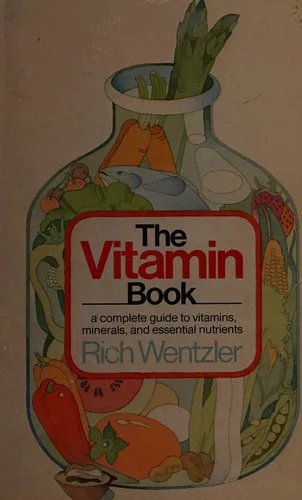
The vitamin book
 78
78

The vitamin book
Rich Wentzler’s The Vitamin Book, from its 1978 debut, offers a methodical dissection of the essential vitamins, grounded in the scientific understanding of its time. Its strength lies in its detailed, almost encyclopedic, approach to each nutrient, presenting biochemical pathways and deficiency symptoms with clarity. A notable limitation, however, is its inherent reliance on the scientific consensus of the late 1970s; some understandings of vitamin interactions and optimal dosages have since evolved. The section on B vitamins, for instance, meticulously details their coenzyme roles, which remains a cornerstone of nutritional science, yet the broader implications for chronic disease prevention have seen significant expansion since. Wentzler's work is a solid, if dated, primer for those seeking the foundational science.
This book provides a valuable historical snapshot of vitamin research and its understanding in the pre-internet era.
📝 Description
78
Rich Wentzler's 1978 book, The Vitamin Book, details the biochemical roles of vitamins and their health implications.
First released in 1978, The Vitamin Book by Rich Wentzler examines the functions of vitamins and their importance for human health. The author gives a thorough overview of each vitamin, explaining its biochemical function and the effects of deficiency. The book goes beyond basic dietary advice to look at how these compounds interact with the body's systems. It acts as a detailed guide for understanding the components of cellular vitality. The volume is for people who want a complete, science-based understanding of nutritional biochemistry. It speaks to students of health sciences, nutritionists, and anyone interested in the core ideas of vitaminology. Readers who prefer detailed explanations and a structured method for health information will find this book useful. It also suits those looking into how nutritional science has developed and its early proponents.
Published in 1978, The Vitamin Book appeared during a time of growing public interest in health, wellness, and alternative medicine. The late 1970s saw a rise in awareness of conventional medicine's limits and a greater demand for information on diet, supplements, and preventative health. This period saw figures like Linus Pauling promote vitamin C research, creating an environment for books that explored vitamins' therapeutic possibilities. Wentzler's work adds to this discussion by offering a structured scientific foundation.
While not strictly esoteric in the occult sense, The Vitamin Book emerged from a late 20th-century milieu where interest in natural health and alternative therapies was expanding. This period saw a growing public engagement with concepts of holistic wellness and the therapeutic potential of diet and supplements, often viewed as counterpoints to mainstream medical approaches. Wentzler's work, appearing alongside popularizers like Linus Pauling, tapped into this cultural shift. It provided a scientific framework for exploring these ideas, resonating with individuals seeking deeper, less conventional understandings of bodily health and vitality, aligning with a broader trend of seeking 'natural' solutions.
💡 Why Read This Book?
• Understand the foundational biochemistry of vitamins, detailed by Rich Wentzler's methodical approach, offering insights into nutrient roles that underpin current health practices. • Gain a historical perspective on nutritional science as presented in 1978, allowing you to compare early recommendations with contemporary understanding of vitamins. • Learn about the specific functions of vitamins like Vitamin A in vision and immune response, providing concrete examples of their necessity for bodily systems.
⭐ Reader Reviews
Honest opinions from readers who have explored this book.
❓ Frequently Asked Questions
When was The Vitamin Book first published?
The Vitamin Book by Rich Wentzler was first published in 1978, reflecting the scientific understanding and public interest in nutrition during that era.
What is the primary focus of The Vitamin Book?
The book focuses on providing a detailed exploration of each essential vitamin, their biochemical functions within the human body, and the effects of their deficiency.
Who would benefit most from reading The Vitamin Book?
Students of health sciences, nutritionists, and individuals keen on understanding the historical development and scientific underpinnings of vitaminology will find this book beneficial.
Does The Vitamin Book discuss vitamin deficiencies?
Yes, a significant portion of the book is dedicated to outlining the specific consequences and symptoms associated with deficiencies in various vitamins.
Is the information in The Vitamin Book still relevant today?
While foundational, the book reflects 1978 scientific knowledge. Some understandings have evolved, but it serves as an excellent historical reference and basis for further study.
What distinguishes The Vitamin Book from modern nutrition guides?
Its distinction lies in its historical context and the depth of its scientific explanations from a specific period, offering a less consumer-focused, more academic approach than many contemporary guides.
🔮 Key Themes & Symbolism
Vitamin Biochemistry
The book offers a deep dive into the molecular roles of vitamins, explaining their function as coenzymes and their necessity for metabolic processes. It details how vitamins like those in the B complex are integral to energy production pathways, while fat-soluble vitamins like Vitamin D are crucial for calcium regulation and bone health. Wentzler emphasizes the intricate biochemical dance required for optimal bodily function, moving beyond simple daily intake recommendations to the fundamental science.
Deficiency Syndromes
A core theme is the systematic cataloging of diseases and symptoms arising from specific vitamin shortages. The work meticulously links conditions like scurvy to Vitamin C deficiency and night blindness to Vitamin A deficiency, grounding the importance of these micronutrients in observable health outcomes. This section serves as a stark reminder of the critical role vitamins play, illustrating the direct impact of their absence on physiological integrity.
Historical Nutritional Science
Published in 1978, the book inherently serves as a document of nutritional science at that specific point in time. It reflects the prevailing understanding of vitamin functions and recommended intakes, providing context for how nutritional knowledge has evolved. Readers can observe the scientific discourse of the era, including discussions around Recommended Daily Allowances (RDAs) and the early stages of widespread public engagement with vitamin supplementation.
The Science of Health
Wentzler's approach is rooted in the scientific method, aiming to explain health through biological and chemical processes. The book champions a fact-based understanding of nutrition, encouraging readers to critically evaluate health claims based on scientific evidence. It positions vitamins not as magical cures but as essential chemical components vital for maintaining the complex machinery of the human organism.
💬 Memorable Quotes
Direct passages from the work, attributed to the author.
“The body requires specific vitamins in precise amounts for optimal functioning.”
— This statement underscores the book's central thesis: that vitamins are not optional but essential chemical components, and their adequate intake is directly tied to physiological well-being.
“Deficiency symptoms are direct indicators of a vitamin's role in the body.”
— This highlights the book's methodology, where observing the effects of lacking a vitamin reveals its specific function, thereby mapping out nutritional requirements through clinical observation.
“Understanding vitamin absorption is key to understanding their effectiveness.”
— This points to the book's detailed exploration of bioavailability and the mechanisms by which the body processes and utilizes vitamins, differentiating between mere intake and actual nutritional benefit.
“Recommended Daily Allowances are based on available scientific data, subject to revision.”
— This reflects a cautious, evidence-based approach to nutritional guidelines, acknowledging that scientific understanding is progressive and that established figures may evolve with new research.
“Fat-soluble vitamins behave differently in the body than water-soluble ones.”
— This emphasizes a fundamental classification within vitamin science, differentiating how vitamins are stored, absorbed, and excreted, which impacts dietary recommendations and potential toxicity.
🌙 Esoteric Significance
Tradition
While primarily a scientific text, The Vitamin Book engages with an underlying esoteric principle: the vitalistic view of health. In many esoteric traditions, the body is seen as a complex energetic system where subtle forces and specific material components are crucial for maintaining equilibrium. This book, by detailing the precise biochemical roles of vitamins, aligns with this view by emphasizing the necessity of specific, often overlooked, elemental substances for the proper functioning of the 'vital body,' moving beyond mere caloric intake to the intricate needs of life itself.
Symbolism
Within the context of vitalism, each vitamin can be seen as a symbolic key unlocking specific biological processes. For instance, Vitamin A, associated with sight, can symbolize clarity and perception, while B vitamins, linked to energy and nerve function, might represent the vitality and dynamism of the life force. Vitamin D, tied to bone and sunlight, symbolizes structure and the infusion of cosmic energy. These are not explicit symbols within Wentzler's text but interpretations that resonate with esoteric frameworks viewing the body as a microcosm reflecting macrocosmic principles.
Modern Relevance
Contemporary holistic health practitioners, functional medicine practitioners, and those interested in orthomolecular medicine draw upon the foundational knowledge presented in works like The Vitamin Book. While modern science has expanded significantly on Wentzler's 1978 understanding, the core principles of vitamin biochemistry and the critical role of micronutrients in preventing deficiency diseases remain central. The book's detailed approach continues to inform individuals seeking to understand the biological underpinnings of health and disease prevention through precise nutritional interventions.
👥 Who Should Read This Book
• Aspiring nutritionists and dietetics students seeking a historical and biochemical foundation for understanding vitamins. • Health enthusiasts interested in the scientific basis of micronutrients and how they impact bodily functions, wanting to move beyond superficial health trends. • Researchers in nutritional history or comparative health sciences looking to understand the state of vitamin knowledge in the late 1970s.
📜 Historical Context
Rich Wentzler’s The Vitamin Book arrived in 1978, a period marked by growing public fascination with health, diet, and self-improvement. The late 1970s witnessed a shift towards preventative medicine and alternative health practices, partly fueled by skepticism towards pharmaceutical dominance and a desire for more holistic approaches. This era saw pioneers like Linus Pauling championing high-dose vitamin C, sparking widespread public interest but also scientific debate. Wentzler's work contributed to this milieu by offering a structured, scientific perspective on vitamins, aiming to ground the burgeoning enthusiasm in biochemical fact. While popular health magazines and books often sensationalized vitamin benefits, Wentzler’s text provided a more academic, though still accessible, examination of established nutritional science from the time, acting as a counterpoint to purely anecdotal claims and situating vitamins within the scientific discourse of the era.
📔 Journal Prompts
The biochemical role of Vitamin A in vision and immune response.
Deficiency symptoms associated with the B vitamins complex.
How the book's discussion of Recommended Daily Allowances (RDAs) compares to current guidelines.
The distinct absorption and storage mechanisms of fat-soluble versus water-soluble vitamins.
Your personal understanding of the 'science of health' as presented by Wentzler.
🗂️ Glossary
Vitamin
An organic compound essential in small quantities for the proper functioning of living organisms. Vitamins cannot be synthesized by the body in sufficient quantities and must be obtained from the diet.
Biochemistry
The study of chemical processes within and relating to living organisms. In this context, it refers to the chemical reactions and substances involved in vitamin function.
Deficiency
A condition characterized by a lack of an essential nutrient, such as a vitamin, leading to specific physical or mental health problems.
Coenzyme
A non-protein compound that is essential for the activity of many enzymes. Many B vitamins function as coenzymes in metabolic reactions.
Fat-Soluble Vitamins
Vitamins that are absorbed through the intestine with the help of lipids (fats) and are stored in the body's fatty tissues and liver. Examples include Vitamins A, D, E, and K.
Water-Soluble Vitamins
Vitamins that dissolve in water and are not stored in the body in large amounts; excess amounts are typically excreted in urine. Examples include Vitamin C and the B vitamins.
Recommended Daily Allowance (RDA)
The average daily level of intake for a nutrient that is sufficient to meet the requirements of nearly all (97–98%) healthy individuals in a particular life stage and gender group.
🔮 Readers Also Liked
Browse all →









More by Rich Wentzler
All books →
More Free Occult Philosophy Books
View all →