The Spirit of the Tarot
 82
82

The Spirit of the Tarot
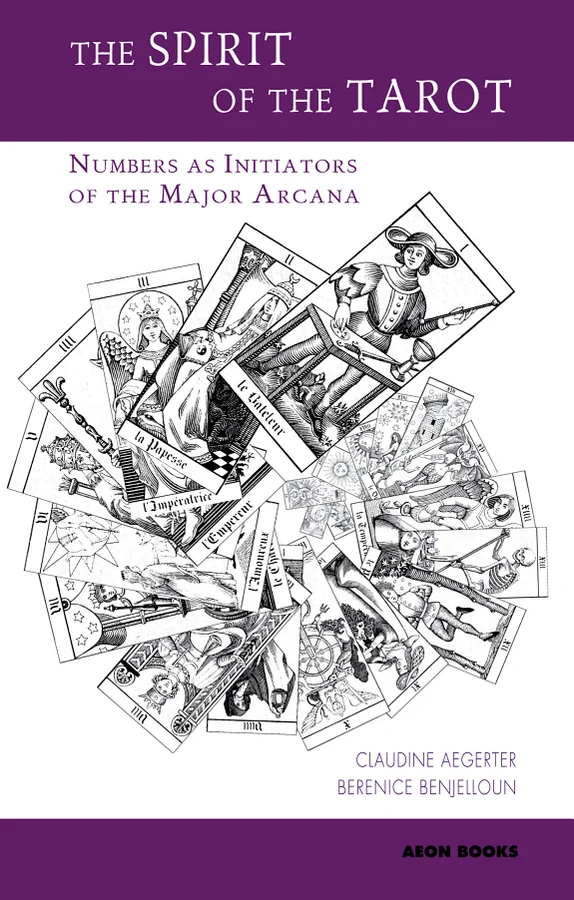
Aegerter and Benjelloun's 'The Spirit of the Tarot' attempts a sophisticated reintegration of the Tarot into esoteric philosophy, specifically highlighting its numerological underpinnings and its role in spiritual initiation. The strength of the book lies in its ambition to connect the mundane imagery of the cards to the grander narrative of the soul's journey. The authors' exploration of the numerical links between cards, particularly within the Major Arcana, offers a fresh perspective for those weary of purely predictive readings. However, the work occasionally falters in its accessibility; the conceptual leaps required can be demanding, and at times the language drifts into a specialized jargon that might alienate readers not already steeped in esoteric terminology. A passage detailing the numerological progression from The Fool to The World, for instance, while conceptually rich, could benefit from more explicit signposting for the uninitiated. Ultimately, 'The Spirit of the Tarot' serves as a dense but rewarding exploration for dedicated students of the esoteric.
📝 Description
82
### What It Is 'The Spirit of the Tarot' offers a re-examination of the Tarot, moving beyond divinatory applications to explore its deeper esoteric and numerological architecture. Published in 2009, this work by Claudine Aegerter and Berenice Benjelloun positions the Tarot as a map for the soul's progression. It suggests that understanding the archetypal patterns within the cards can illuminate the individual's spiritual journey, connecting personal growth to universal cosmic principles.
### Who It's For This book is intended for those seeking to understand the Tarot as a system of spiritual development rather than solely a tool for prediction. It caters to individuals engaged in any form of spiritual pursuit, whether they are neophytes exploring fundamental life mysteries or seasoned disciples within a school of attainment. The authors aim to provide a framework for integrating Tarot wisdom into a conscious path of self-discovery and existential understanding.
### Historical Context Emerging in the late 2000s, 'The Spirit of the Tarot' arrived in a landscape of increasingly diverse Tarot literature. While many contemporary works focused on psychological interpretation or specific divinatory techniques, Aegerter and Benjelloun's approach harkened back to earlier esoteric traditions that viewed the Tarot as a mystical text. Their emphasis on numerology and the initiatory journey connects them to a lineage influenced by figures like Eliphas Lévi and A.E. Waite, who also sought to imbue the Tarot with profound spiritual meaning beyond mere fortune-telling.
### Key Concepts The core concepts revolve around the Tarot as a symbolic representation of the soul's evolutionary path. The book explores the inherent numerological relationships between the Major Arcana, viewing them as stages in an initiatory process. It emphasizes transcending the limited 'personality' – the physical, emotional, and mental constructs – to connect with a deeper, spiritual essence. This journey is framed through the lens of spiritual attainment, suggesting a structured progression akin to Neoplatonic or Gnostic ascent narratives.
💡 Why Read This Book?
• Gain a nuanced understanding of the Tarot's numerological structure, as presented in the book's detailed analysis of the Major Arcana's numerical connections, offering a framework for spiritual progression distinct from popular divinatory methods. • Connect the Tarot's symbolism to the concept of the 'initiatic journey of the Soul,' as explored by the authors, providing a deeper lens through which to view personal growth and spiritual evolution beyond the mere personality. • Explore the esoteric links underlying the Tarot system, as detailed in the work first published in 2009, potentially illuminating mysteries of existence for disciples in various schools of spiritual attainment.
⭐ Reader Reviews
Honest opinions from readers who have explored this book.
❓ Frequently Asked Questions
What is the primary focus of 'The Spirit of the Tarot' beyond fortune-telling?
The book emphasizes the Tarot's role as a system for spiritual development and understanding the soul's initiatory journey. It explores esoteric numerological links within the cards, offering a framework for personal growth and connection to universal principles.
When was 'The Spirit of the Tarot' first published?
'The Spirit of the Tarot' by Claudine Aegerter and Berenice Benjelloun was first published on December 31, 2009.
Who are the authors of 'The Spirit of the Tarot'?
The authors are Claudine Aegerter and Berenice Benjelloun. Their work was first published in 2009.
What kind of esoteric tradition does the book connect the Tarot to?
The book connects the Tarot to the initiatic journey of the soul, exploring its esoteric numerological links. This approach aligns with broader Western esoteric traditions that view symbolic systems as maps for spiritual attainment.
Is this book suitable for beginners in Tarot?
While it offers a unique perspective, the book delves into complex esoteric and numerological concepts. It is best suited for those who have some familiarity with Tarot and are seeking a deeper, philosophical, or spiritual understanding beyond basic divinatory practices.
What does the book mean by 'initiatic journey of the Soul'?
This refers to the process of spiritual evolution and self-realization. The book interprets the Tarot cards, particularly the Major Arcana, as symbolic stages or lessons encountered on this path of inner transformation and growth.
🔮 Key Themes & Symbolism
Numerological Architecture
The work meticulously details the hidden numerological connections between the Tarot cards, particularly within the Major Arcana. This focus moves beyond simple symbolic representation to reveal an underlying mathematical and energetic structure. The authors argue that these numerical relationships are not arbitrary but form a cohesive system that mirrors cosmic laws and the stages of spiritual evolution, offering a unique lens for understanding the Tarot's depth.
The Soul's Initiatic Journey
Central to the book is the concept of the Tarot as a map for the soul's progression. It posits that the archetypal journey depicted through the cards represents stages of spiritual development, transformation, and enlightenment. This perspective frames the Tarot not as a predictive tool but as a guide for the disciple on the path of self-realization, helping to transcend personal limitations and connect with a higher consciousness.
Beyond Personality
The book encourages readers to look past the superficial aspects of the 'personality'—the composite of physical, emotional, and mental constructs—to connect with a deeper, spiritual essence. It suggests that true understanding and spiritual attainment come from recognizing and integrating these deeper layers of being, using the Tarot's symbolic language as a catalyst for this internal exploration and expansion.
Esoteric Links and Mysteries
Aegerter and Benjelloun aim to reveal the esoteric links that underpin the Tarot system, connecting it to broader mystical traditions. The book addresses those aspiring to grasp the fundamental mysteries of life on Earth, positioning the Tarot as a key that unlocks deeper existential and spiritual truths for those dedicated to a path of attainment.
💬 Memorable Quotes
“Connect the teaching of the Tarot to the initiatic journey of the Soul.”
— This core statement encapsulates the book's thesis: the Tarot is presented not just as a symbolic system, but as an active guide for personal spiritual evolution and inner transformation.
“Explore beyond those physical emotional and mental aspects that we call the personality.”
— This highlights the book's focus on transcending the ego-driven self to access deeper spiritual realities and a more authentic sense of being.
“If you are aspiring to connect with the mysteries of our life on this planet...”
— This phrase targets individuals actively seeking profound meaning and understanding about existence, positioning the book as a resource for such existential inquiry.
“...reveals the esoteric numerological links underlying this ancient system...”
— This points to the book's methodological approach, emphasizing the hidden numerical relationships within the Tarot as key to its esoteric significance.
“...or you are already a disciple in some school of spiritual attainment...”
— This broadens the book's appeal to seasoned practitioners, suggesting its content offers advanced insights relevant to ongoing spiritual disciplines.
🌙 Esoteric Significance
Tradition
This work situates itself within the Western Esoteric Tradition, particularly drawing on Hermetic and Neoplatonic influences that view the universe and human consciousness as interconnected symbolic systems. It interprets the Tarot's structure through a lens of spiritual numerology, akin to Kabbalistic thought, positing the cards as stages in a divine or soul's unfolding journey, rather than solely as tools for divination.
Symbolism
The book emphasizes the symbolic significance of the Major Arcana's numerical sequence, viewing cards like The Fool (0/1) and The World (21) as archetypal points in a cycle of spiritual progression. It explores the transition from the 'personality' (physical, emotional, mental planes) to the deeper 'Soul,' suggesting that each card represents a lesson or challenge on this initiatory path towards higher consciousness and self-realization.
Modern Relevance
Contemporary practitioners of Hermeticism, Kabbalah-informed Tarot studies, and those engaged in comparative mysticism find value in this book's approach. It offers a structured, philosophical interpretation that complements more modern psychological or divinatory methods, appealing to those seeking to integrate the Tarot into a conscious path of spiritual attainment and existential inquiry.
👥 Who Should Read This Book
• Students of Western Esotericism seeking to understand the Tarot's symbolic language as a map for spiritual development and inner transformation. • Tarot practitioners looking to move beyond predictive readings and explore the deeper numerological and initiatory aspects of the cards for personal growth. • Individuals engaged in spiritual disciplines who wish to connect existential questions with archetypal wisdom and understand the soul's journey through a structured esoteric framework.
📜 Historical Context
Published in late 2009, 'The Spirit of the Tarot' emerged during a period of prolific Tarot publication. While many books focused on practical divination, psychological archetypes, or specific deck interpretations, Aegerter and Benjelloun's work consciously engaged with a more traditional esoteric lineage. Their emphasis on numerological connections and the Tarot as a map for spiritual initiation aligns with earlier 20th-century authors like A.E. Waite and the broader Hermetic Order of the Golden Dawn, who sought to reveal the occult and mystical dimensions of the cards. Unlike contemporary psychological approaches championed by figures like Jung, this book leans towards a more overtly spiritual and philosophical interpretation, positioning itself as a guide for inner alchemy and soul evolution. The reception, while not marked by major public events, likely appealed to a dedicated readership within established esoteric study groups and circles seeking deeper theoretical frameworks.
📔 Journal Prompts
The numerological links between The Magician and The High Priestess.
The concept of transcending the 'personality' in relation to The Hermit.
Stages of the 'initiatic journey of the Soul' as represented by the numbered Major Arcana.
Connecting the mysteries of life on this planet with the symbolism of The Star.
Interpreting The Fool's initial leap within your own spiritual attainment.
🗂️ Glossary
Initiatic Journey
A spiritual path of progressive self-discovery, transformation, and enlightenment, often involving symbolic trials and the acquisition of esoteric knowledge.
Esoteric Numerology
The study of the hidden symbolic meanings and divine influences associated with numbers, applied here to the Tarot's structure and progression.
Personality
In this context, the composite of the physical, emotional, and mental aspects of an individual, often seen as distinct from the deeper spiritual self or Soul.
Spiritual Attainment
The process of achieving a higher state of consciousness, wisdom, and union with the divine or ultimate reality through dedicated practice and study.
Major Arcana
The set of 22 trump cards in a Tarot deck, typically representing significant life lessons, archetypal forces, and stages of spiritual development.
Soul
The spiritual or immaterial part of a human being, considered as immortal; the deeper essence or true self, distinct from the transient personality.
Symbolic Links
Connections and correspondences between different symbols, concepts, or elements within a system, revealing deeper layers of meaning and structure.