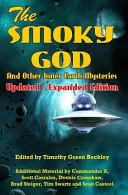
The Smoky God and Other Inner Earth Mysteries
 80
80

The Smoky God and Other Inner Earth Mysteries
The compilation of "The Smoky God and Other Inner Earth Mysteries" offers a curious glimpse into a persistent fringe theory. The primary narrative, purportedly detailing Olaf Jansen's voyage into the Earth's core, is presented with a directness that skirts scientific plausibility, functioning more as a fantastical account than a factual report. Its strength lies in its earnest presentation of a persistent mythos. A limitation, however, is the lack of critical analysis or corroboration for the extraordinary claims made, particularly regarding the existence of inner-earth civilizations and giants. The description of the inner sun and the advanced society encountered by Jansen, while imaginative, remains firmly in the realm of speculative fiction. The work serves its purpose as a repository of unusual ideas but does not offer empirical evidence for its central premise.
📝 Description
80
### What It Is The Smoky God and Other Inner Earth Mysteries presents a collection of startling claims and narratives concerning the possibility of a hollow Earth. It compiles accounts and theories suggesting that the planet's interior is not molten rock but a habitable space containing advanced civilizations. The core of the work is often the purported journey of a Norwegian sailor, Olaf Jansen, who allegedly traveled into the Earth's interior and encountered its inhabitants. This edition, compiled by Commander X, Scott Corrales, and Dennis Crenshaw, brings together these unusual perspectives for readers interested in fringe geological and anthropological theories.
### Who It's For This book is intended for individuals with a keen interest in esoteric lore, conspiracy theories, and speculative geology. It will appeal to those who question mainstream scientific consensus and are open to exploring alternative cosmologies and hidden histories. Readers fascinated by ancient myths of subterranean realms, Ufology, and the history of unusual scientific hypotheses will find material to consider within these pages.
### Historical Context The "Hollow Earth" concept has roots stretching back centuries, gaining significant traction in the 19th century with figures like John Cleves Symmes Jr. advocating for navigable polar openings. Later, writers such as Marshall B. Gardner and Raymond Bernard continued to popularize variations of the theory. The "Smoky God" narrative itself, attributed to Olaf Jansen and published by Willis George Emerson in 1908, emerged during a period of intense public fascination with exploration and the unknown, alongside burgeoning spiritualist and occult movements.
### Key Concepts The central concept is the "Hollow Earth," proposing that the Earth is not solid but contains an inner world accessible through polar openings or subterranean tunnels. This inner realm is depicted as a place of abundant life, light, and advanced civilizations, often populated by giants. The accounts within challenge conventional geology and physics, suggesting a hidden reality beneath the surface. The work also touches upon the idea of lost civilizations and advanced technologies existing in these inner realms.
💡 Why Read This Book?
• You will explore the "Hollow Earth" theory, a concept that captivated speculative thinkers from the 19th century onwards, distinct from modern geological models. • You will encounter the narrative of Olaf Jansen's alleged journey, a specific account of subterranean travel that has influenced subsequent esoteric thought and literature. • You will gain exposure to early 20th-century fringe science and its intersection with exploration myths, as presented in Willis George Emerson's 1908 publication of "The Smoky God".
⭐ Reader Reviews
Honest opinions from readers who have explored this book.
❓ Frequently Asked Questions
What is the "Smoky God" narrative about?
The "Smoky God" narrative, attributed to Olaf Jansen, details a supposed voyage into the Earth's interior. Jansen claims to have discovered a subterranean world inhabited by giants and advanced beings, challenging conventional scientific understanding of our planet's structure.
Who compiled "The Smoky God and Other Inner Earth Mysteries"?
This specific edition was compiled by Commander X, Scott Corrales, and Dennis Crenshaw, bringing together various accounts and theories related to the Hollow Earth hypothesis.
When was "The Smoky God" originally published?
The "Smoky God" narrative, as published by Willis George Emerson, first appeared in 1908, contributing to the popularization of the Hollow Earth theory in the early 20th century.
What is the main scientific theory challenged by the Hollow Earth concept?
The Hollow Earth concept directly challenges the scientific consensus that the Earth is a solid, molten sphere with a dense, iron core. It proposes an internal habitable space.
Are there any historical figures associated with the Hollow Earth theory besides Olaf Jansen?
Yes, prominent historical proponents include John Cleves Symmes Jr., who advocated for navigable polar openings in the 19th century, and later, Marshall B. Gardner and Raymond Bernard.
What kind of civilization is described within the Hollow Earth?
The book describes an advanced civilization dwelling within the Earth, often characterized by beings of great stature (giants) who possess advanced knowledge and a peaceful society, illuminated by an inner sun.
🔮 Key Themes & Symbolism
Hollow Earth Hypothesis
The central theme posits that the Earth is not solid but hollow, containing an internal world. This theory, explored through the narrative of Olaf Jansen's alleged journey, suggests that the planet's interior is a habitable space. It proposes that this inner realm is accessible and hosts advanced civilizations, challenging established geological models and offering an alternative cosmology. The book presents this concept not as mere speculation but as a revelation of hidden truths about our planet's true nature.
Subterranean Civilizations
This theme focuses on the purported inhabitants of the Earth's interior. These beings are often described as giants, possessing advanced wisdom and technology, living in a world illuminated by an internal sun. The narrative of Jansen's encounter with these beings highlights themes of ancient wisdom, peaceful coexistence, and a reality hidden from the surface world. It taps into archetypal myths of inner realms and enlightened societies dwelling beneath our feet.
Esoteric Exploration Narratives
The book functions as a collection of narratives that blur the lines between factual account and esoteric exploration. The story of Olaf Jansen's voyage serves as a prime example, presenting a sensational journey into the unknown. These narratives appeal to a desire for hidden knowledge and the exploration of realms beyond conventional perception. They are framed within a tradition of esoteric literature that seeks to reveal hidden truths about existence and the cosmos.
Challenging Scientific Orthodoxy
A significant aspect is the direct challenge to established scientific paradigms, particularly in geology and physics. The Hollow Earth theory, as presented, dismisses mainstream understanding in favor of accounts that suggest a radically different planetary structure. This theme resonates with readers interested in alternative science, conspiracy theories, and the history of ideas that deviate from accepted scientific dogma, suggesting that established knowledge may be incomplete or deliberately obscured.
💬 Memorable Quotes
“Our planet is hollow and life exists at the Earth's center and throughout a vast tunnel system.”
— This statement encapsulates the core premise of the Hollow Earth theory presented in the book. It directly asserts a non-standard geological model and the existence of life within the planet's interior, setting the stage for the extraordinary claims that follow.
“The interior of the Earth is not made up of molten lava, but houses a vast civilization unheard of by those living on the planet's outer surface.”
— This interpretation of the Earth's interior contrasts sharply with scientific consensus. It proposes a habitable inner world, complete with a civilization unknown to surface dwellers, emphasizing the hidden nature of this advanced society.
“The Smoky God tells of a fantastic journey made inside the Earth where the author meets a race of giants who befriend him.”
— This highlights the narrative structure: a personal account of an incredible journey leading to encounters with extraordinary beings. The befriending aspect suggests a potentially benevolent and advanced inner-earth society.
“Revelations about a blockbuster discovery -- science be damned!”
— This quote reflects the radical and defiant stance of the narrative against established scientific authority. It signals that the book intends to present information that overrides conventional understanding, prioritizing its own extraordinary claims.
“This valuable manuscript was believed to have been lost for decades.”
— This suggests a sense of rarity and historical significance attributed to the 'Smoky God' manuscript. It frames the text as a recovered piece of potentially crucial, hidden knowledge.
🌙 Esoteric Significance
Tradition
The Hollow Earth concept, as presented in "The Smoky God," draws from a confluence of esoteric traditions rather than a single lineage. It echoes Gnostic ideas of hidden, superior realms and ancient myths of subterranean paradises or underworlds found across cultures. Its focus on advanced, hidden civilizations and inner illumination aligns with certain interpretations within Theosophy and early 20th-century occultism, which often posited secret masters or lost continents holding ancient knowledge. The work deviates from strictly Hermetic or Kabbalistic frameworks but shares their interest in concealed realities and a multi-layered cosmos.
Symbolism
The primary symbol is the Earth itself, rendered as a vessel for hidden life rather than a solid mass. The "inner sun" symbolizes enlightenment, a source of perpetual life and knowledge accessible only within the inner world, contrasting with the external, material sun. The "giants" represent primordial wisdom, a connection to an ancient, perhaps divine, lineage that predates surface humanity. The "tunnel system" or polar openings symbolize passages between worlds, thresholds that require specific knowledge or courage to traverse, separating the mundane from the sacred or hidden.
Modern Relevance
The Hollow Earth concept continues to resonate within certain subcultures, particularly those interested in conspiracy theories, fringe science, and alternative spirituality. Thinkers and communities exploring concepts like Agartha, Shambhala, or even certain interpretations of UFO phenomena sometimes incorporate elements of the Hollow Earth narrative. It informs speculative fiction and serves as a foundational myth for those who question official narratives about planetary structure and hidden histories. Modern proponents often connect it to ideas of planetary consciousness and hidden energy grids.
👥 Who Should Read This Book
• Individuals fascinated by historical fringe science and speculative geology, particularly those interested in the "Hollow Earth" hypothesis as presented in early 20th-century literature. • Readers of esoteric and occult texts who explore alternative cosmologies and hidden histories beyond mainstream scientific understanding. • Enthusiasts of adventurous exploration narratives and myths of subterranean worlds, seeking accounts that challenge conventional reality.
📜 Historical Context
The "Hollow Earth" concept gained notable traction in the 19th and early 20th centuries, a period marked by intense global exploration and burgeoning spiritualist movements. Figures like John Cleves Symmes Jr. actively promoted the idea of navigable polar openings in the 1820s, presenting his theories widely. The narrative of "The Smoky God," attributed to Olaf Jansen and published by Willis George Emerson in 1908, emerged within this intellectual climate. It coincided with widespread interest in subterranean myths and alternative cosmologies, often fueled by discoveries in geology and paleontology that seemed to hint at vast, hidden histories. This era also saw the rise of Theosophy, founded by Helena Blavatsky in 1875, which explored ancient wisdom and hidden realms, providing a receptive audience for such speculative ideas. While mainstream science solidified its understanding of a solid Earth, these fringe theories persisted, finding champions like Marshall B. Gardner and later Raymond Bernard, who published "The Hollow Earth" in 1969, further popularizing the concept.
📔 Journal Prompts
The "Smoky God" narrative's claim of giants within the Earth.
The concept of an inner sun illuminating the subterranean world.
Olaf Jansen's alleged journey and its implications for discovery.
The contrast between the Earth's interior as described and scientific models.
The idea of a civilization unknown to the surface world.
🗂️ Glossary
Hollow Earth Theory
The hypothesis that the Earth is not a solid sphere but contains a hollow interior, potentially habitable and accessible through polar openings or subterranean passages.
Olaf Jansen
The purported Norwegian sailor whose alleged journey into the Earth's interior forms the central narrative of "The Smoky God."
Willis George Emerson
The publisher and likely author/editor who presented Olaf Jansen's story as "The Smoky God" in 1908, popularizing the Hollow Earth concept.
Inner Sun
A hypothetical source of light and heat within the Earth's hollow interior, as described in Hollow Earth narratives, enabling life and civilization.
Subterranean Civilization
An advanced society believed to exist within the Earth's interior, often depicted as inhabited by giants or beings of great wisdom and longevity.
Agartha
A legendary subterranean kingdom or city, often mentioned in connection with Hollow Earth theories, said to be a center of spiritual enlightenment and advanced civilization.
Polar Openings
Theoretical entrances to the Earth's interior located at the North and South Poles, a key feature in many Hollow Earth models, including those proposed by John Cleves Symmes Jr.