The selfish giant
 80
80

The selfish giant
Oscar Wilde’s ‘The Selfish Giant’, first appearing in 1888, employs a deceptively simple fairy tale structure to examine profound spiritual and emotional themes. The story’s strength lies in its potent symbolism, particularly the personification of the seasons as direct reflections of the Giant’s inner state. The perpetual winter that grips his garden due to his possessiveness is a stark, effective metaphor for spiritual isolation. The narrative’s limitation, however, is its somewhat didactic conclusion, which, while offering a clear moral, might feel overly explicit to some modern readers. Wilde’s prose, though less ornate than in some of his other works, retains a lyrical quality that makes the Giant’s eventual transformation moving. The passage describing the children playing in the garden after the Giant relents is particularly evocative, capturing a sense of pure, unadulterated joy. It is a poignant, if somewhat overt, exploration of redemption.
📝 Description
80
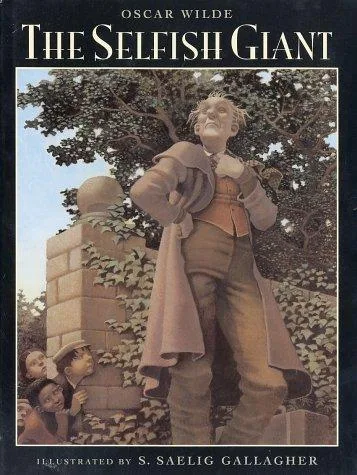
Oscar Wilde’s 1888 story, The Selfish Giant, uses a garden to depict spiritual transformation.
Oscar Wilde’s short story, The Selfish Giant, published in 1888, tells of a giant who selfishly guards his garden from children. His possessiveness creates a perpetual winter, a state reflecting his own inner coldness. When the children eventually return, bringing spring and summer with them, the giant’s heart begins to thaw. The narrative shows how isolation hardens the spirit, while love and generosity bring renewal and warmth.
The story unfolds as an allegory for spiritual awakening. The giant’s transformation is tied to the changing seasons, symbolizing the shift from a state of selfishness and spiritual barrenness to one of love and connection. His eventual reunion with the children, and a mysterious figure representing Christ, marks the full return of life and joy to his garden and himself. It is a fable about the consequences of a closed heart and the redemptive power of selfless affection.
Published in 1888, The Selfish Giant aligns with a late Victorian interest in fairy tales that carried symbolic weight. The story uses the seasons as a metaphor for spiritual states, a common trope in esoteric traditions. The giant's initial isolation and the subsequent return of life through the children and a Christ-like figure suggest themes of spiritual death and rebirth. This narrative structure mirrors cycles found in various mystical traditions, where inner renewal is often depicted through natural imagery and the overcoming of egoic barriers.
💡 Why Read This Book?
• Gain insight into the symbolic power of nature, learning how the perpetual winter in the Giant's garden (1888) represents a state of spiritual isolation and how its eventual thawing signifies redemption. • Understand the allegorical contrast between selfishness and generosity, observing how the Giant's initial hoarding of his garden leads to barrenness, while sharing brings life. • Experience a narrative that uses the figure of the Giant to explore themes of repentance and forgiveness, reflecting on how even the most solitary and seemingly unyielding heart can be softened by love and compassion.
⭐ Reader Reviews
Honest opinions from readers who have explored this book.
❓ Frequently Asked Questions
When was Oscar Wilde's 'The Selfish Giant' first published?
Oscar Wilde's short story 'The Selfish Giant' was first published in 1888 as part of his collection 'The Happy Prince and Other Tales.'
What is the main theme of 'The Selfish Giant'?
The main theme is the transformative power of love and generosity, contrasted with the barrenness of selfishness. It explores redemption through the Giant's change of heart.
How does the story use seasons symbolically?
The seasons in the story directly reflect the Giant's emotional state. Perpetual winter signifies his selfish isolation, while the arrival of spring and summer represents his softening and eventual redemption.
Who are the main characters in 'The Selfish Giant'?
The primary characters are the Selfish Giant, who initially keeps his garden to himself, and the children whose presence brings life and joy back to the garden.
What is the ultimate message of 'The Selfish Giant'?
The ultimate message is that love, compassion, and sharing can overcome selfishness and isolation, leading to spiritual renewal and joy, as symbolized by the Giant's transformation.
Is 'The Selfish Giant' considered an esoteric text?
While not strictly esoteric in the way of occult traditions, 'The Selfish Giant' employs rich symbolism and allegorical layers that resonate with esoteric interpretation, particularly concerning spiritual growth and universal archetypes.
🔮 Key Themes & Symbolism
The Barrenness of Selfishness
Wilde illustrates how possessiveness and isolation lead to spiritual decay. The Giant's selfish hoarding of his beautiful garden results in a perpetual, unnatural winter, symbolizing his own internal barrenness. This state prevents growth, joy, and connection, mirroring how a lack of generosity can create an emotional and spiritual wasteland in one's own life. The story posits that true abundance is found not in keeping things for oneself, but in sharing them.
Redemption Through Love and Sacrifice
The narrative arc of 'The Selfish Giant' is fundamentally one of redemption. The Giant's transformation begins when he allows the children back into his garden, a selfless act that thaws his frozen heart. This act of allowing love and joy to enter signifies his repentance. The story suggests that true redemption is often achieved through acts of love, compassion, and embracing vulnerability, leading to spiritual rebirth.
The Symbolism of Seasons and Nature
The changing seasons serve as a powerful allegory for the Giant's spiritual journey. The initial eternal winter imposed by his selfishness is a direct manifestation of his inner coldness. Spring and summer only return when love and children are present, symbolizing natural cycles of renewal tied to emotional openness and connection. The final, enduring presence of snowdrops and the blooming of flowers represent a restored harmony between the Giant's inner state and the outer world.
The Child as a Symbol of Innocence and Divine Connection
The children in the story represent innocence, joy, and a direct connection to a more natural, perhaps divine, order. Their presence is what awakens the garden from its perpetual winter, suggesting that purity and uncorrupted spirit have the power to restore life and beauty. The small boy the Giant finds in the garden, bearing the marks of Christ, further elevates this theme, linking childhood innocence to a sacred presence.
💬 Memorable Quotes
Direct passages from the work, attributed to the author.
“He was still too proud to let any one play in his garden. So the Snow and the Frost stayed all the year round.”
— This highlights the Giant's stubborn pride as the persistent barrier to his own spiritual renewal, demonstrating how ego can perpetuate internal winter.
“Then the children ran in, and a great joy broke over all the land, and the Snow and the Frost retreated from the trees.”
— This marks the turning point, illustrating the immediate, restorative power of shared joy and the presence of children in breaking the spell of isolation.
“For the children were really a kind of flowers that grow in the garden, and when the snowdrops melted, there was the child.”
— This interpretation of the small boy suggests a profound spiritual connection between nature's renewal and the presence of innocence, linking the child to a divine springtime.
💡 Key Ideas
Editorial paraphrase of the work's core concepts — not direct quotes.
My own garden, said the Giant; anyone can understand that it belongs to me by the right of possession.
This line expresses the Giant's core flaw: his belief that ownership equates to exclusive right, blinding him to the communal and spiritual value of his garden.
It was winter all the year round, and the North Wind, and the Frost, and the Over-snow, and the Hail-stone danced their dances in the trees.
This passage vividly portrays the unnatural state of the garden under the Giant's selfish rule, where elements of cold and harshness dominate, reflecting his isolated heart.
🌙 Esoteric Significance
Tradition
While not originating from a specific codified esoteric tradition like Hermeticism or Gnosticism, 'The Selfish Giant' aligns with archetypal spiritual narratives found across many traditions. Its emphasis on inner transformation, the symbolic language of nature, and the redemptive power of love echoes themes present in Christian allegory, Neoplatonism, and certain strands of nature mysticism. The story can be interpreted as a modern parable on the soul's journey from isolation and spiritual winter to a state of grace and renewal through connection.
Symbolism
The most potent symbols are the seasons themselves, with winter representing spiritual death, isolation, and the ego's grip, while spring and summer signify rebirth, joy, and the soul's awakening. The garden is a microcosm of the self, initially barren due to selfishness, but capable of flourishing when love and innocence are allowed to enter. The figure of the child bearing stigmata can be seen as an avatar of divine love or Christ consciousness, embodying the pure, selfless force that can bring about ultimate spiritual redemption.
Modern Relevance
Contemporary spiritual writers and therapists often draw on the story's archetypal themes of isolation, repentance, and the healing power of connection. Its allegorical depiction of an inner landscape mirroring external conditions speaks to modern mindfulness and psychological approaches that emphasize the connection between emotional states and our perception of reality. The story continues to be relevant for those exploring themes of personal growth, forgiveness, and the rediscovery of wonder in everyday life.
👥 Who Should Read This Book
• Students of comparative mythology and folklore: To analyze archetypal themes of transformation, nature symbolism, and the hero's journey within a seemingly simple fairy tale. • Readers interested in Oscar Wilde's broader literary output: To understand the thematic range of his work beyond his plays and epigrams, appreciating his skill in crafting moral allegories. • Individuals exploring themes of spiritual growth and redemption: To engage with a narrative that uses potent natural imagery to illustrate the path from self-imposed isolation to loving connection and renewal.
📜 Historical Context
Published in 1888, 'The Selfish Giant' emerged from Oscar Wilde’s period of prolific fairy tale writing, often intended for his own children. The late Victorian era saw a surge in children's literature that frequently carried moralistic undertones, a trend Wilde both participated in and subverted with his characteristic wit and aesthetic sensibilities. Unlike the overtly didactic tales of authors like Maria Edgeworth, Wilde infused his stories with deeper psychological and symbolic layers. This period also saw the rise of figures like Helena Blavatsky and the Theosophical Society, fostering an environment where symbolic interpretation of narratives gained traction, though Wilde himself was more aligned with the Aesthetic Movement, prioritizing beauty and art. The story's enduring appeal lies in its simple yet profound allegory, offering a spiritual message that transcends its specific historical moment.
📔 Journal Prompts
The perpetual winter in the Giant's garden as a reflection of inner barrenness.
The children's return to the garden and the symbolism of spring's arrival.
The Giant's transformation from possessiveness to selfless love.
The significance of the small boy found by the Giant in the garden.
Reflecting on moments when sharing joy led to personal renewal.
🗂️ Glossary
Allegory
A story, poem, or picture that can be interpreted to reveal a hidden meaning, typically a moral or political one. 'The Selfish Giant' uses characters and events to represent abstract ideas like selfishness and redemption.
Archetype
A recurring symbol, character type, or motif in literature and mythology that represents universal patterns of human nature. The Giant and the innocent children function as archetypes.
Moral Fable
A short story, typically with animals as characters, conveying a moral. Wilde's story, while using human characters, functions similarly to teach a lesson about generosity and love.
Perpetual Winter
In the context of the story, this symbolizes a state of spiritual stagnation, isolation, and emotional coldness resulting from the Giant's selfish actions.
Redemption
The act of being saved from sin, error, or evil. The Giant's journey from isolation and bitterness to love and peace represents his redemption.
Symbolism
The use of symbols to represent ideas or qualities. The story is rich in symbolism, particularly through the personification of seasons and the actions of characters.
Victorian Era
The period of Queen Victoria's reign in the United Kingdom (1837–1901), characterized by industrial growth, social reforms, and a distinct literary style often focused on morality and realism.
🔮 Readers Also Liked
Browse all →








More by Oscar Wilde
All books →




More Free Occult Philosophy Books
View all →